Pick the training path that matches your goal, the riding you can manage now and the time you can repeat most weeks, not the hardest plan you can find. If fatigue, pain or missed sessions keep happening, scale back or choose a different path. Go to the training-path selector to match a goal with a realistic next step.
Choose what you want cycling to improve
Getting fitter on a bike can mean a regular riding habit, a longer comfortable ride, a faster pace, or finishing a particular event. Each goal calls for different training.
Pick the one that would change your riding most right now:
- General fitness: Fit cycling into an ordinary week.
- Endurance: Ride longer at an effort you can sustain.
- Speed: Build the capacity for quicker riding and hard efforts.
- Event readiness: Prepare for a known distance, elevation profile and route.
- Supporting strength: Add resistance work without losing time for rides.
For general health, the CDC recommends at least 150 minutes a week of moderate aerobic activity, 75 minutes of vigorous activity, or an equivalent combination, plus muscle-strengthening on two or more days. Those are adult public-health recommendations.
Start from the riding you can repeat
Judge a plan’s opening week against your recent riding. A long weekend ride may be fine on its own, while several solid sessions in one week wear you down. Terrain matters too: 21 miles with nearly 1,500 feet of climbing feels very different from 21 flatter miles.
A rider preparing for that hilly 21-mile event wrote on r/ladycyclists: “My gut is telling me that I need to start with shorter rides so that I can go more frequently throughout the week – same total mileage but better able to recover.” Spreading the same mileage over shorter rides gives you more recovery between them.
Your starting record: Write down the distance or time of your recent manageable rides, how often you ride, the climbing or terrain, and how you recovered. Compare that record with a program’s first week.
If you’ve been inactive or have a chronic condition that affects exercise, the CDC advises talking to a healthcare professional about suitable activity, especially before you move up to vigorous effort.
What fits in your week
A formal program gives you planned sessions and progression. If your immediate goal is simply to ride regularly, a steady riding rhythm can serve you better. The time you have in a normal week decides it.
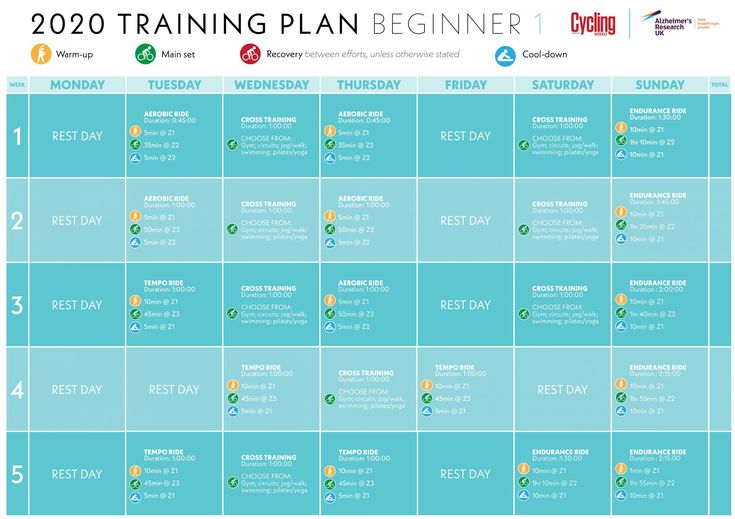
Chloe Hosking’s 30-Day Women’s Cycling Kickstart Plan on TrainingPeaks lasts four weeks, with 2 to 3 rides of 30 to 75 minutes and a listed weekly average of 1 hour 46 minutes. Cycling Weekly’s ten-week beginner program describes 6.5 to 8 hours each week and two complete rest days.
Mark the riding windows that survive your work and family schedule, leaving time to get ready and recover. Add up a program’s weekly hours, easy and hard sessions included, and check the total against those windows.
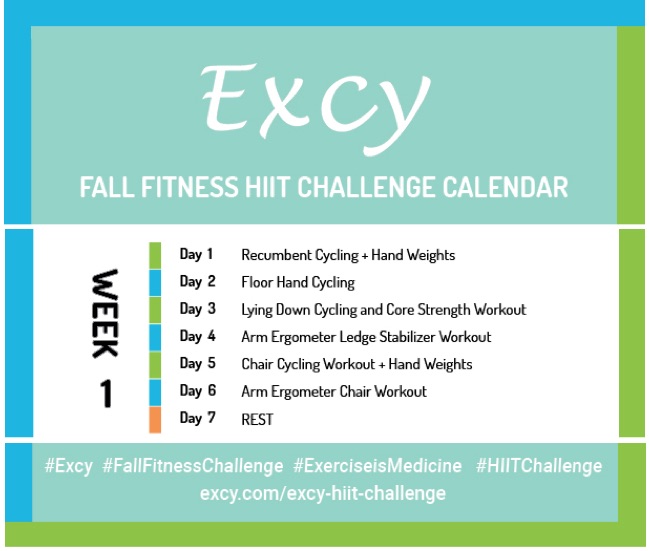
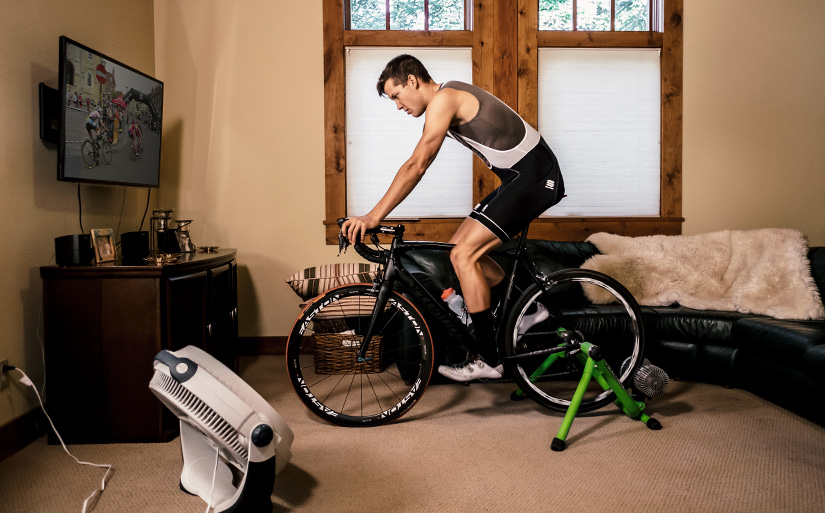
Indoor cycling helps with darkness or bad weather when you have the equipment. Outdoor rides teach you real routes and changing terrain.
Judge effort without guessing at zones
Start with your breathing and how easily you can speak. The CDC’s talk test puts moderate effort at a pace where you can talk but cannot sing. At vigorous effort, you usually need to pause for breath after a few words.
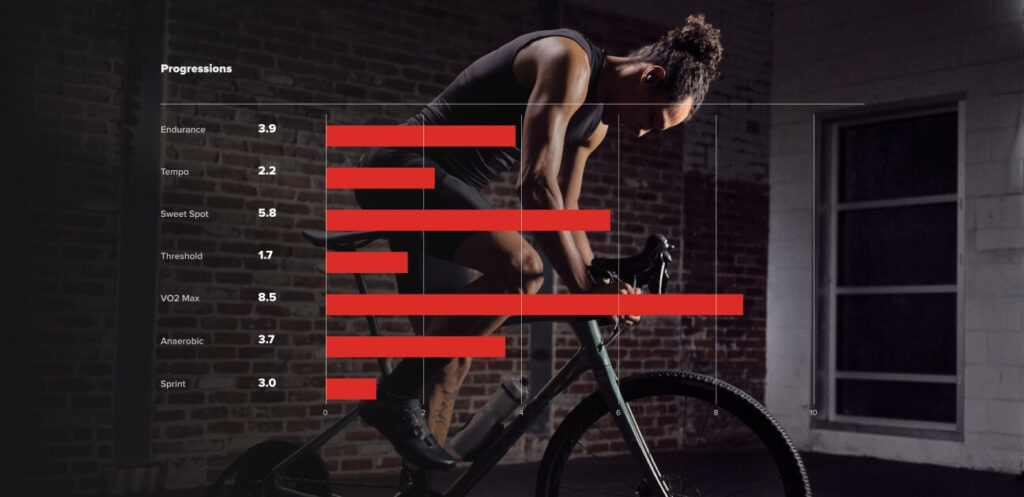
Training guides also use rate of perceived exertion (RPE), heart rate or power. Each measures something different:
| Method | What it tells you | What you need |
|---|---|---|
| Talk test or RPE | How hard the work feels to you | No sensor, only attention to your breathing and perceived difficulty |
| Heart rate | How your cardiovascular system responds | A heart-rate monitor and settings set for you |
| Power and FTP | Mechanical output, sometimes relative to your estimated functional threshold power | A power meter and a threshold estimate |
RPE runs on a 1 to 10 scale. FTP stands for functional threshold power, an estimate some plans use to set power zones. The talk test and the numerical heart-rate or FTP zones are separate systems with no exact conversion between them.
In r/cycling, a rider wrote: “I dont have a lot of time to train. I have heard zone 2 is best suited to putting in long hours.” A zone label only helps if you know whether the plan counts it by heart rate or by power.
Pick an endurance, speed, or event-training path
Find the row that matches your goal. The “Check before committing” column flags what could make that direction a poor fit, and the last column links to your next step.
| Your goal | Training direction | Check before committing | Where to go |
|---|---|---|---|
| Ride regularly | Consistent riding with beginner progression | Can you manage the whole first week’s sessions? | Beginner plan options |
| Ride farther | Gradual endurance development | Can you recover between the planned rides? | Endurance options |
| Improve pace | Structured training that may include harder efforts | Do you have a consistent riding and recovery pattern? | Performance options |
| Prepare for an event | Sessions matched to distance and route demands | Does the plan address climbing, terrain and the time available? | Event preparation |
| Add strength | Supporting resistance training | Does another session fit your week and recovery? | Strength and cycling |
| Fit riding around weather or time | Indoor, outdoor or mixed sessions | Do you have the setting and equipment the sessions assume? | Weekly training setup |
Cycling Weekly’s endurance plan, for example, targets demanding long-distance riding, including weekend rides of more than five hours.
Strength training around your rides
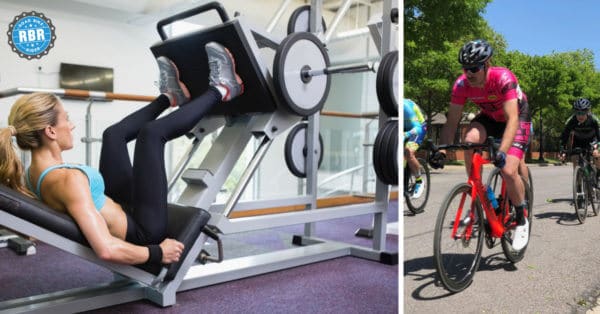
Strength work fits alongside riding when you have space for it and enough recovery between hard sessions. Muscle strengthening for general health and heavy lifting for performance serve different purposes.
A systematic review and meta-analysis of heavy strength training in endurance cyclists combined 17 controlled studies involving 262 cyclists, 60 of them women.
The review found improvements in cycling efficiency, anaerobic power and cycling performance. The pooled result showed no statistically significant VO₂max improvement. The authors rated the evidence as low certainty, which limits how far these findings can guide heavy-strength prescriptions for recreational beginners.
Recovery and when to scale back

Cut the load or switch plans if fatigue, pain or missed sessions keep happening. Rest, easier rides and activities you enjoy belong in the plan too. If pain or fatigue gets in the way of daily life, see a doctor.
Open the right training guide
- For an accessible starting program: Chloe Hosking’s TrainingPeaks beginner plan asks for little time each week. Read its entry requirements before you start.
- For longer rides: The Cycling Weekly training-plan collection separates beginner, endurance and racing paths. The endurance option builds longer-distance capacity.
- For improving speed: Bicycling’s training-plan selector includes a four-week get-faster program for cyclists who already ride consistently, four to five days per week. It also offers a racing pathway if you are preparing to race and meet its starting level.
- For a particular event: The same Bicycling selector includes event-oriented options. Choose one that fits your route’s distance, terrain and climbing.
- For strength sessions: REI’s cycling training guide offers a detailed strength approach to pair with your rides.
If you are still learning to handle a bicycle or complete your first rides, start with basic cycling skills before a structured schedule.