
FTP is a starting estimate for setting workout intensity. It does not give you an exact one-hour limit, and it does not grade your fitness. If the number clashes with reliable power readings or the effort your workouts require, check your setup, then adjust or retest. Otherwise, use it to set your next session.
What does FTP mean in cycling?
FTP stands for Functional Threshold Power. It estimates the power you can hold during a hard, steady effort, measured in watts (W). Training platforms use it to scale workouts to you.
Coaches have traditionally described FTP as roughly the power you can sustain for an hour. Time to exhaustion varies from rider to rider. A displayed FTP of 190 W is a training reference even when you can’t hold it for exactly an hour.
Power measures mechanical output. Speed also depends on wind, gradient, riding position and equipment, and heart rate shows how your body responds to effort. That is why an app can ask for your FTP before you have ever raced. It needs a reference for setting workout watts.
How is FTP calculated? A 20-minute example
A 20-minute FTP test estimates threshold power by multiplying the average power from a sustained hard effort by 0.95.
If you average 200 W across the whole test:
200 W × 0.95 = 190 W estimated FTP.
Use the mean watts for the full interval, including the hard final minutes. A momentary sprint peak is a different measurement. Preparation and pacing are part of a structured test, so a random 20-minute stretch of riding gives a different kind of result.
Lillo-Beviá and colleagues studied 11 trained male cyclists and triathletes. They found a 12 ± 7 W bias between the 95% FTP estimate and maximal lactate steady state (MLSS).
Ramp test or 20-minute test: which estimate should you use?
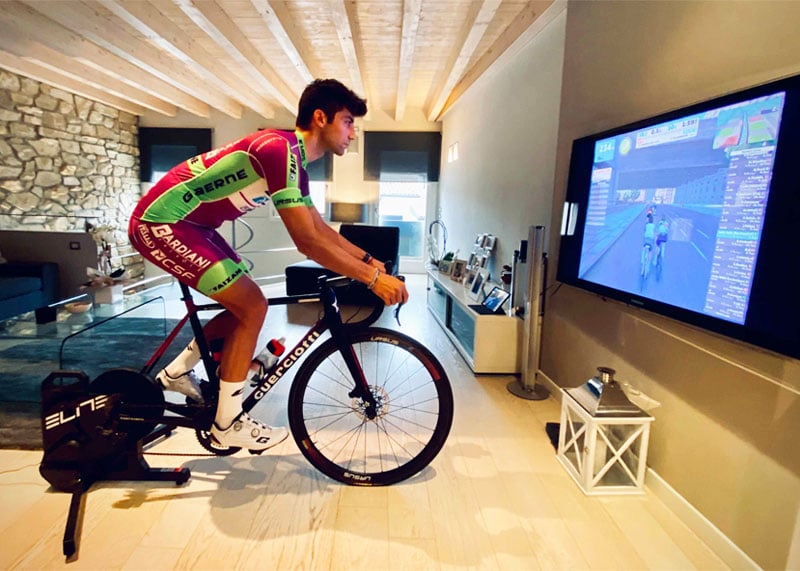
Pick a test your equipment and training platform support, in a format you can pace consistently. The methods use different procedures, so they give different FTP estimates.
| Method | How it works | Useful when | Main trade-off |
|---|---|---|---|
| 20-minute test | Sustain a hard effort; the estimate is 95% of mean power | You can pace a sustained effort | Pacing and preparation affect the result |
| TrainerRoad ramp test | Power target rises in one-minute stages; the basic calculation uses 75% of the highest one-minute power | You prefer a test that builds in steps | The platform may adjust the result if you miss the target power |
| TrainerRoad two-by-eight-minute test | Two eight-minute efforts separated by 10 minutes; TrainerRoad calculates 90% of their combined mean power | You prefer two shorter hard efforts to one long one | Pacing and recovery influence the estimate |
| Longer effort or modeled estimate | A sustained effort or software power-duration data informs an estimate | You have enough power history to work from | The result depends on the method or model |
TrainerRoad’s ramp test starts with a five-minute warm-up before the one-minute increases. The whole session, including preparation and cool-down, typically lasts about 25 minutes.
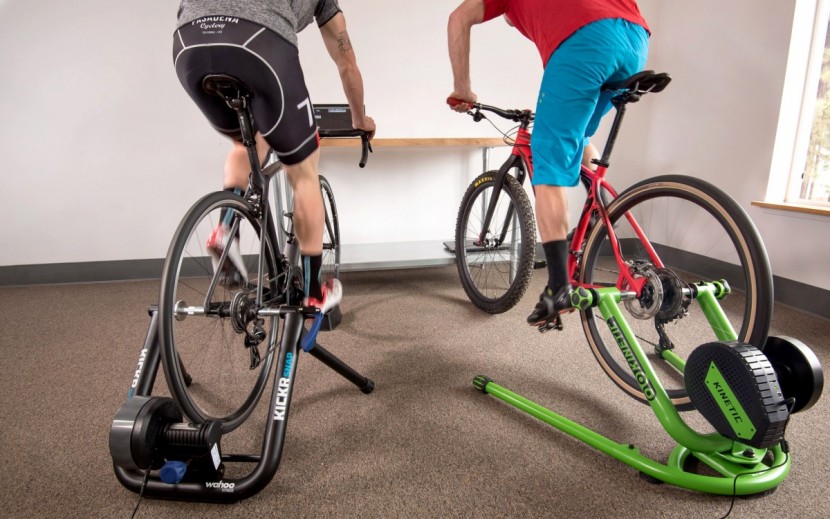
Your smart trainer’s resistance mode matters too. TrainerRoad recommends ERG mode for its ramp test. During the test intervals of its 20-minute and eight-minute assessments, Slope/Resistance mode leaves the pacing to you, and its assessment workouts switch modes automatically. TrainerRoad’s eight-minute and 20-minute testing instructions explain the distinction.
A cyclist who came to structured cycling from running did a 20-minute test and a ramp test within two weeks and got wildly different results: 217 W from the 20-minute test and 272 W from the ramp test. Those estimates would produce substantially different interval targets.
An all-out FTP test is strenuous. If you have concerning exercise symptoms or known cardiovascular, metabolic or renal disease, take that into account before attempting a maximal test. If you get concerning symptoms during exercise, stop the effort and seek assessment.
How FTP sets your cycling workout targets
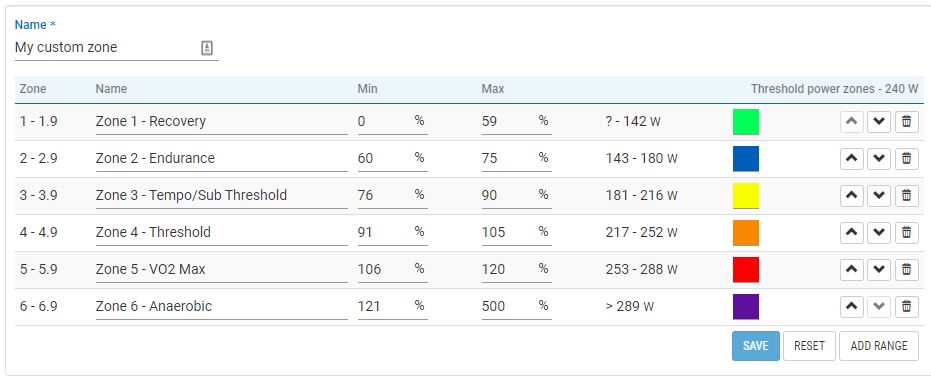
A structured power workout sets its target watts as a percentage of the FTP entered in your training platform. Two riders doing the same percentage-based interval get different wattage targets when their FTPs differ.
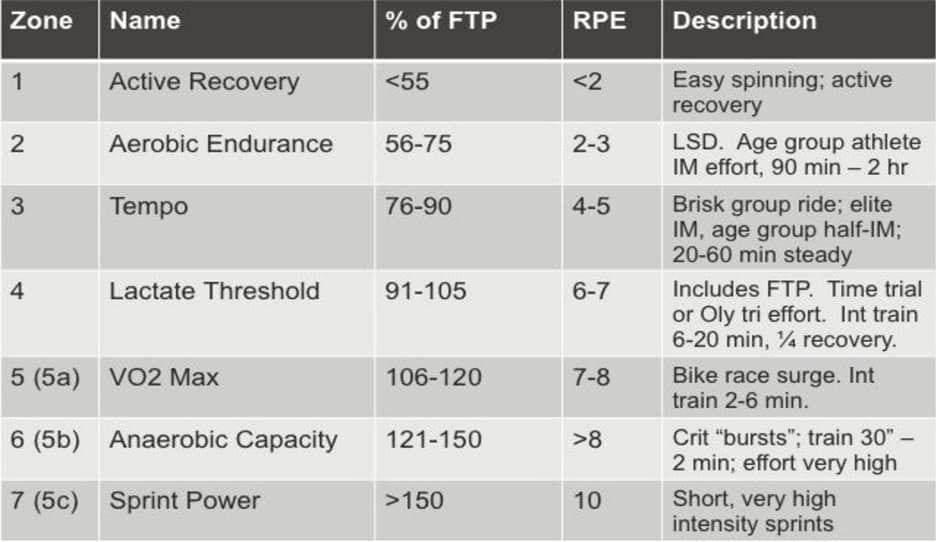
Take an FTP of 190 W. An interval at 80% targets 152 W. At 105%, the target is 199.5 W, about 200 W. Platforms differ in their zone systems and names.
Change the FTP stored in an app and the workout targets change immediately, whether or not your fitness has changed.
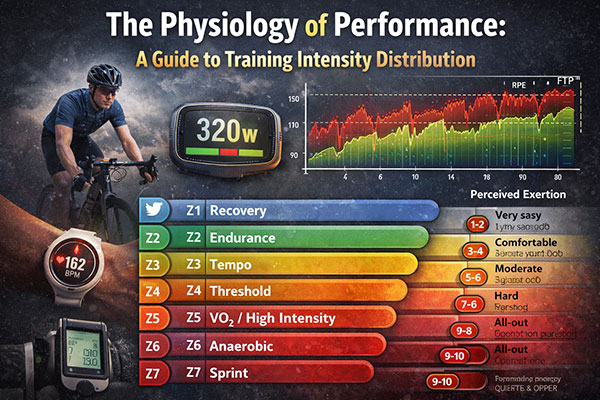
Heart rate and rating of perceived exertion (RPE) give you two more readings of effort. RPE is how hard the work feels to you. Heat and fatigue can make the three signals diverge.
What is a good FTP for a woman or beginner?
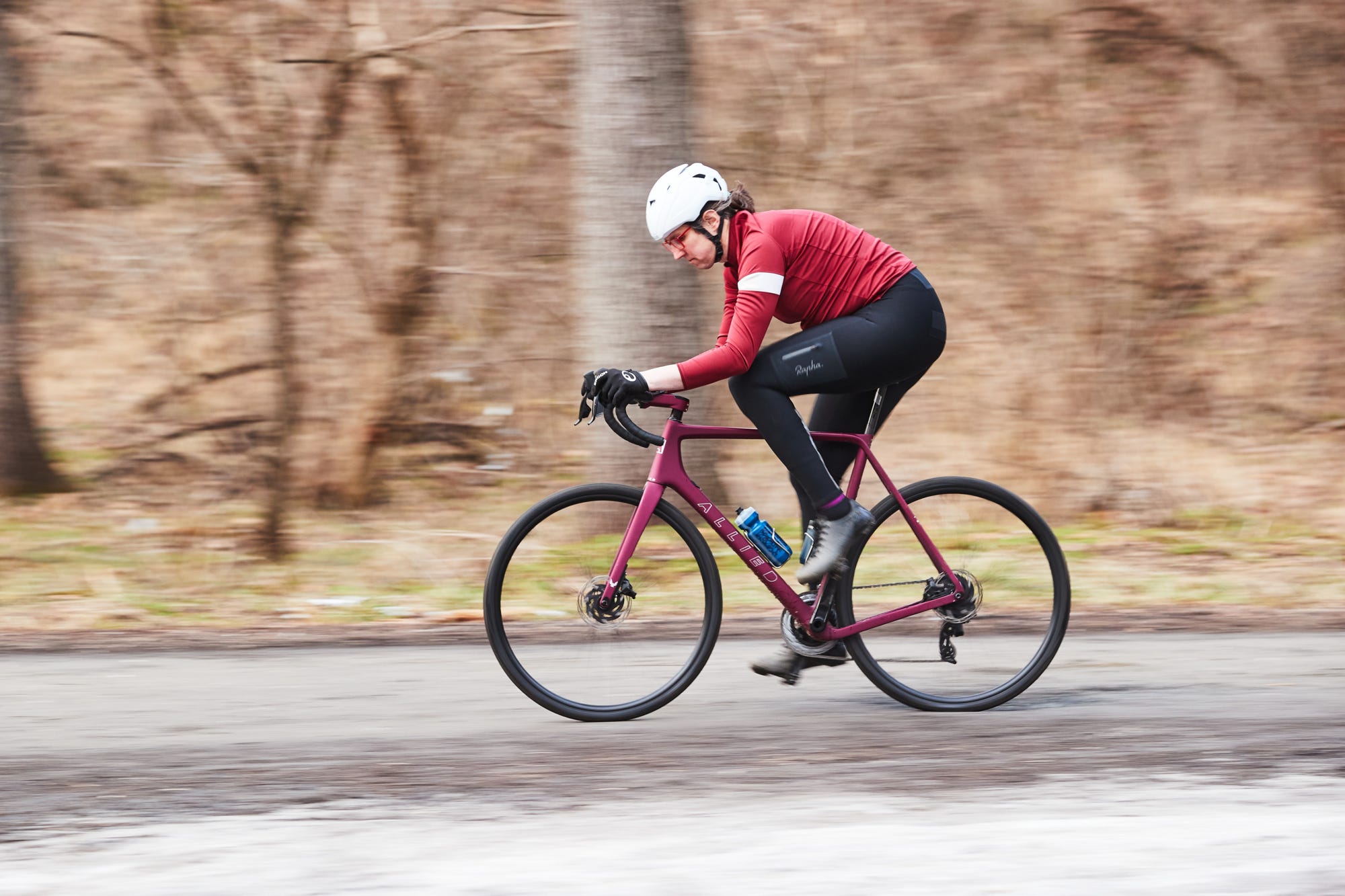
No single FTP number defines a “good” result for every woman beginning to cycle. Before you compare FTPs, know what you want from your riding and how the number was measured. Your own results from comparable tests tell you more than another cyclist’s arbitrary goal.
Absolute watts and watts per kilogram (W/kg) answer different questions. W/kg is your FTP in watts divided by your body mass in kilograms. Here is the arithmetic for two riders:
| Measurement | Rider A | Rider B |
|---|---|---|
| Estimated FTP | 150 W | 200 W |
| Body mass | 60 kg | 80 kg |
| Relative FTP | 2.50 W/kg | 2.50 W/kg |
Equal W/kg is informative for climbing comparisons. On a flat route, wind resistance and riding position matter a lot, and the riders’ absolute power still differs.
Use your own ratio alongside the kind of riding you want to improve, and don’t treat body weight as a fitness verdict.
Why might your FTP look unusually low or high?
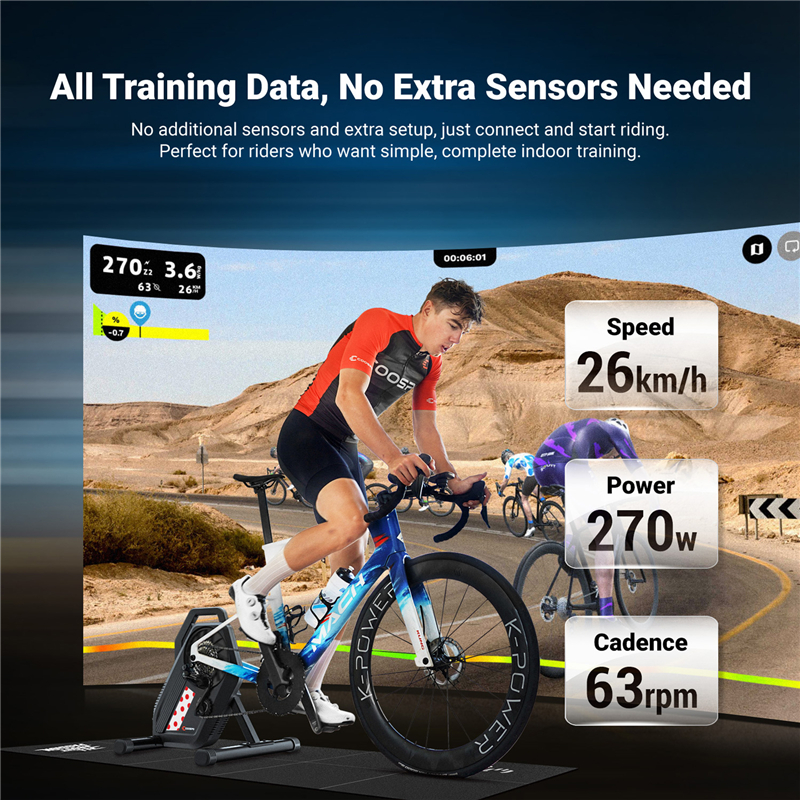
An unexpected result can come from a real cycling-specific limit, an unsuitable test effort or an unreliable power reading. If the number surprises you, find out where the watts came from.
A female newcomer weighing 57 kg wrote in an August 2026 r/Zwift discussion, “But… is it normal to have such a low FTP? I did the Lite Ramp Test and it gave me 77.”
She used a Wahoo KICKR CORE 2 and traced a competing connection to Garmin Express. After she resolved that conflict, she reported a reading above 130 W.
| Check | What to do |
|---|---|
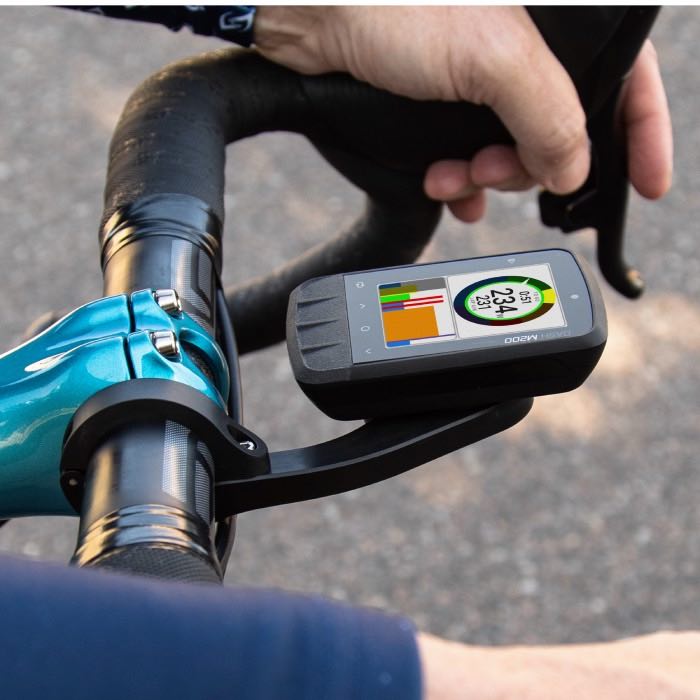
| Power source | Confirm which trainer or power meter supplies the watts and that the platform has it selected |
| Connections | Resolve any pairing conflict with another app or device |
| Calibration | If your model has a calibration procedure, follow the manufacturer’s instructions |
| Units and display | Confirm the recorded value is power in watts, not another unit or data field |
| Reliable comparison | Compare the estimate with later power data you trust |
If you still can’t trust the power data, go by perceived effort before you commit to demanding wattage targets from that number.
What if your FTP-based workouts feel too hard or too easy?

First separate a workout that is meant to be hard from a repeated mismatch between the intended effort and what you feel. Hard intervals are sometimes the point, and accumulated fatigue can also make a normal session difficult.
A 49-year-old recreational cyclist who also ran and did CrossFit, with FTP set to 170 W, found a couple of Zwift workouts too hard.
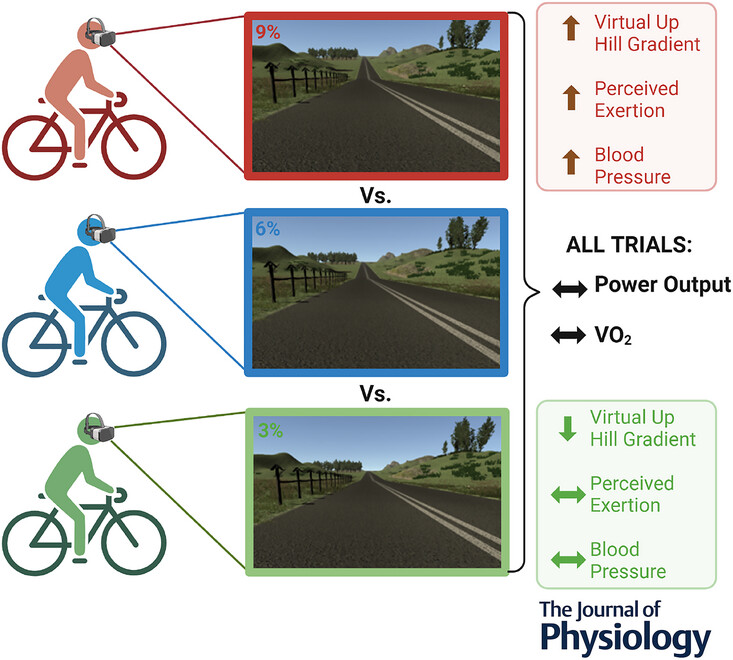
Zwift’s published effort guidance helps you check whether the FTP setting is behind this. It describes green/moderate work as RPE 4 to 6. If an intended moderate block repeatedly feels closer to RPE 8 to 9, or barely registers at RPE 1 to 2, the setting may be off. Zwift documents workout-bias adjustments and manual FTP changes for correcting the target watts.
When should you retest FTP?
Retest when a new number would change your training, such as at a program transition or after a lasting mismatch between workouts and recent performance. For a fair comparison, repeat the same protocol with the same power source and similar preparation and conditions.
How accurate is FTP, and is it lactate threshold?
FTP is estimated from cycling power tests or performance data, while maximal lactate steady state (MLSS) is determined through controlled physiological testing with blood-lactate measurements. For an individual rider, the two power values can differ. Reliability asks whether a protocol gives similar results when repeated under comparable conditions. Validity asks whether it measures the physiological quantity being claimed. Borszcz and colleagues tested 25 trained cyclists with a 20-minute protocol, repeated after seven days. Repeat results were similar, with a coefficient of variation of 2.9% and an intraclass correlation coefficient of 0.97. Two other physiological measures address related questions. Respiratory compensation point (RCP) concerns respiratory behavior as exercise intensity rises. Critical power (CP) comes from power-duration performance modeling.
In the 13-cyclist study, mean time to exhaustion at FTP was 33.7 ± 7.6 minutes. At FTP plus 15 W, it was 22.0 ± 5.7 minutes. The Engelke study included 49 amateur triathletes, 24 women and 25 men, and found a correlation of r = 0.916 between FTP and RCP. Even so, agreement between the measures was poor for individuals. Its analysis detected no statistically significant sex interaction (p = 0.524).
Another study enrolled 18 participants, six of them women, and ten returned after training. In those ten, MLSS rose by an average of 12 ± 8 W without matching average increases in the tested FTP estimates. When a claim equates FTP with a laboratory threshold, check the testing protocol and which quantity the study measured before you apply the conclusion to your own riding.
Do you need an FTP number to enjoy cycling or get fitter?
FTP is most useful when your sessions set power targets as percentages of an estimated threshold.
You can enjoy cycling, commute, get fitter and improve your bike handling without a power meter. RPE gives you a simple way to tell easy, moderate and challenging efforts apart, though it will not give you exact watt targets.