As an adult new to cycling, take a short, easy first ride on a bike that passes a basic check, and only once you can start, steer, brake, and stop in control. If the bike fails the check or the route has more traffic than you can handle, practice somewhere traffic-free or get the bike inspected first.
Before you pick a distance, think about two things: how the bike responds under you and where you can ride it. A quiet path and a mechanically sound bike are a good start. If you’ve never balanced on two wheels, though, your first task differs from that of someone returning after a few years away.
Choose your starting point: new, returning, or ready to ride
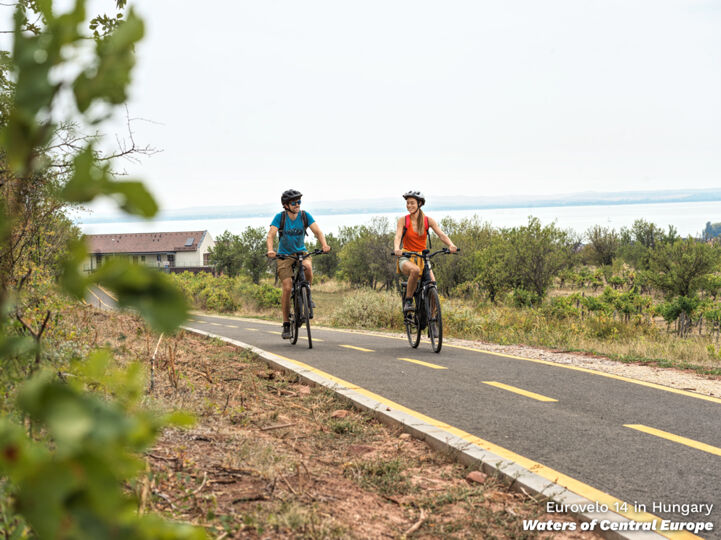
If you rode as a kid, the motions will probably come back fast. If you’ve only ridden an indoor bike, your fitness will help with the effort, but you still have to learn how a bike handles outdoors: steering, balance, braking, surface changes, and other people’s movements.
| If this sounds like you | Start here |
|---|---|
| You can’t balance, start, or stop reliably | Learn to ride with an instructor, or practice the basics in a genuinely traffic-free space. Move on when you can start, steer, and stop under control. |
| You rode years ago, or you ride indoors but feel unsure outside | Refresh your handling skills in a controlled setting until starting, turning, braking, and stopping feel predictable. |
| You already ride comfortably outdoors | Go straight to the bike check and route choice below. |
If balancing is entirely new to you, an adult learn-to-ride class gives you more detailed instruction than a general guide like this one. The League of American Bicyclists’ Smart Cycling program includes a way to find instruction.
Start with the bike you have
Use a bike you already own or can borrow. A hybrid, road bike, or another suitable type works when the fit and the route match your ability. You should be able to get on and off comfortably, steer without overreaching, and reach the controls. Judge fit by your actual riding position and control reach, including on bikes marketed to women.
Shopping for a bike instead? Read How to choose a first bike that fits the rides you want before committing to a frame or riding style.
| Priority | Examples |
|---|---|
| Every ride | A suitable bicycle, a bicycle helmet, and clothing and shoes that don’t interfere with movement |
| Some rides | Water, lights or other visibility equipment, weather layers, a phone, and a way home. Pack what the route, conditions, daylight, duration, and local rules call for. |
| Can wait | Clipless pedals, cycling shoes, premium bib shorts, a GPS computer. Add them if later rides give you a reason. |
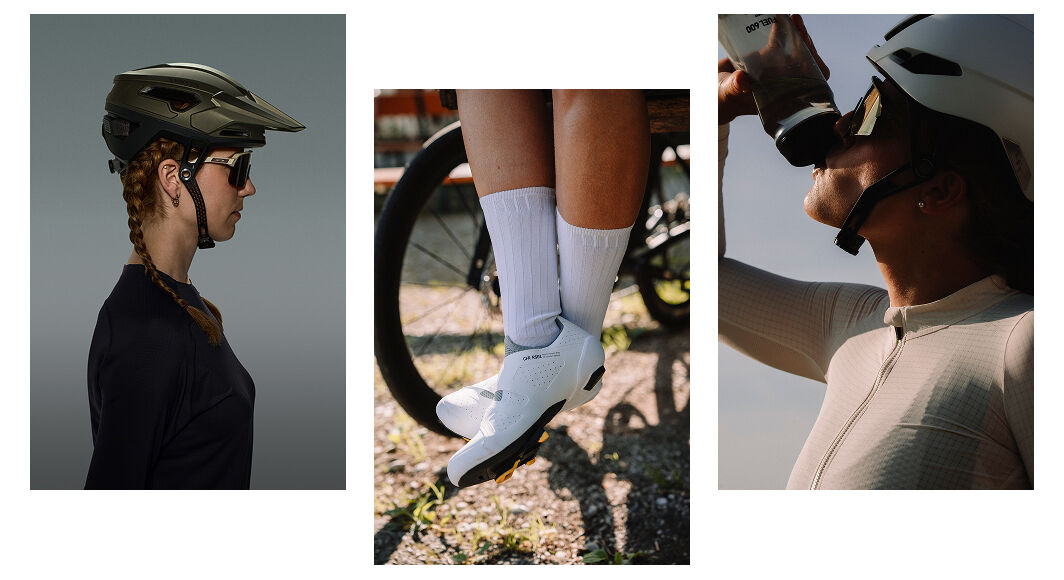
Specialized shorts help with particular comfort needs and longer rides. Flat pedals and everyday clothes let you get used to cycling before you think about technical upgrades.
Buying secondhand is a good option, but one commuter considering a used gravel bike had no idea what to watch out for in terms of condition. Fit and mechanical history both matter on a used bike, especially when you don’t know its service record.
Check the bike and helmet before riding
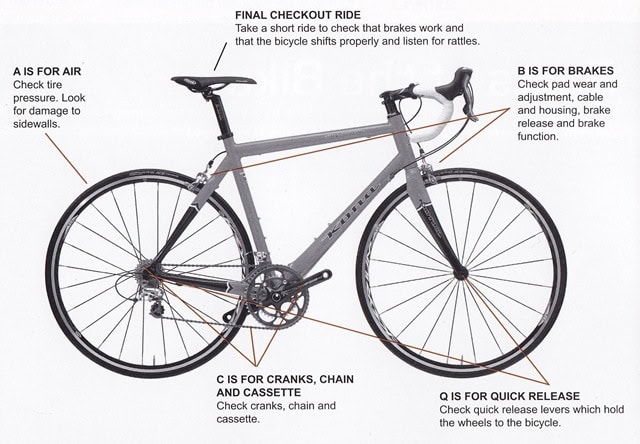
The League of American Bicyclists teaches the ABC Quick Check to catch common equipment problems.
If you still need to decide what to bring, see Which cycling gear is essential when you start before buying extras.
- Air: Inspect the tires for visible damage or obvious pressure loss. Inflate them following the guidance for your tires and bike.
- Brakes: Squeeze the levers and confirm that the brakes respond properly.
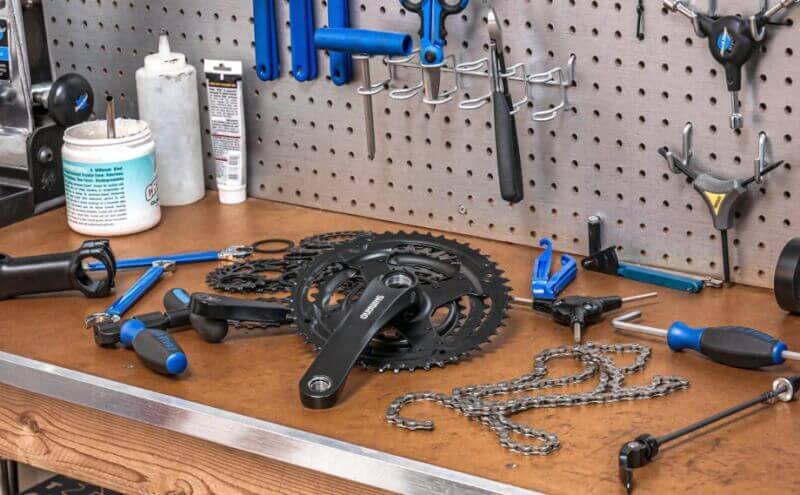
- Chain and cranks: Look for obvious damage, looseness, or malfunction around the chain, pedals, and crank assembly.
- Quick release or wheel retention: Make sure the system fitted to your bike secures the wheels. The League calls this step “Quick Release,” but some bikes use thru-axles, which need their own correct retention check. If the hardware is unfamiliar, ask a mechanic to check it.
- Check ride: If the stationary checks pass and you can already control the bike, roll it slowly to confirm it works. If you can’t yet do that safely, have someone who knows bikes check it.
This quick check does not replace a thorough inspection. If a brake is faulty, a tire is damaged, a wheel is insecure, or a critical part is one you can’t assess, get it repaired or checked by a mechanic before you ride.
Check the helmet’s fit
In the United States, the Consumer Product Safety Commission’s bicycle helmet rules specify 16 CFR Part 1203, including impact, retention, positional stability, and peripheral-vision requirements. That federal regulation governs helmet products; rules about wearing a helmet vary by state and circumstance.
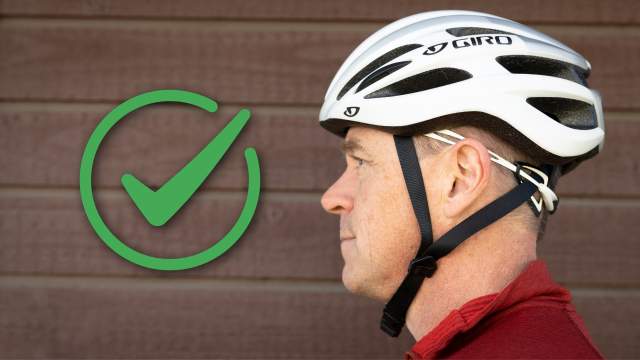
The National Highway Traffic Safety Administration advises wearing the helmet level and low on the forehead, with the side straps forming a V near the ears. Look for bicycle-helmet compliance labeling and a fit that holds the helmet securely in place.
Practice the controls where there is no traffic
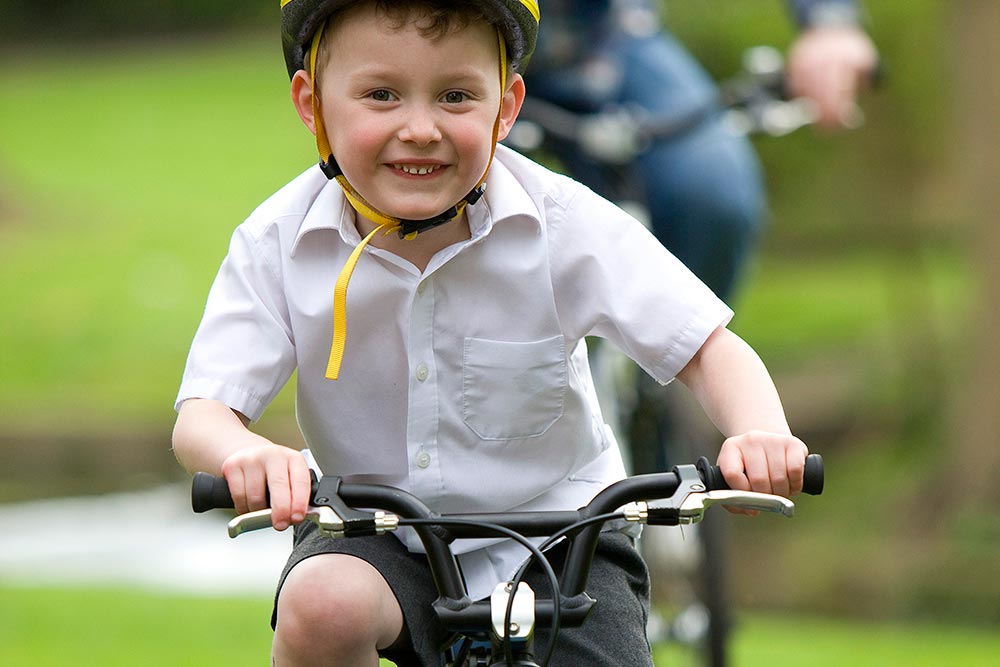
Find a clear, genuinely traffic-free area. Begin with a controlled start:
- Stand ahead of the saddle with one pedal raised.
- Press that pedal down to move off, then settle onto the saddle.
- Steer straight before you add gentle turns.
To stop on a bike with two hand brakes, stop pedaling, apply both brakes smoothly, and put a foot down as the bike comes to a halt. If your bike has gears, practice shifting while moving once starts and stops feel steady.
New riders often wonder when they will be ready for the road. In May 2026, a Pennsylvania Peloton rider asked in a r/ladycyclists discussion, “How long did it take you to gain confidence to start riding on the roads?”
Choose a low-stress route you can turn back from
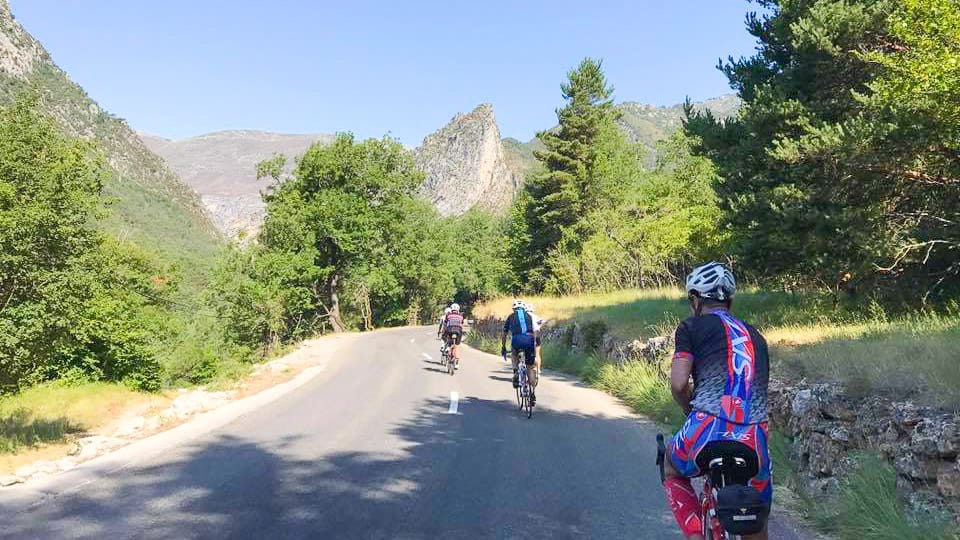
Pick a first route that fits your handling skills and gives you an easy way home. A familiar paved path with few motor vehicles is easier than a short trip through a complicated intersection.
| Route feature | Good for a start | Pick somewhere else if |
|---|---|---|
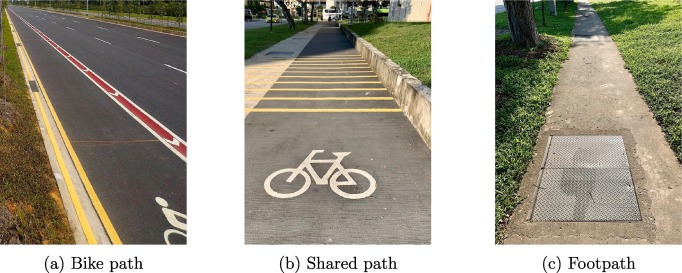
| Traffic | A traffic-free path, or roads you can already handle | Vehicles are fast, road movements are unfamiliar, or interactions stress you |
| Surface and hills | Predictable pavement and slopes you can handle | The ground is rough, descents are steep, or hills go beyond your experience |
| Crossings | Simple crossings | Intersections are complex or multi-lane |
| Return options | A familiar loop with a nearby turnaround | The route is long with no straightforward way back |
| Weather and visibility | Conditions that match your skills and equipment | Visibility is poor, or conditions make it hard to stay in control |
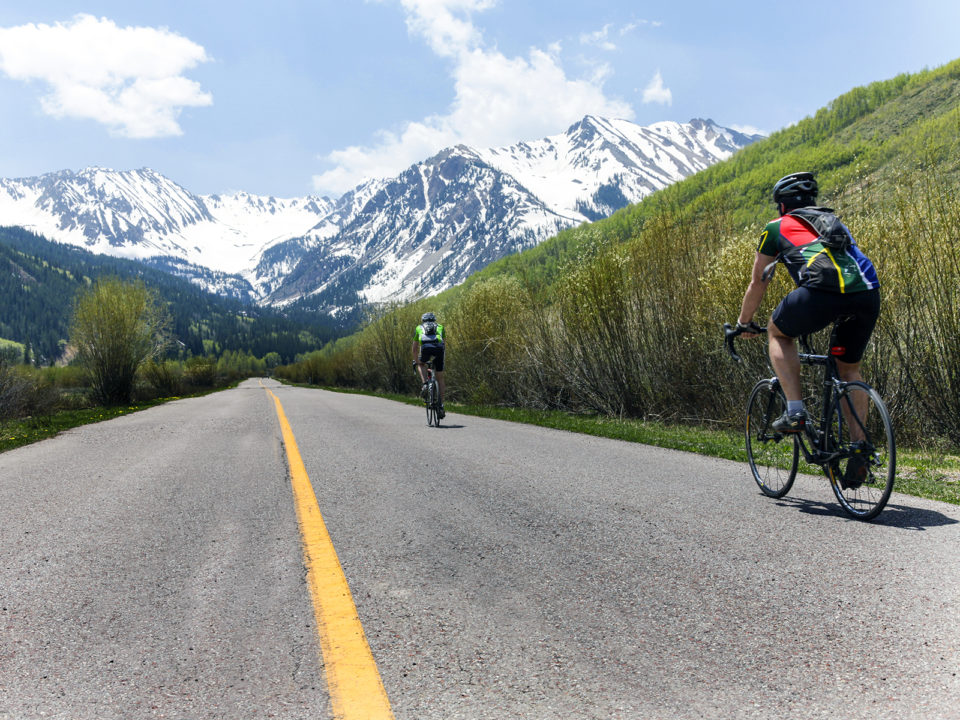
Plan an easy first outing
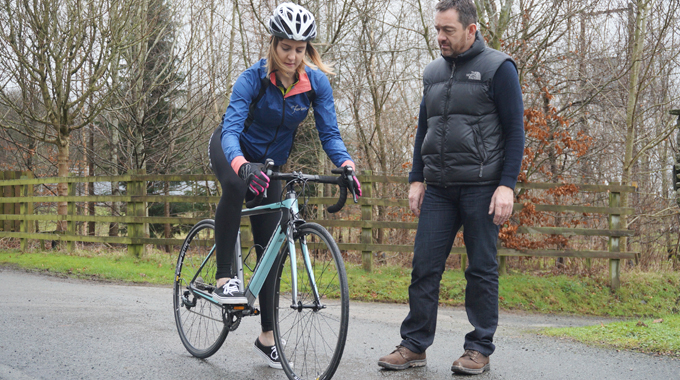
Pick an outing you can finish at an easy effort, and leave room to cut it short. Let your handling skills and your route set the plan, not a fixed distance or speed.
Start on the familiar route without rushing to build speed. Ride at an effort that leaves enough attention for steering, braking, and your surroundings. Turn back at your planned turnaround while you can still handle the bike predictably. Practicing basic handling in a quiet area can be the whole outing.
Fitness guidelines are a longer-term reference
The CDC’s general guidance for adults includes 150 minutes of moderate-intensity aerobic activity each week and muscle-strengthening activity on two days. That is a long-term health goal, not a first-week mileage or cycling schedule.
Treat comfort and effort as feedback
Find the source of discomfort
A newer road cyclist riding roughly ten miles at about 13 mph asked for beginner tips, including how to avoid soreness in the saddle area.
Saddle pressure, hand discomfort, or trouble reaching the controls often points to a fit or equipment issue. Saddle position and shape, handlebar reach, posture, and clothing all affect how it feels. The right adjustment depends on where and when the discomfort occurs.
Know when to ease off or stop
- Tired but in control: If you can still handle the bike and stay alert, easing the pace is enough.
- Fit-related discomfort: Saddle, hand, or reach problems call for a closer look at your riding position and equipment.
- Concerning symptoms: Stop riding if you feel significant pain. See a doctor if sharp pain gets worse or numbness continues after you stop.
Discomfort, fatigue, or uncertainty that affects your grip, braking, or attention is also a reason to end the ride.
After your first ride
If the ride wore you out, repeat a shorter or easier outing. If it felt comfortable and controlled, repeat a familiar ride or add one challenge you can handle.