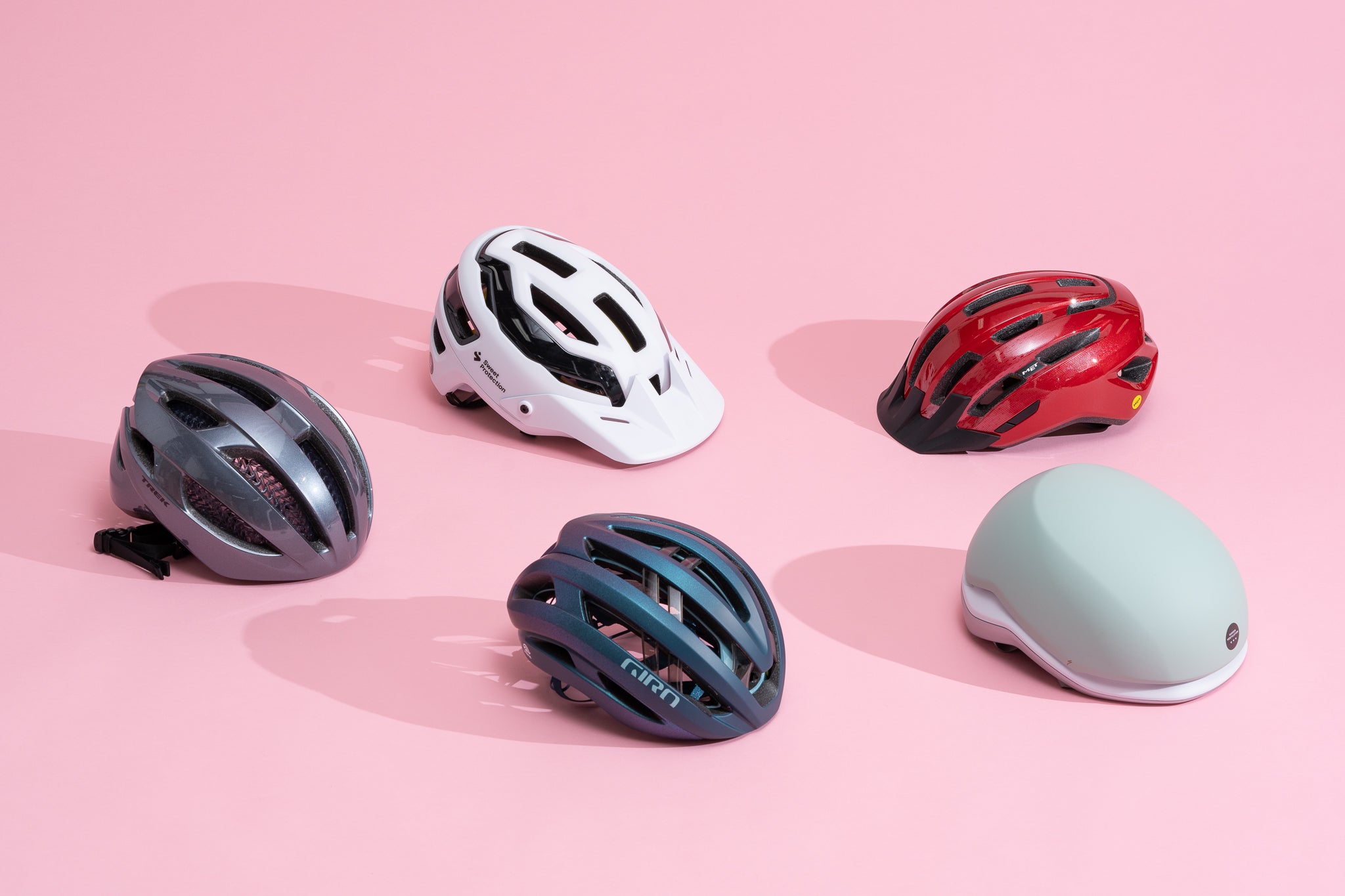
Pick a CPSC-compliant helmet that fits the shape of your head and works with your hair. Check the exact model in the Virginia Tech ratings, and pay extra only for features you’ll use. A women’s label is optional.
Do women need a women’s-specific bike helmet?
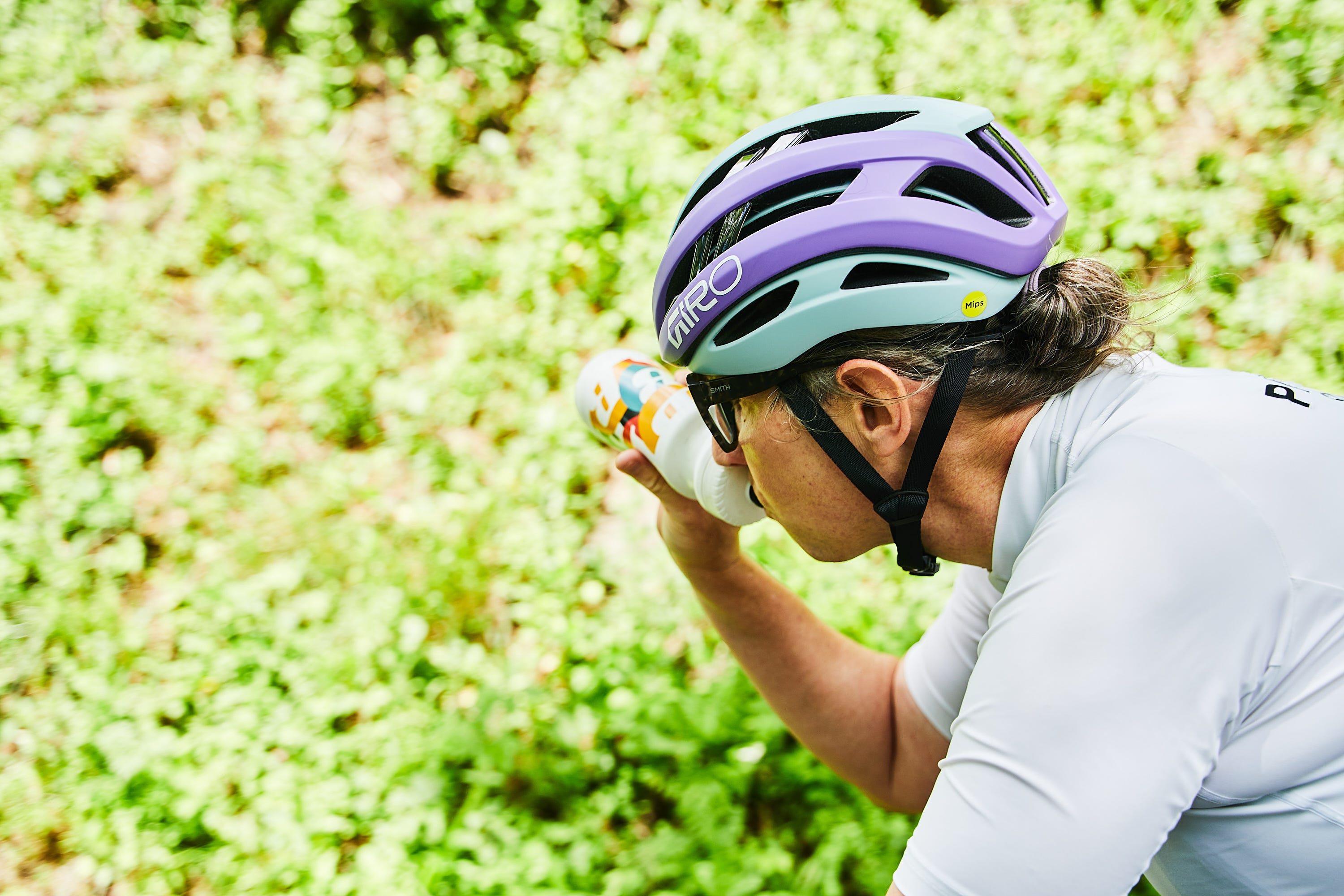
There’s no separate US safety standard for women’s bicycle helmets. A women’s model can give you a different size range, shape, color or ponytail opening, and that’s all. Your head shape and the helmet’s adjustment system decide the fit. Shop unisex helmets too, and hold every candidate to the same compliance and fit checks.
Choose a helmet for the riding you do
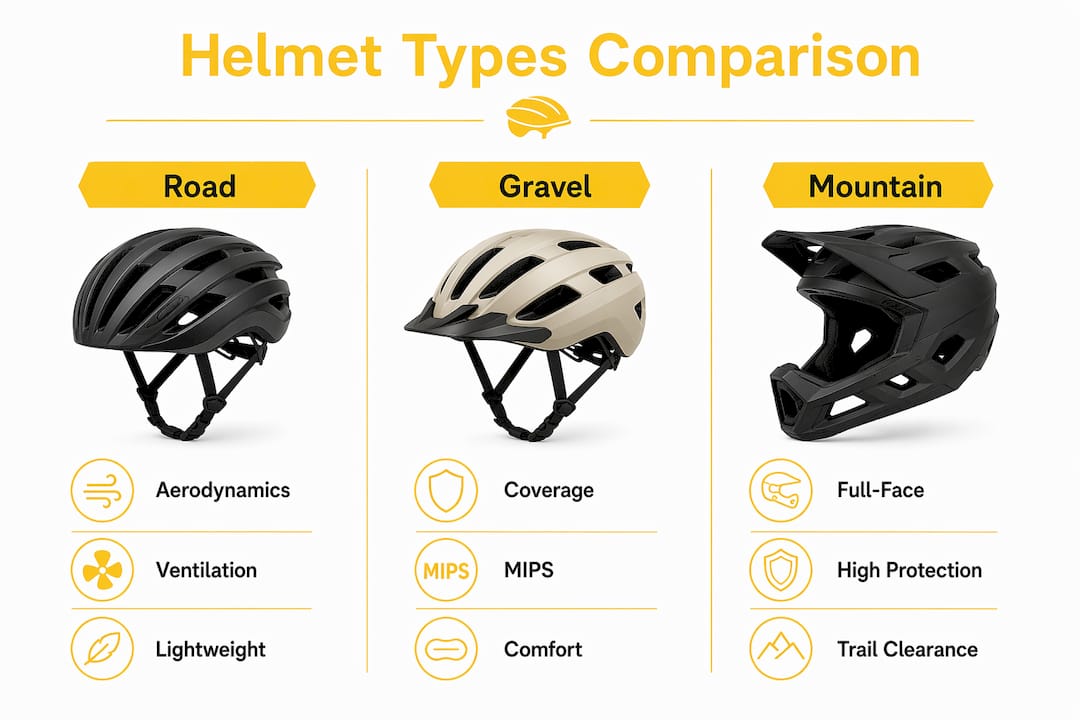
The kind of riding you do decides which features matter. A comfortable recreational helmet suits paved paths and weekend rides. Road cyclists care more about airflow and weight. Technical trail riders want different coverage. Your bike may cover several types of riding, so start with where you actually ride it.
| Your main riding | Features worth having |
|---|---|
| Casual rides and paved paths | Simple adjustment, comfort, ventilation |
| Road cycling and longer rides | Airflow, low weight, sunglasses compatibility |
| Everyday commuting | Easy adjustment, reflective details, a mount for a light |
| Mountain biking and trails | More coverage, a visor, a trail-specific fit |
| Specialized downhill or certain e-bike riding | A helmet made for that activity. An ordinary bicycle helmet label doesn’t cover it, so you may need a dedicated category or an additional standard. |
What about commuting?
Commuter helmets often add a visor, reflective details or a light mount. They help most if you carry the helmet into work or ride at different times of day. Make sure accessories don’t interfere with the fit or the manufacturer’s instructions. A helmet-mounted light supplements your bicycle lights and doesn’t replace them.

What US bicycle helmet certification means
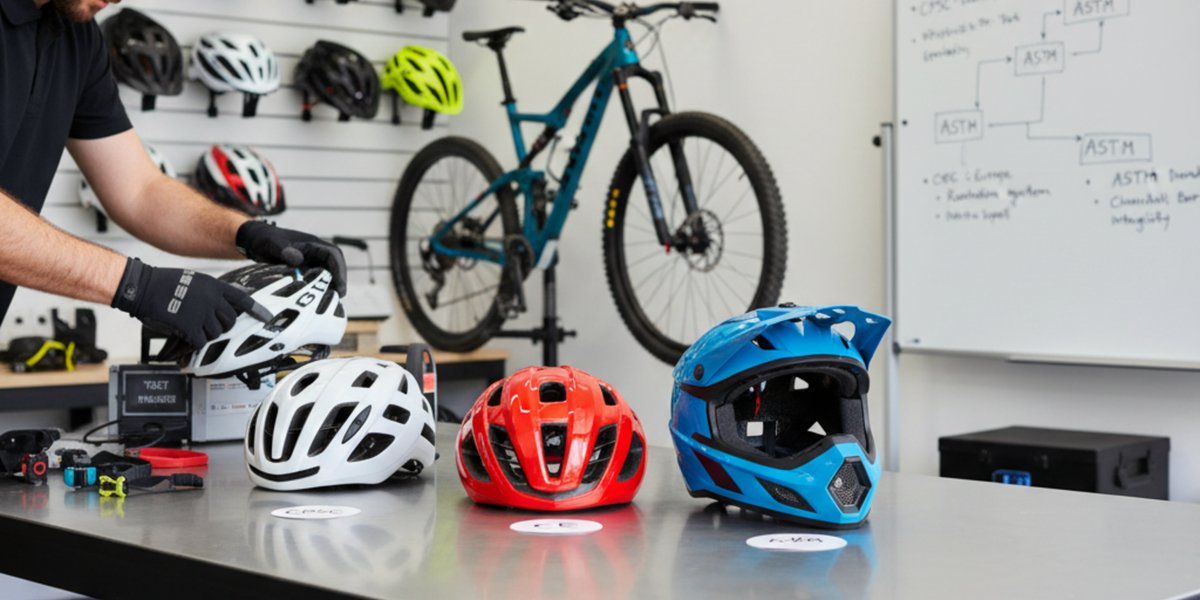
For bicycle helmets sold in the United States, the baseline is the Consumer Product Safety Commission’s standard, 16 CFR Part 1203. It sets requirements for impact attenuation (how well the helmet absorbs a hit), retention-system strength (the straps and buckle), positional stability (whether it stays put on your head) and peripheral vision.
CPSC compliance is the mandatory baseline. Independent lab ratings compare models against each other. Neither one guarantees an injury-free crash. The CPSC Bicycle Helmets FAQ explains the requirements and the information that must come with a compliant product.
Check the label on the helmet
Look for the certification information on the helmet itself. The required label includes a compliance statement, the responsible manufacturer or private labeler, manufacturing identification, and the month and year of manufacture. Fitting and use instructions must come with the helmet. An online “certified” badge, a seller’s promise or a technology logo tells you less than that physical label.
Manufacturers and importers carry the certification and testing responsibilities. CPSC sets and enforces the rules, so a retailer’s “CPSC approved” claim doesn’t mean CPSC staff inspected that helmet. Match the label and model details to the product you meant to buy, especially when you order from an unfamiliar marketplace seller.
Compare Virginia Tech ratings and helmet technologies
Virginia Tech’s Helmet Lab rates bicycle helmets with its STAR method. It uses 24 laboratory impacts at six locations and two impact severities. The tests measure linear acceleration and rotational head motion and turn them into a single STAR value. A lower value means better modeled performance, and the lab recommends helmets with four or five stars. You can look up your model in the Virginia Tech Bicycle Helmet Ratings database.
| Evidence or feature | What it tells you |
|---|---|
| CPSC compliance | The helmet meets the mandatory US standard |
| Virginia Tech STAR | How that exact model performed in the lab impacts compared with other helmets |
| Mips or another impact-management technology | One design approach to managing impact forces |
| Physical fit | Whether the size, shape and straps work for your head |
| Retail price | What you pay. It says nothing about fit or compliance. |
When two helmets both fit and comply, compare their model-level STAR results.
Why an older five-star review may disagree with the rating database
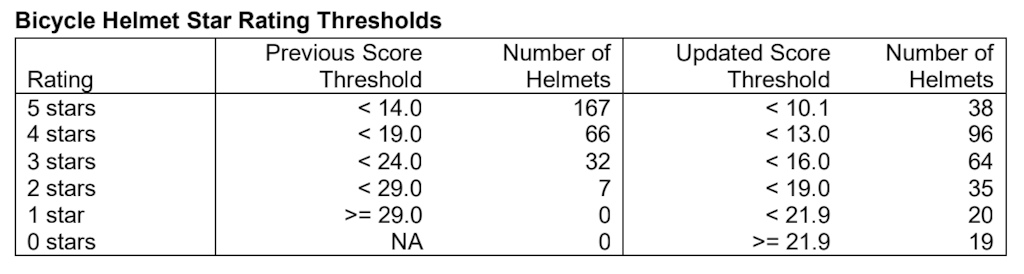
Virginia Tech changed its star thresholds on July 14, 2025. Before the change, a STAR score below 14.0 earned five stars. Now a five-star score must be below 10.1. In the lab’s sample of 272 bicycle helmets, 167 earned five stars under the old thresholds and 38 earn them under the new ones.
The recalibration moved the star classification of certain results. The helmets’ physical performance stayed the same.
One cyclist in 2026 chose a helmet based on a 2022 review showing five stars, then found three stars in a later listing. If your numbers disagree, confirm the manufacturer, model and variant, then compare the current published result with the older source. The threshold change is one explanation. A different product version is another.
If a helmet isn’t in Virginia Tech’s database, rely on the CPSC label on the helmet itself.
Are Mips and similar technologies worth looking for?
Mips is designed to manage rotational motion in certain impacts. WaveCel and KinetiCore take different design approaches.
A peer-reviewed 2024 study in Annals of Biomedical Engineering tested 30 bicycle helmets available in the United Kingdom. Three of the models came in matched versions with and without Mips. Across 72 corresponding impacts under specified oblique-impact conditions, the Mips versions recorded 19% lower peak rotational velocity. Peak rotational acceleration was 27.6% lower, and BrIC, a rotation-based brain-injury measure, was 18.5% lower. Peak linear acceleration showed no statistically significant difference.
The 2024 helmet biomechanics study measured laboratory kinematics. Those percentages describe the tested helmets and don’t show reduced concussion rates among cyclists. Judge the complete helmet by its independent, model-level results.
Measure your head, then check helmet shape
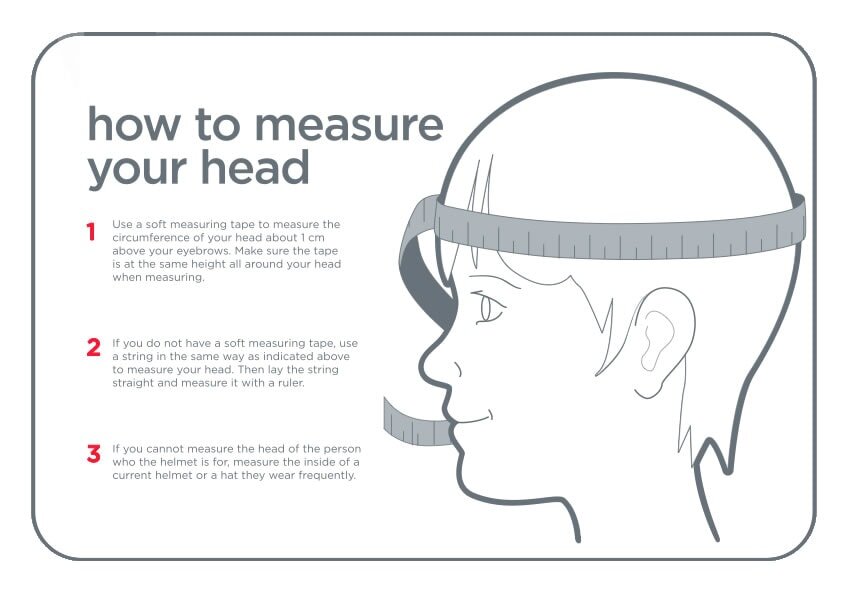
Head circumference tells you which sizes to try. Two helmets marked with the same size letter can have different interior shapes and adjustment ranges.
Wrap a flexible tape around the widest part of your head, about one inch above your eyebrows. Keep it level and record the result in centimeters, since most size charts use metric. No tape? Use a piece of string and measure it against a ruler.
Compare your number with the chart for that exact model. A small in one brand can overlap a medium in another, and some models list overlapping sizes themselves. Trek’s Rally WaveCel, for example, lists 51 to 57 cm for small, 54 to 60 cm for medium, 58 to 63 cm for large and 60 to 66 cm for extra-large. Those ranges apply to that model only.
Why the right size can still feel wrong
A helmet’s internal shape matters as much as its printed range. Some heads are rounder, others longer from forehead to back. “Round” and “long oval” are handy descriptions, though no standard measurement system defines them.
| What you notice | What to try |
|---|---|
| Tight across the sides despite a correct size range | A differently shaped model |
| Snug at the front and rear, loose at the sides | Other shell shapes |
| Shifts a lot after normal adjustment | Refit it following the instructions, and reject it if it still moves |
| Two listed sizes cover your measurement | Both sizes, following the manufacturer’s fit guidance |
In a 2025 discussion, one rider with a round head of about 54 cm found many helmets in her size range too tight across the sides. Another, with a long-oval head, had a snug front-to-back fit with unwanted space at the sides.
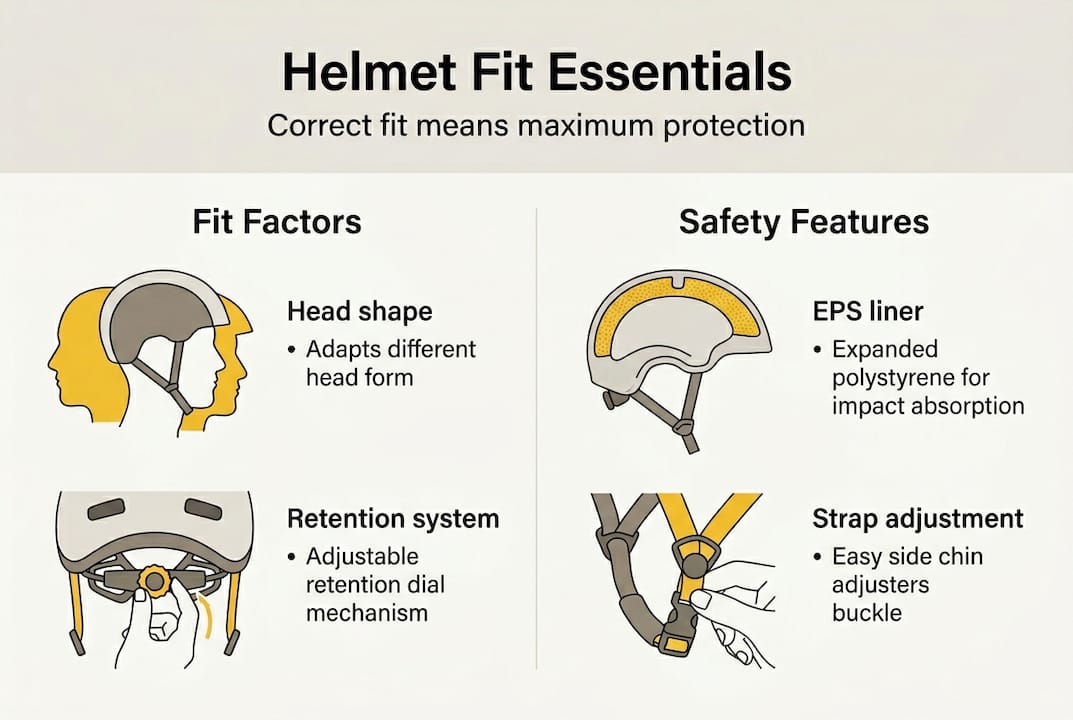
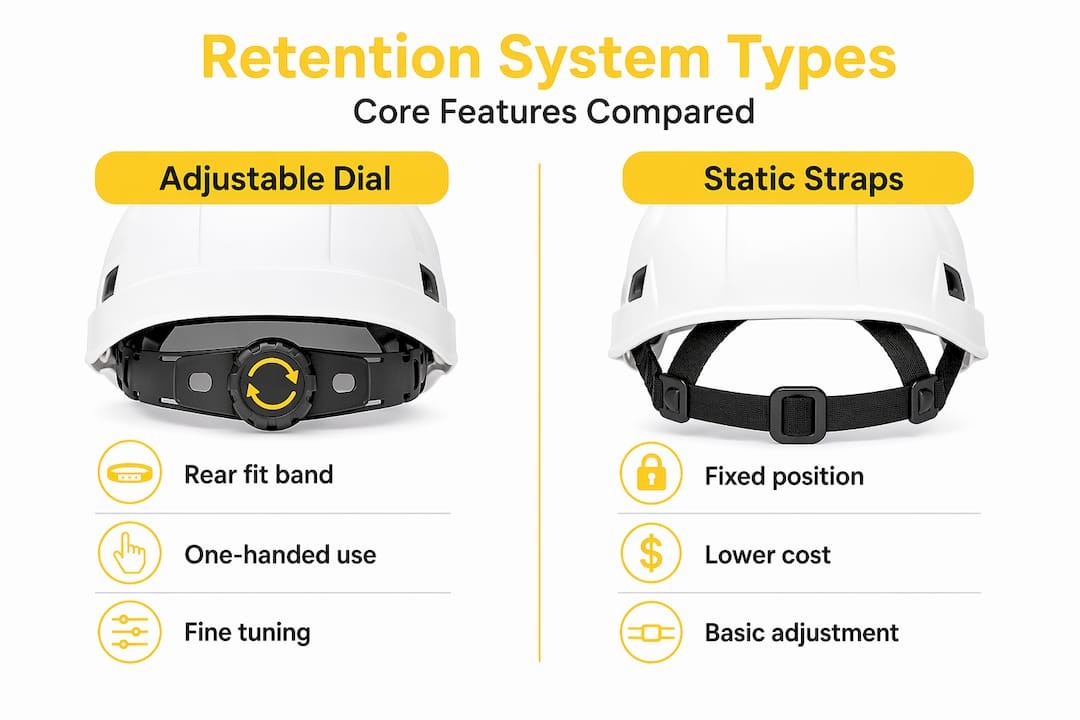
A rear dial tightens the straps and cradle but can’t change the shape of the shell. If the shape is wrong, you need a different helmet. Brand-wide claims about round or oval fit are a poor substitute for trying the exact model.
Test the fit before you buy
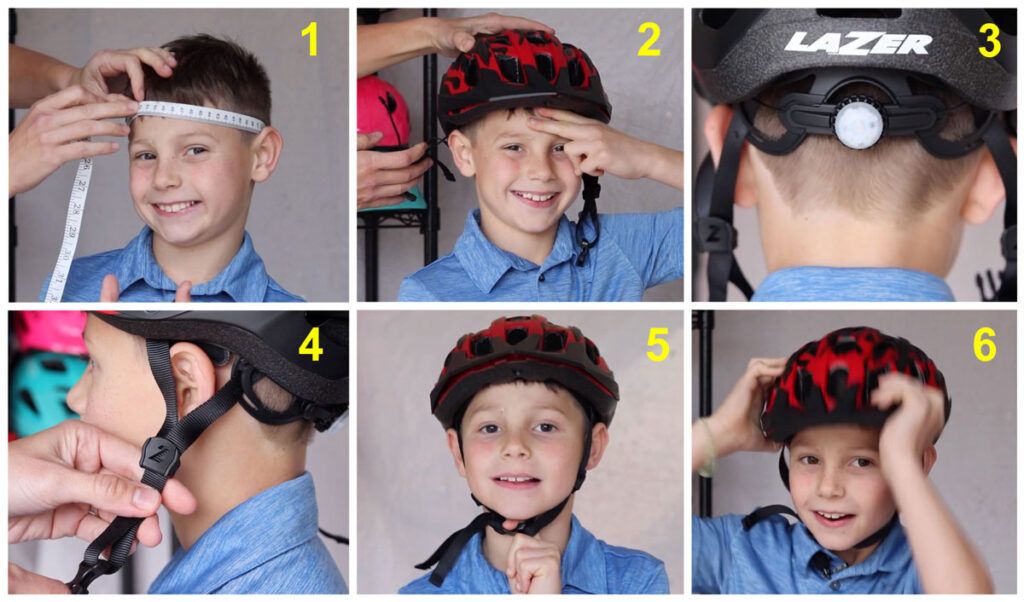
A helmet should feel snug and stay in place without painful pressure. If it moves when the retention system is properly adjusted, comfort doesn’t count for much. Compare helmets in person when you can. If you’re ordering online, read the return conditions first, especially if past helmets pressed on your temples. A complicated fit problem is easier to solve in a bike shop where you can try several models.
Before choosing a helmet by its size label, Verify fit and CPSC labeling on a bike helmet.
- Level placement: REI’s fitting guidance puts the front edge no more than about one inch above your eyebrows.
- Rear adjustment: The dial or cradle holds the helmet steady without painful tightening.
- Straps: REI’s guidance shows a V shape under each ear. Fasten the chin strap buckle and follow the manufacturer’s fit check.
- Movement: Shake your head. If the helmet rocks or slides up and exposes your forehead, it’s the wrong size or shape.
A helmet that needs extreme tightening to stay put calls for a different size, shell shape or model. Once you’ve chosen one, follow the instructions that came with it for the final adjustment.
Ponytails, braids, and textured hair
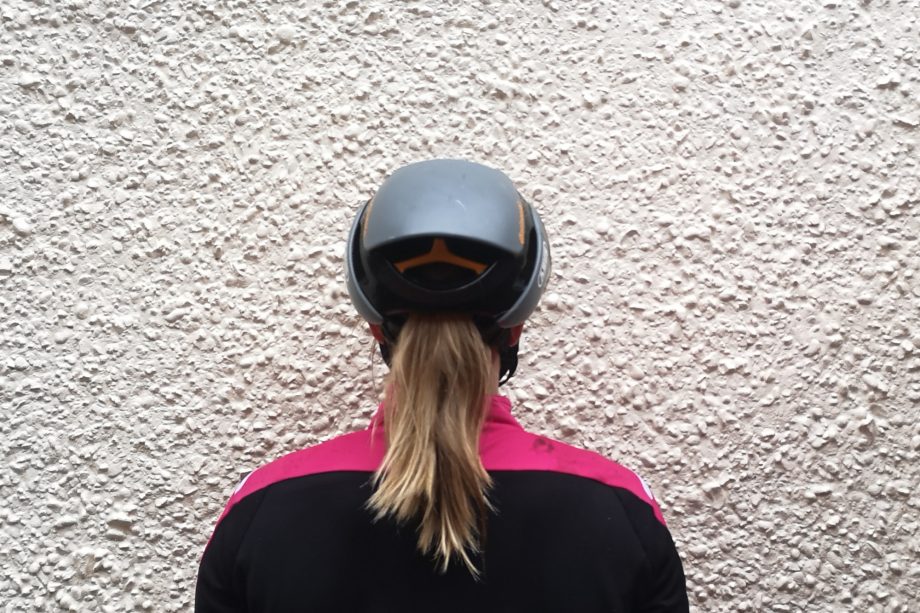
Hair affects fit when it pushes the shell out of position, crowds the straps or blocks the rear adjustment. Look for a ponytail-friendly opening, or a cradle placed where a braid or ponytail can pass without lifting the helmet. Test every helmet with the hairstyle you’ll ride in. A fit you got with your hair arranged differently can change on your next ride.
If your hairstyle affects helmet position, Check helmet fit with a ponytail or braid without compromising the fit.
A rider had a 62 cm (about 24-inch) head and struggled to find ponytail clearance. She later reported that a unisex Giro Syntax worked for her. Good size and hairstyle combinations aren’t limited to women’s labels.
Thick, curly, braided and textured hair adds volume that the shell and retention system have to accommodate. One cyclist with 4B/4C hair described trouble with ordinary helmet fitting. Cornrows worked, but she didn’t want to depend on them every day, and a low ponytail hadn’t worked. Compare helmets and adjustment layouts with a realistic version of your riding hairstyle. Hair texture and styling preferences belong in the fit decision.
If your hairstyle prevents a secure fit, change the helmet or its configuration. Never loosen the straps to make room for a ponytail, bun or braid.
Which helmet features are worth paying for?
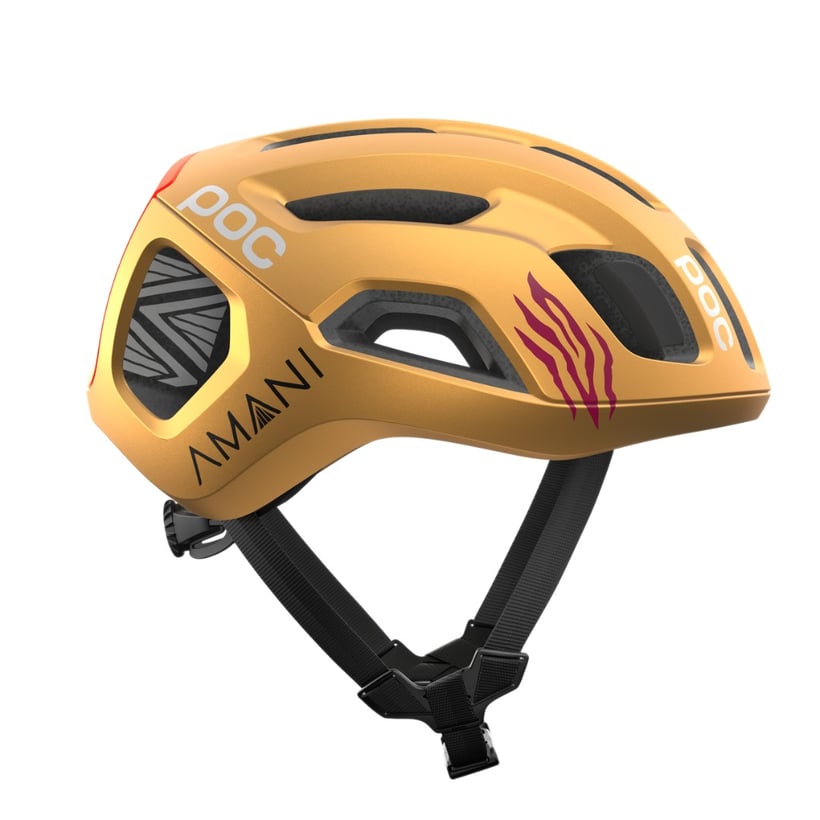
Once fit and compliance are settled, airflow, weight, coverage and convenience are fair ways to choose. Pay for the ones that solve a problem in your riding.
Ventilation and comfort
Airflow matters most in warm weather and on long efforts. Road helmets stress ventilation, and aerodynamic designs trade some airflow for lower drag. Vent count alone doesn’t tell you which helmet runs cooler, so look for product-specific testing when you compare expensive models.
Weight and riding position
Weight matters more on a long ride than on a short trip through town. Check a lightweight helmet’s impact performance separately, using model-level evidence. Test comfort in your normal riding position too. A helmet that feels unobtrusive when you’re standing can feel different when you lean forward on a road bike.
Visors, coverage, and accessories
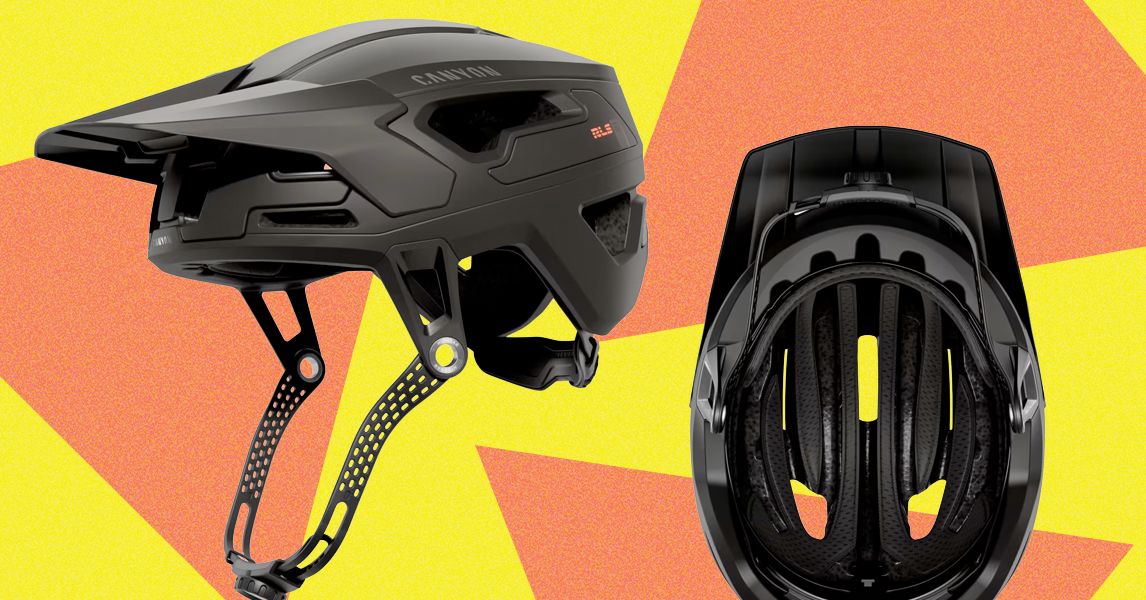
Mountain helmets often add visors and extra rear coverage, and road helmets may have storage for sunglasses.
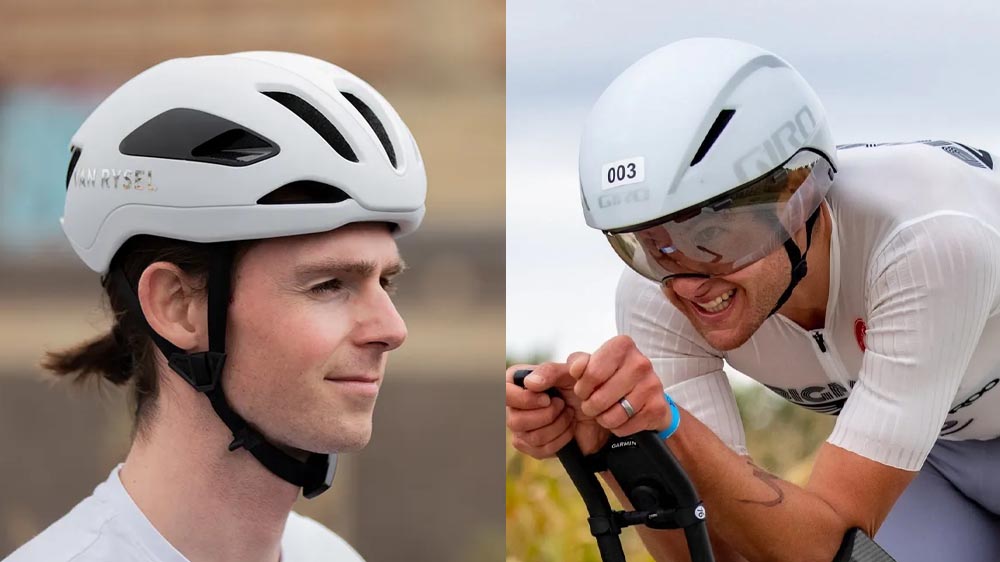
A visor suits trail riders. Sunglasses storage helps on long road rides. Easy adjustment pays off on a commute where you take the helmet on and off all day. Follow the manufacturer’s instructions for attaching accessories, and check that the helmet stays comfortable and adjusted with them on.
How much should you spend on a bicycle helmet?
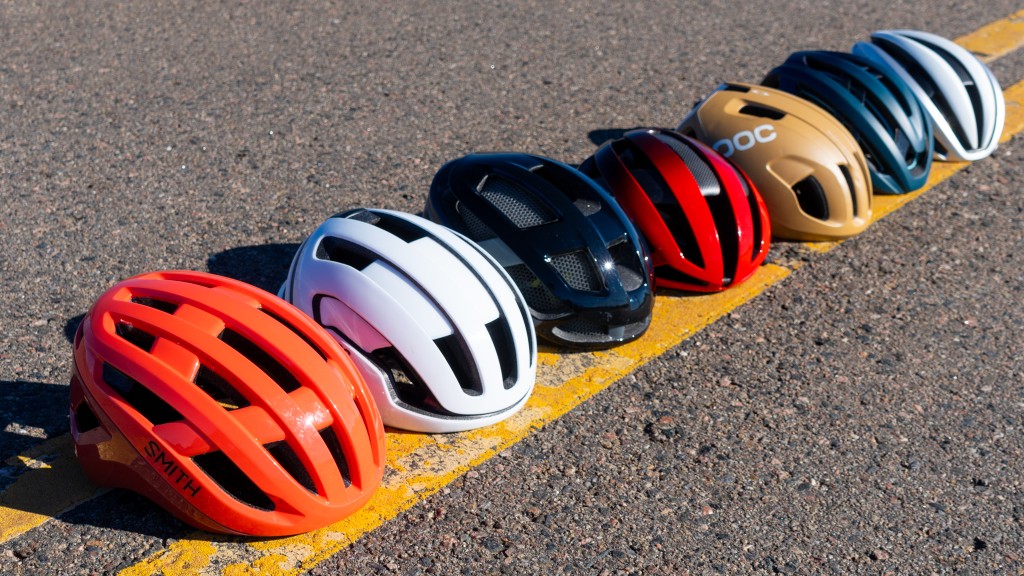
A compliant helmet that fits can be inexpensive. Set a budget, then shortlist helmets that meet your fit and compliance needs. When the exact model has a Virginia Tech rating, use it to separate candidates regardless of price.
A 2024 laboratory study of 30 helmets available in the UK, priced from £9.99 to £135, found no statistically significant relationship between price and exposure-adjusted modeled protection. Those were selected UK products tested with one laboratory method, so for a US purchase, compare US listings and exact-model results.
Higher-priced helmets can bring refinements in weight, ventilation, adjustment, comfort or aerodynamics. They’re worth the money when they solve a need you actually have.
Count the cost of a wrong fit
One rider in 2026 didn’t want to spend more than $200 and wondered whether a local bike shop beat ordering online. Another, with a round head, described the hassle and expense of returning helmets that matched the size chart but squeezed the sides. In both cases the sticker price was only part of what the helmet cost.
Your final helmet-buying checklist

Run through these five checks before you pay.
- Know your ride. Confirm the helmet is made for the riding you do.
- Find the CPSC label. Check it on the physical helmet. If you’re buying online, check it when the helmet arrives.
- Measure your head. Compare your centimeters with the chart for the exact model and size.
- Pass the fit test. Level, stable and free of painful pressure.
- Look up the rating. Find the exact model in the Virginia Tech database, or note that it’s unlisted.
When to reject or replace an existing helmet
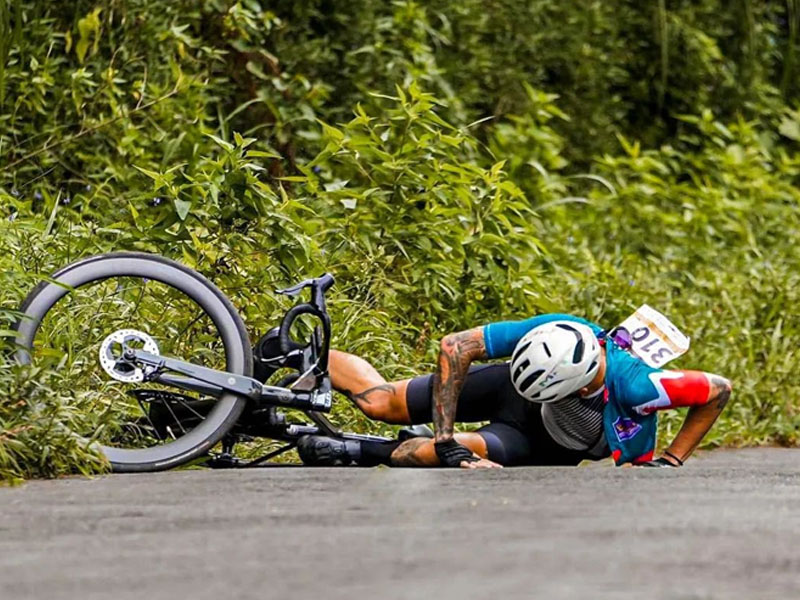
Check an old, secondhand or crashed helmet before you ride in it. Impact damage can be invisible, and the CPSC-required warning says so. A helmet can look intact after a significant impact while its protective structure is already damaged. Follow the manufacturer’s instructions on replacement after an impact. A secondhand helmet with an unknown crash history can’t be judged by its looks.
There’s no universally required federal replacement age of three, five or any other fixed number of years. Check the manufacturer’s model-specific guidance and manufacturing information, plus the condition of the shell, straps, buckle and adjustment system. Clean the helmet as the manufacturer instructs, because the wrong cleaner can damage its materials.
Check recalls by exact model
Search the CPSC Recalls and Product Safety Warnings database using the exact product identity. On September 17, 2026, CPSC announced a recall of about 315 Basecamp HT-10 bicycle helmets. The notice cited failures in impact attenuation, positional stability and certification requirements, plus a battery-labeling issue. Owners of affected units should stop using them and seek a refund through the recalling firm.
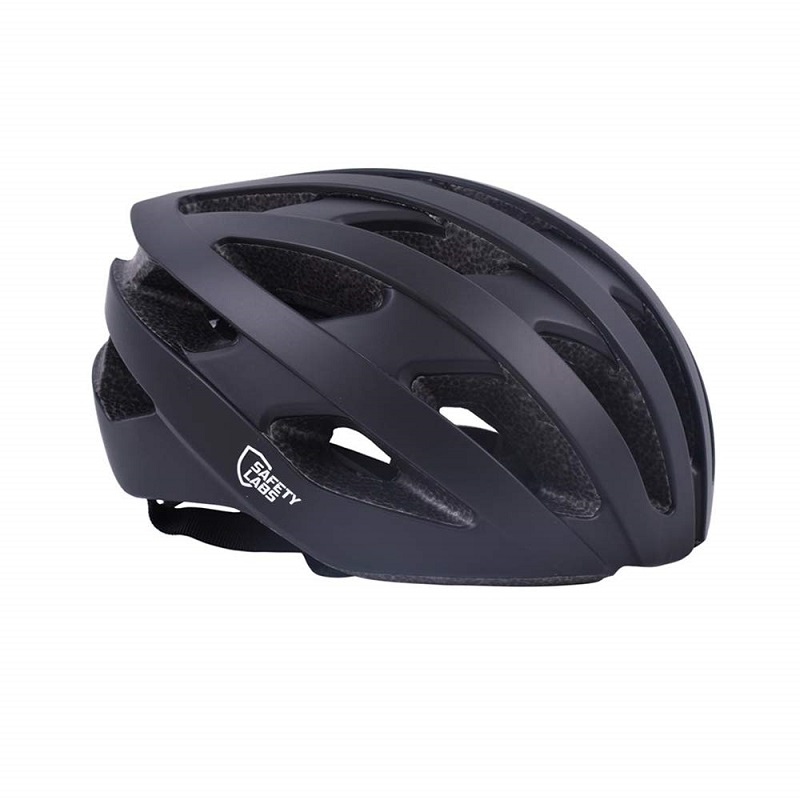
A helmet covered by a recall, or one that has taken a significant impact, comes out of use before your next ride. Follow the remedy the manufacturer or CPSC specifies.
Before you order
A CPSC label tells you a helmet meets the US standard. It doesn’t tell you it fits you. Try the exact size on your head with the hair you ride in, and shake your head. If it rocks or squeezes your temples, you need a different shell shape, because the dial can’t change the shell. One rider with a round head kept returning helmets that matched the size chart but pinched at the sides. Then check that model’s Virginia Tech rating, but remember the lab changed its star thresholds in July 2025, so an older five-star review may not match. And look the model up in the CPSC recall database before you order.