
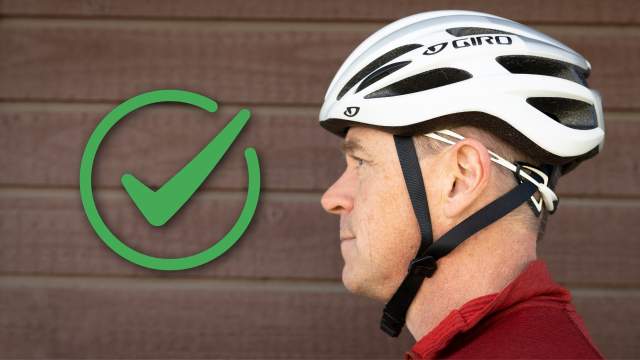
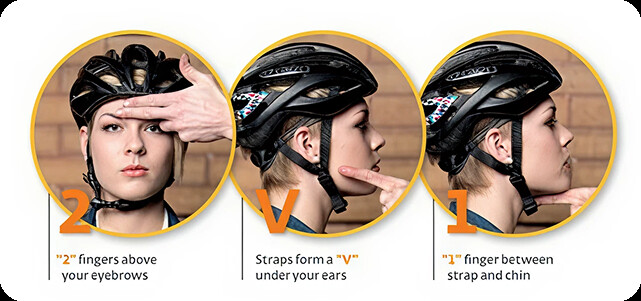
Set the helmet level, with its front rim about two finger-widths above your eyebrows. Form a V with the side straps around each ear, and fasten the chin strap snugly, with about two fingers fitting beneath it. These are the basic checks illustrated by the National Highway Traffic Safety Administration.
Fit the helmet in this order before you ride.
Check the helmet’s size and condition before you adjust it
Start with a helmet that matches your head size and shape. A rear dial or tight chin strap can’t fix a shell that doesn’t seat properly.
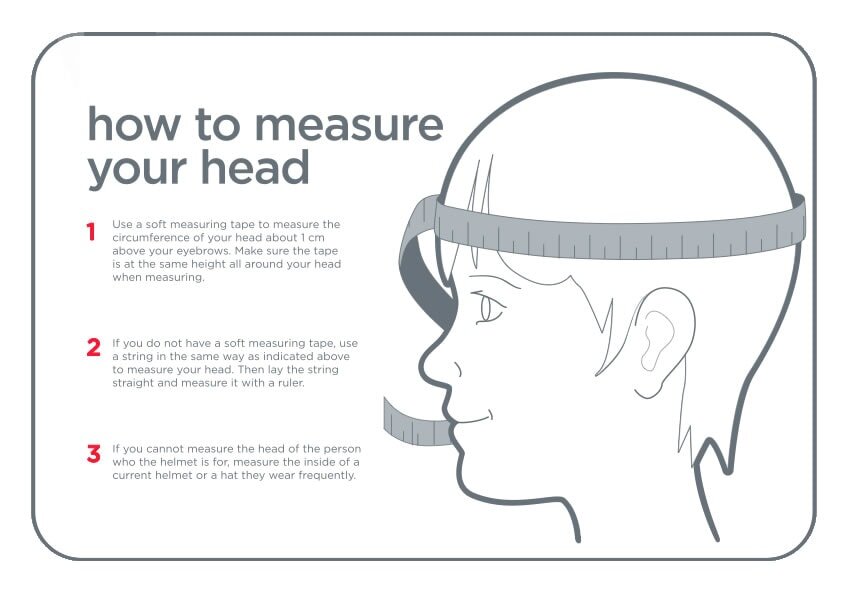
Wrap a flexible measuring tape around the widest part of your head, keeping it level. For most riders, that is about 1 inch above the eyebrows.
No tape? Measure a piece of string against a ruler. Then find your circumference on the size chart for the exact make and model, as REI’s bicycle helmet guide describes. This measuring line sits in a different spot from where the helmet’s front rim goes when you wear it.
Read the manufacturer’s instructions before you touch any fittings. Some helmets use a dial and rear cradle, others a retention band or supplied pads. Size letters and adjustment ranges vary by model, so a Medium that fits in one design may be wrong in another.
Trek’s Bontrager sizing guidance shows how sizes overlap: Small covers 51 to 57 cm and Medium covers 54 to 60 cm. If your measurement falls inside both ranges, try both on.
Now put the helmet on. It should settle onto your head instead of sitting on top, with no obvious gaps and no sharp pressure at the forehead or temples. Circumference only gets you started. The inside shape of the shell matters too, so a helmet that fits by the numbers but still gaps or pinches needs a different shape or model.
Don’t fit or ride a helmet that has taken a crash or significant impact. The liner can be damaged with no visible sign. Follow the manufacturer’s return or replacement instructions. A cracked shell, damaged liner, broken buckle, worn straps or missing fitting parts mean the same thing: stop using it.
Position the helmet level on your forehead

Set the helmet straight and level, with the front rim about two finger-widths above your eyebrows. Check a mirror from the front and from the side. The helmet should cover your forehead, neither tipping backward nor dropping into your eyes. Move any hair or headwear out of the way and reset the shell before you tighten anything.
Snug the rear dial without overtightening
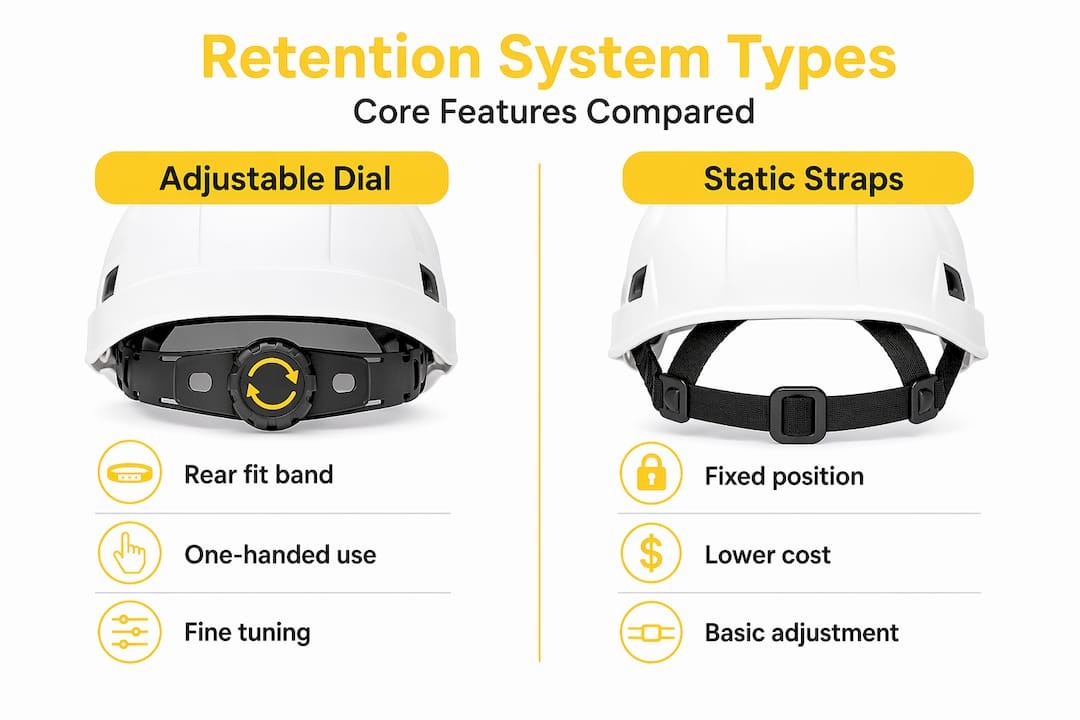
With the shell level, turn the rear dial until the helmet sits securely without a painful squeeze. On many road and recreational helmets, the dial tightens a band or cradle around the back of your head. Other designs use fitted pads or different hardware.
Adjust in small steps, in the order your model prescribes. The cradle should rest where the maker intends, clear your hairstyle and hold the shell in place. If your forehead or temples start to hurt as you tighten, back the band off.
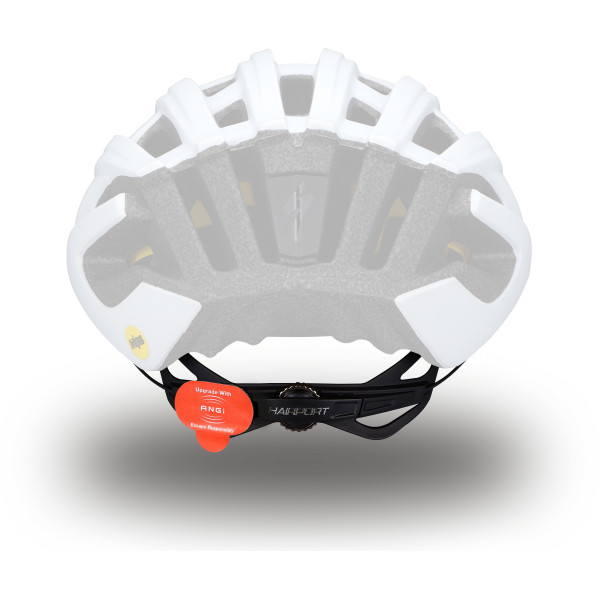
The dial and the chin strap do different jobs. The dial snugs the shell to your head, and the chin strap keeps the helmet on. Buckle the strap even when the dial feels tight.
If the shell still rotates with the band snug, the size or inside shape is wrong. Some helmets have internal parts built to move against the outer shell, so check the manual if you can’t tell which part is shifting.
Set the side straps in a V around each ear
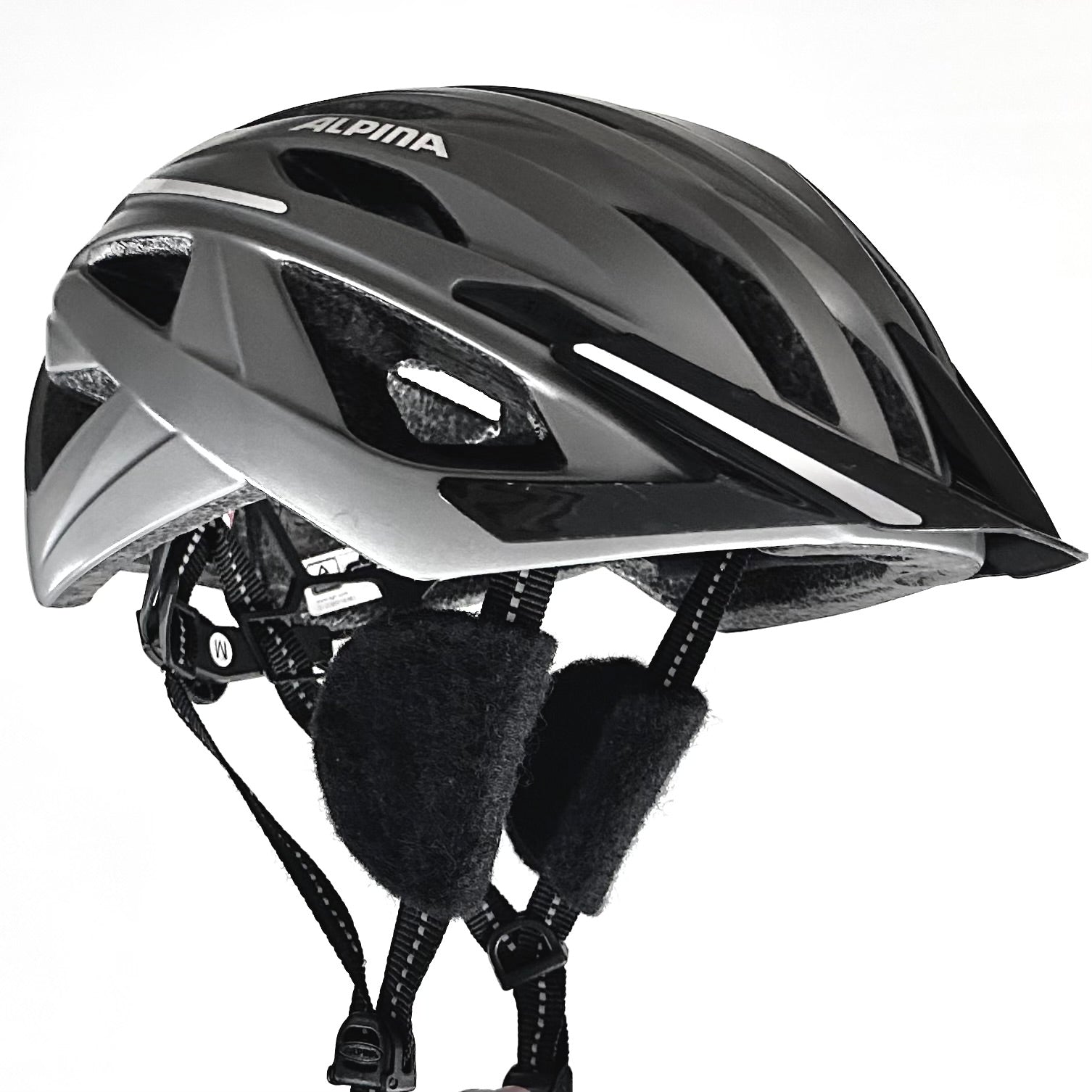
Lay the side straps flat so they form a V around each ear. From the side, one length passes in front of the ear and the other behind it, meeting near the lower part of the ear.
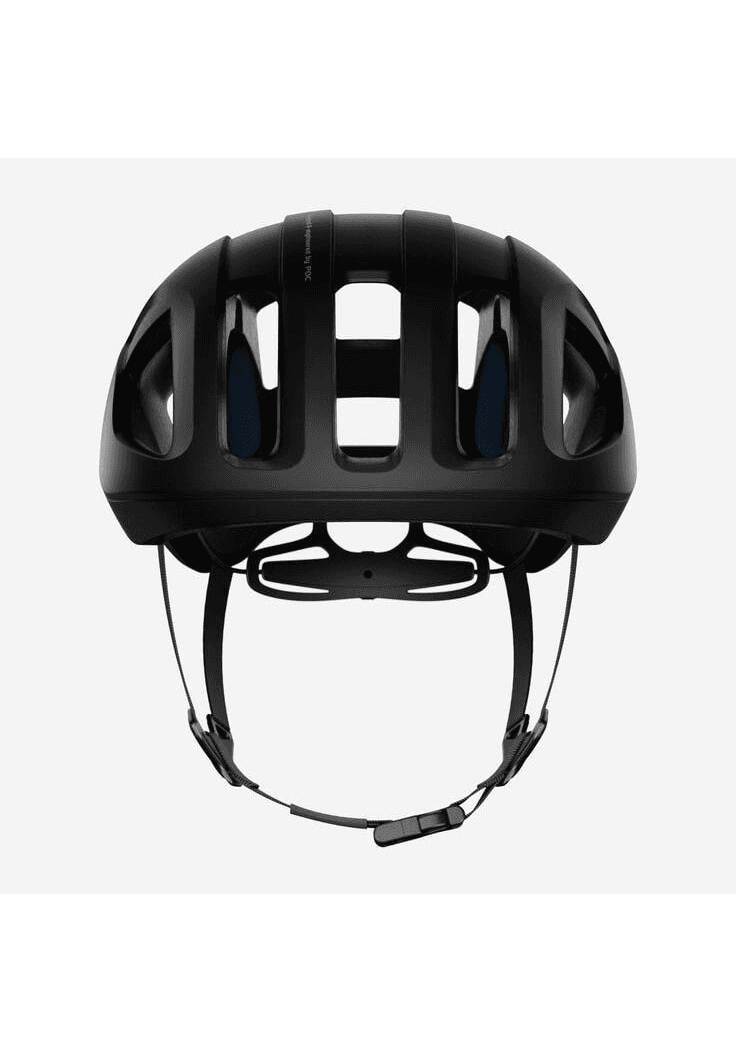
Check both sides in a mirror. Untwist the webbing, slide the adjustable divider into place and lock it. A loose slider lets the V change.
Straps that hang loose behind your ears while the chin strap feels too tight point to the divider and the strap route. Fix those before you pull the buckle strap harder.
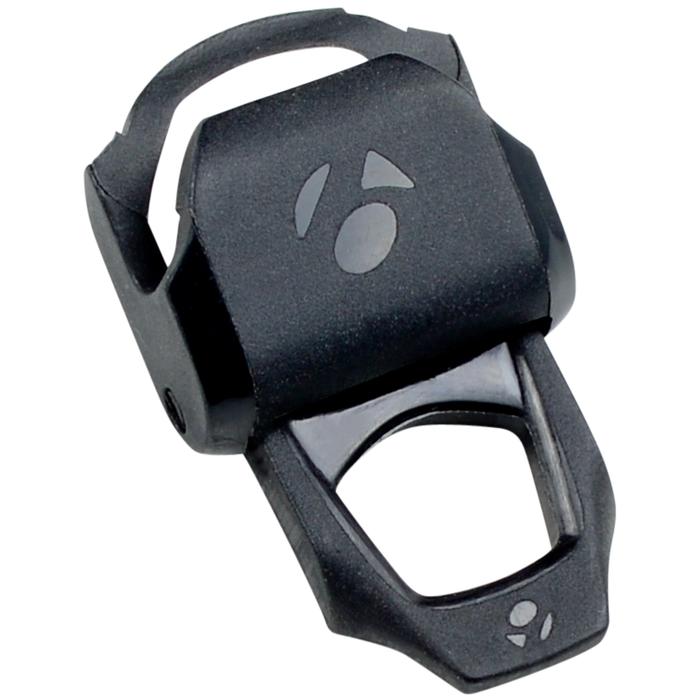
Once both Vs look right, buckle the chin strap and look at them again.
Buckle the chin strap snugly without pain
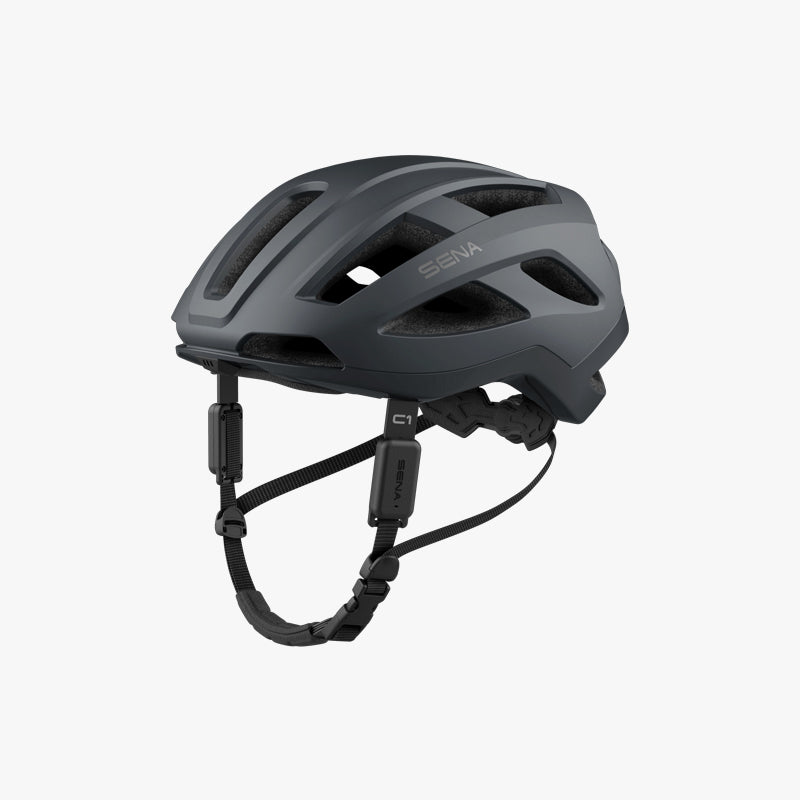
Close the buckle and pull out the slack until the strap fits snugly under your chin, with about two fingers fitting beneath it.
Make sure the buckle is fully engaged. A click-type buckle stays closed when you gently pull the halves apart.
You should be able to open your mouth and move your jaw normally. The strap shouldn’t rub your throat or need painful pressure to hold the helmet in place. If the buckle sits awkwardly, check the strap route and ear dividers before tightening again.
Then open your mouth wide. REI and UC Davis both describe a slight downward pull on the helmet when the strap is adjusted correctly. If opening your mouth hurts or shifts the shell, go back to the strap route and the shell position.
Test the fit before you ride
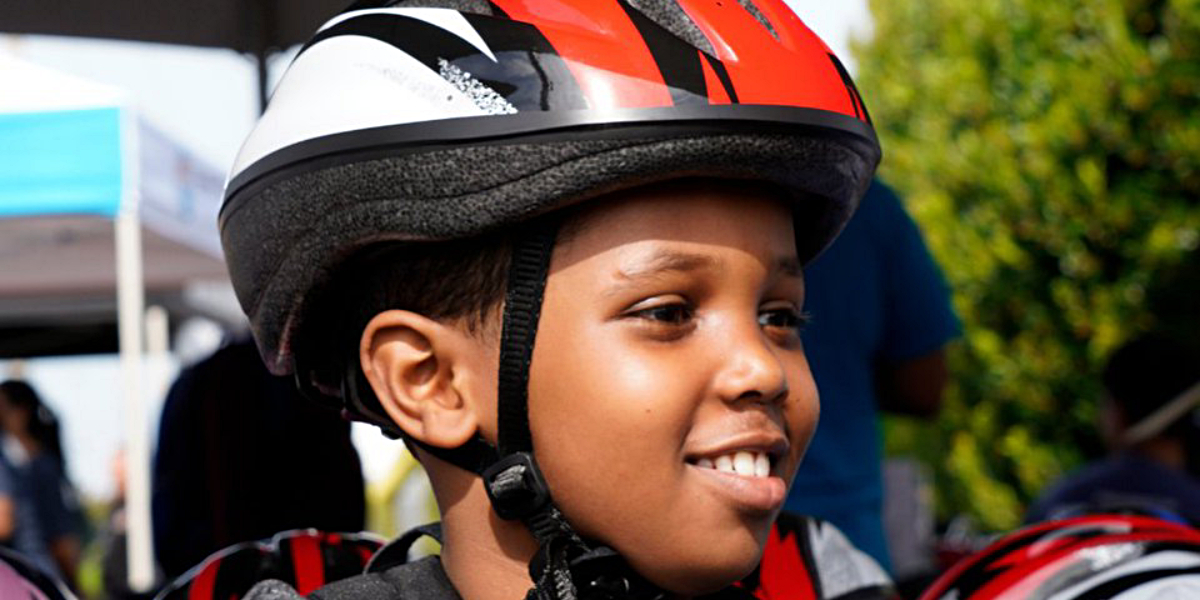
A helmet can look right in the mirror and still slide when you move. With the buckle fastened, check its position once more. Then shake your head gently and push the helmet with your hands, side to side and front to back. Watch for slipping or rocking that exposes your forehead or moves the rim toward your eyes.
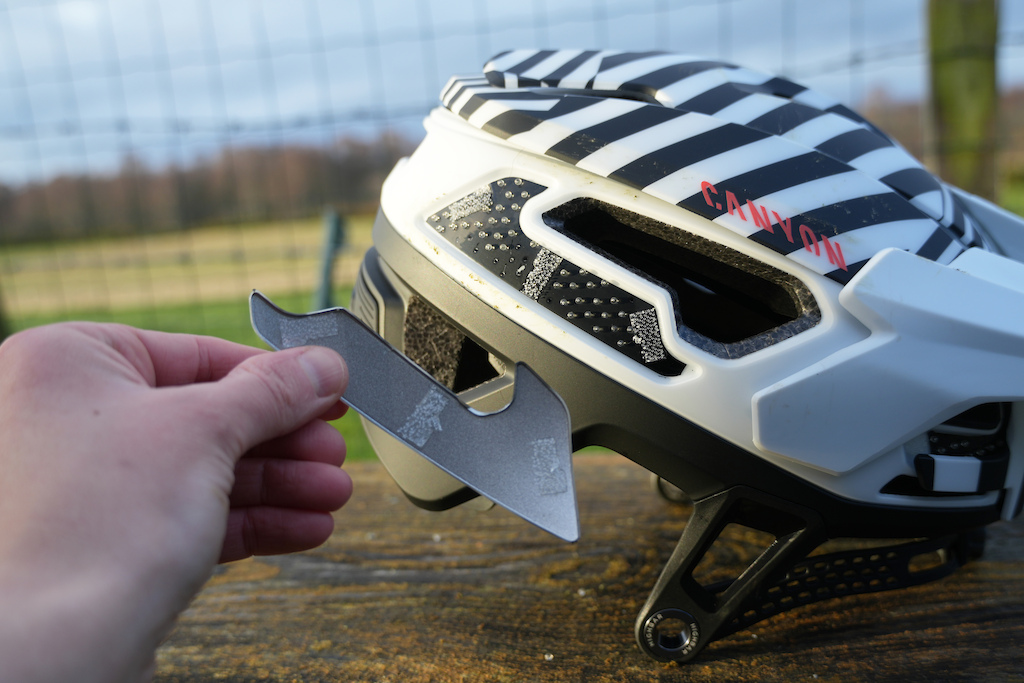
The US Consumer Product Safety Commission sets lab requirements for impact attenuation, positional stability, retention strength and peripheral vision under 16 CFR Part 1203.
If one check fails, fix that part and run the whole sequence again from the start.
Troubleshoot a helmet that slips, pinches, or won’t stay level
Fix one part at a time. If you tighten everything at once, you can’t tell whether the shell size, shell position, a strap divider or the dial is causing the trouble.
| What happens | Likely cause | What to do |
|---|---|---|
| Helmet tips backward | Shell position, front and back strap length, hair | Reset it level and follow your model’s strap route |
| Helmet drops toward the eyes | Size, cradle or straps | Pull it back to level, then retighten the dial and straps |
| Helmet rotates sideways despite a tight dial | Head measurement, shell shape, cradle or pads | Compare your measurement with the size chart again and try a different shape |
| Straps stay loose behind an ear | Side divider and V | Untwist the webbing and slide the divider until the V closes |
| Chin strap rubs the throat | Buckle route, divider position, tension | Correct the route and retighten until snug |
| Forehead or temples develop pressure points | Shell shape, band tension | Loosen the band or try another shell shape |
| Helmet sits on top of your hair | Riding hairstyle, cradle clearance | Refit with the hairstyle you ride in, or try another model |
Sideways movement with a tight dial points to the shell. The band can reach a comfortable tension while the shape still doesn’t match your head. Try another size or inside shape.
If the helmet can’t sit level, keeps slipping after the adjustments for your model, or presses painfully, switch to a different size or shape, or get fitted in person at a bicycle shop. Trek recommends replacing its helmets after three years.
Fit a helmet with ponytails, braids, or natural hair

Fit the helmet with your hair arranged the way you ride. A ponytail or bun can get in the way of the rear cradle, and extra hair volume changes how low the shell sits.
One rider with a head circumference of about 24 inches (approximately 62 cm) wanted a helmet that would also take a ponytail. Another found that a Medium worked over braids, yet even an XL sat high over loose natural hair.
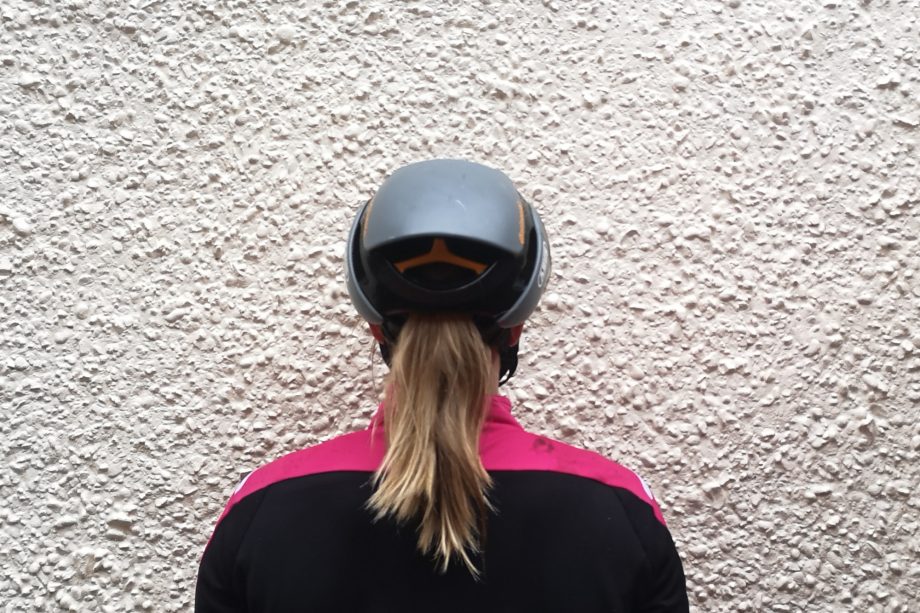
If the helmet presses on a ponytail, move the ponytail until it clears the cradle and the shell sits level. Then recheck the forehead, both ear Vs, the chin strap and the movement test. Any cap, liner or hair accessory you wear under the helmet must also match the manufacturer’s instructions.
If you get persistent pain or significant headaches, stop forcing the fit and talk to a professional. If the shell won’t seat over your riding hairstyle, try a different design.
When it still doesn’t fit
Do the fit in order and don’t skip back. Size first, then level on your forehead, then the dial, the V at each ear, the chin strap, and last the shake test. If something fails, fix that one thing and run it again from the top. If the helmet keeps slipping or pressing even after everything your model allows, it’s the wrong shape for your head, and a different helmet will do more than another turn of the dial. Do all of this with your riding hairstyle in place, and retire any helmet that has taken a crash.