
Match the saddle to your riding position and sit-bone width, look at how its shape and relief design spread pressure, and confirm its rails fit your seatpost clamp. A women’s label, thick padding or a big cutout predicts nothing about comfort. The saddle that holds up on a real ride in your usual posture is the one to keep.
A stock saddle can feel fine for twenty minutes and miserable an hour later. A softer replacement can fix that, then start rubbing the inside of your thighs. Two saddles with nearly identical published widths can feel very different once you’re pedaling.
Start with where and how you ride, narrow the options by fit and contact shape, and rule out incompatible models before you pay for a trial.
Start with how you ride
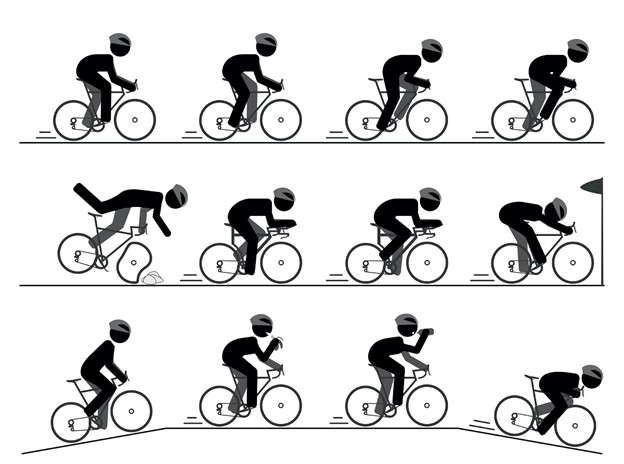
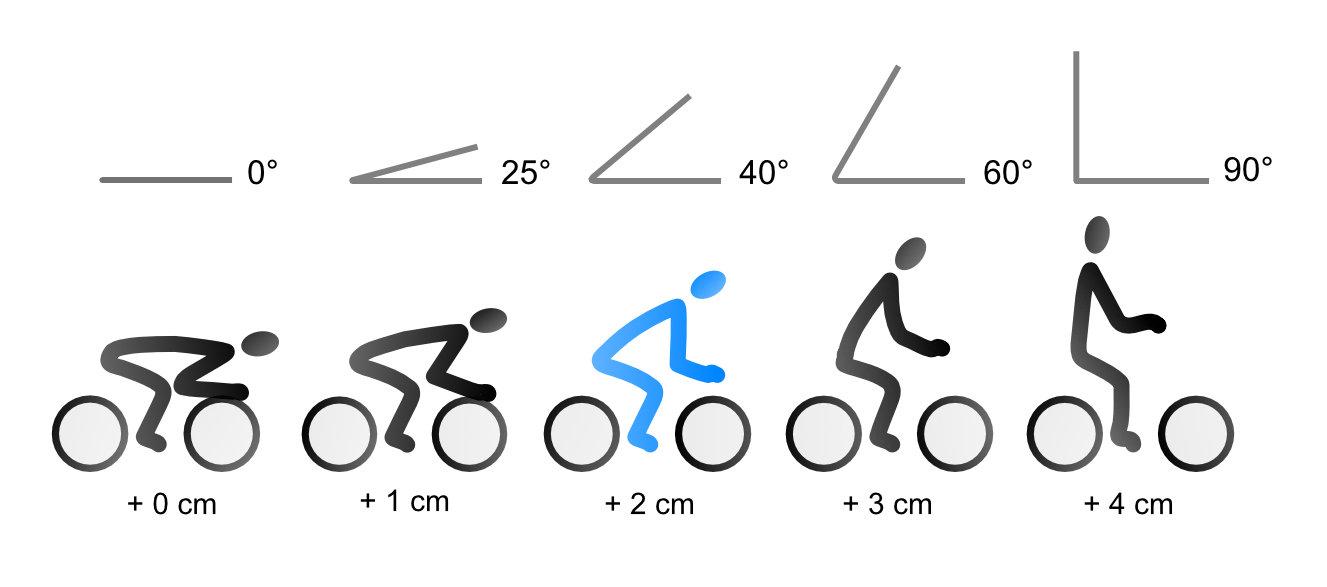
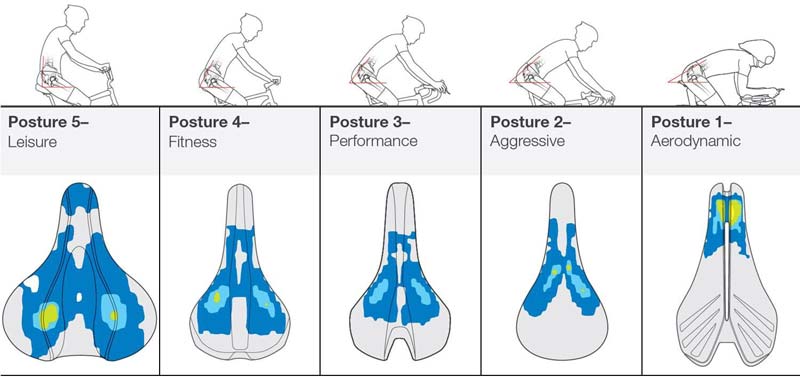
Your riding position decides how your pelvis meets the saddle. Begin with the posture you hold for most of a ride: upright, leaning forward or moving around.
Two road riders can load a saddle very differently. One stays fairly upright on the hoods; another spends long stretches much lower. Gravel and mountain bike riders shift their weight constantly. Whatever you ride, the saddle has to support the positions you use and let you pedal and move freely.
| Riding situation | Rear support | Relief and nose | Test it by |
|---|---|---|---|
| Relaxed city riding | Stable support while upright | Pedaling clearance without rubbing | Your normal commute in your usual clothes |
| Moderately forward road or gravel | Support as you lean forward | Pressure when your posture changes | Typical seated terrain and duration |
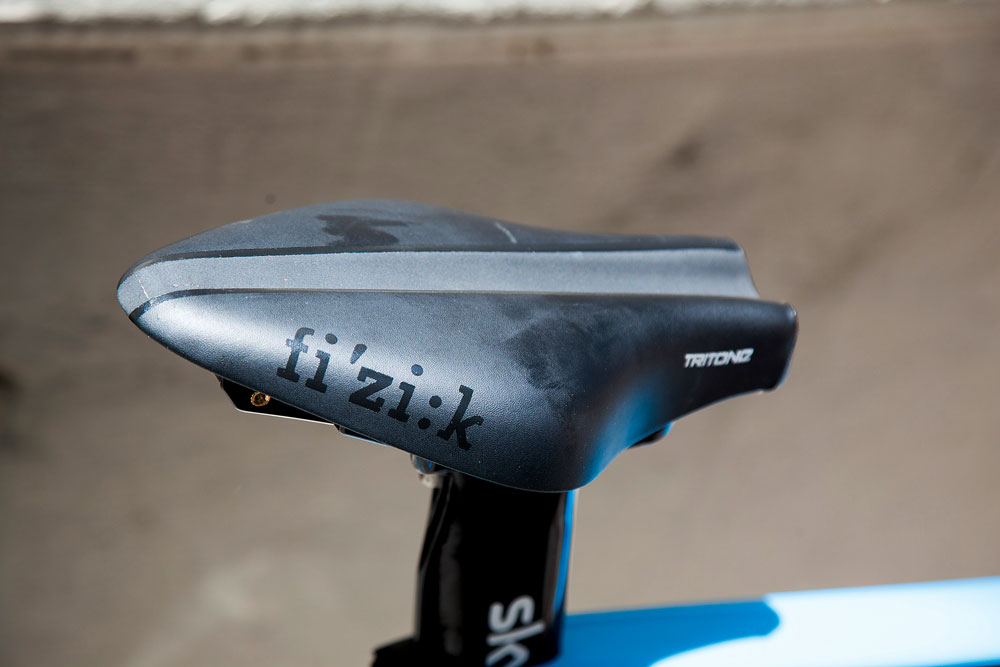
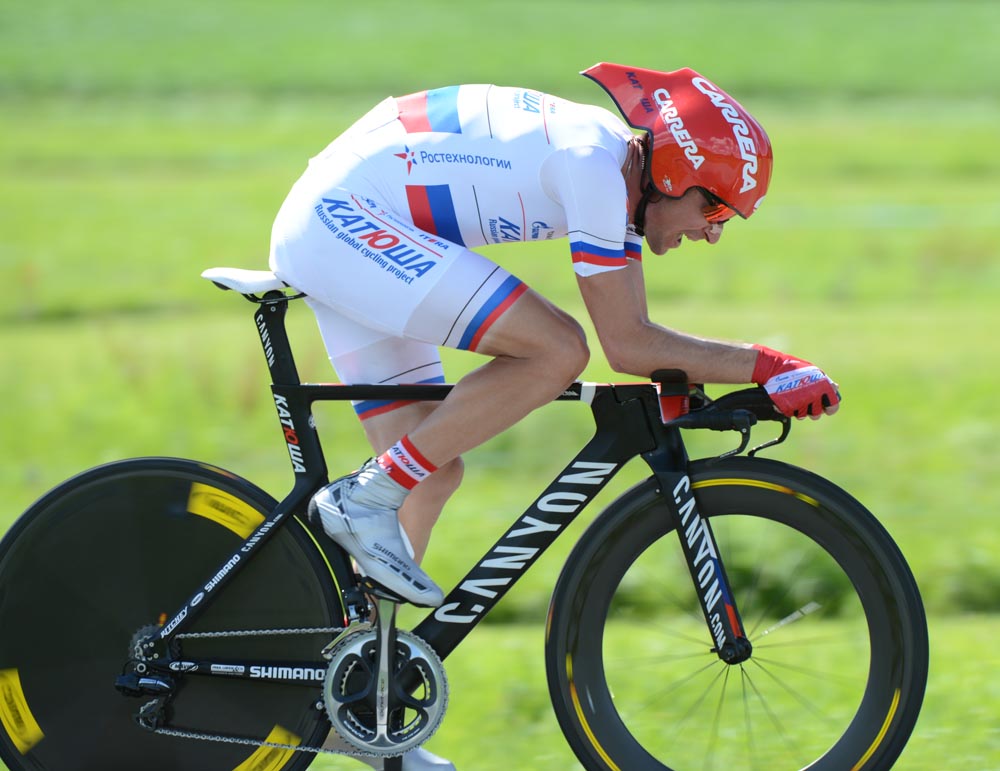
| Low road position | Support as the pelvis rotates forward | Contact at the center and nose | Time in your usual low position |
| Active gravel or mountain biking | Comfort when seated | Clearance while moving around | Seated sections and frequent transitions |
Low positions deserve extra attention. A 2012 observational analysis covered 41 cyclists with usable handlebar-position data, drawn from an original group of 48 competitive women. Lower handlebars went with higher perineal pressure and reduced sensation at an anterior vaginal measurement site. The study found an association only and set no universal handlebar adjustment.
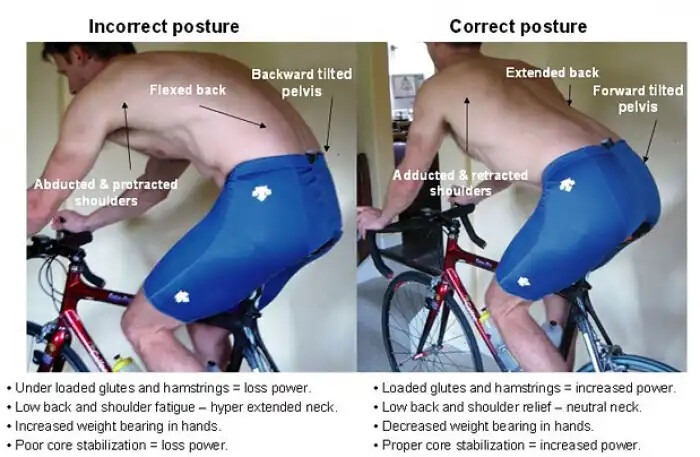
Now look at the saddle already on your bike. Where does it hurt: under the sit bones, through the center, around the nose or against the upper thighs? Does it start right away or only late in the ride? Note your usual shorts too. A rider whose stock road saddle limits longer outings has a different problem from a commuter whose wide, cushioned replacement chafes on long trips. If your current saddle works for the riding you want to do, you have nothing to fix.
Find your support width without relying on one number
Sit-bone distance is a useful starting measurement. Your sit bones, or ischial tuberosities, are the bony points that bear your weight when you sit. How you apply the number depends on the model’s own support shape and sizing method.
If the width measurement is uncertain, Check saddle support width before choosing a model before comparing models.
A bike shop can measure your spacing, or you can get a careful estimate at home. Write the result down with its unit. If repeat measurements disagree, get a shop reading before you use the number to narrow a purchase.
Manufacturers don’t describe saddle width the same way. Overall shell width gives the outer dimensions. Usable support width covers the area where you can actually be supported, and a curved edge or steep side transition changes it. SQlab’s sit-bone measurement guidance explains the distinction.
| Source or model | Published measurement | What the number describes | What to check next |
|---|---|---|---|
| Ergon SR Pro Women S/M | 8 to 12 cm | Manufacturer’s stated sit-bone fit range | The model’s size guidance |
| Ergon SR Pro Women M/L | 12 to 16+ cm | Another fit range for the same model family | Whether that size suits your posture |
| Ergon SR Sport Gel Women M/L | 152 mm wide, 261 mm long | Physical dimensions of a different model | Its own sizing method and support contour |
| Liv Approach Women’s Saddle 2021 | 155 mm wide, 270 mm long | Physical dimensions of this model and year | Its support profile and fit |
| 2023 width experiment | 14, 15, 16 and 17 cm designs | Experimental saddle widths used in a controlled test | Whether the test conditions resemble your riding |
The fit bands for the Ergon SR Pro Women are sit-bone distances. The 152 mm and 155 mm figures belong to different models and describe external width, so comparing them tells you nothing about which rear platform supports you better.
In the 2023 experiment, ten healthy young women rode saddle designs from 14 to 17 cm while researchers recorded pressure over 30-second intervals at 90 rpm and 150 watts. The authors pointed to a saddle about 1 cm wider than the rider’s sit-bone spacing under those test conditions. When you shop, follow each manufacturer’s own sizing guidance.
One commuter, for example, measured her sit bones at 110 mm and tried a 137 mm saddle while riding without padded shorts.
Choose a shape that supports you without rubbing
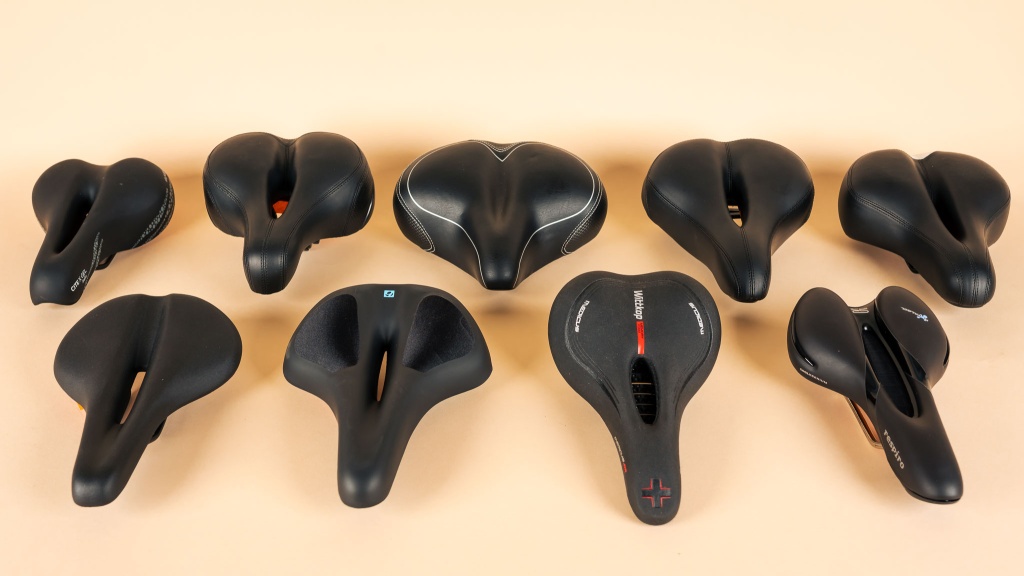
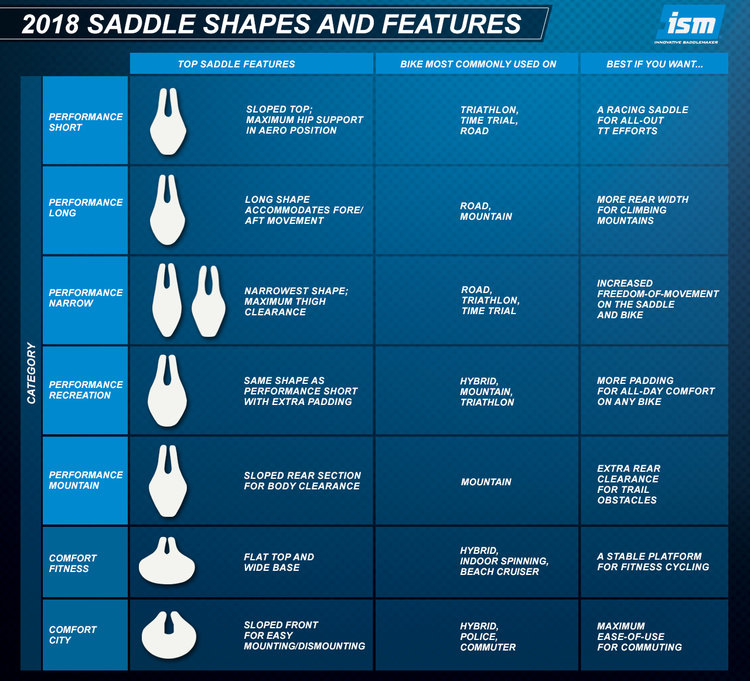
With a width range in hand, look at the saddle from above and from the side. The rear profile, outer edges, nose and padding decide where contact happens and whether your thighs move freely.
A flat rear platform and a curved one can share the same overall width and still support you differently. Strong side flare gives a broad rear area but can put an edge in the path of your inner thighs. The nose works the same way: its length and width affect clearance as you pedal and shift position.
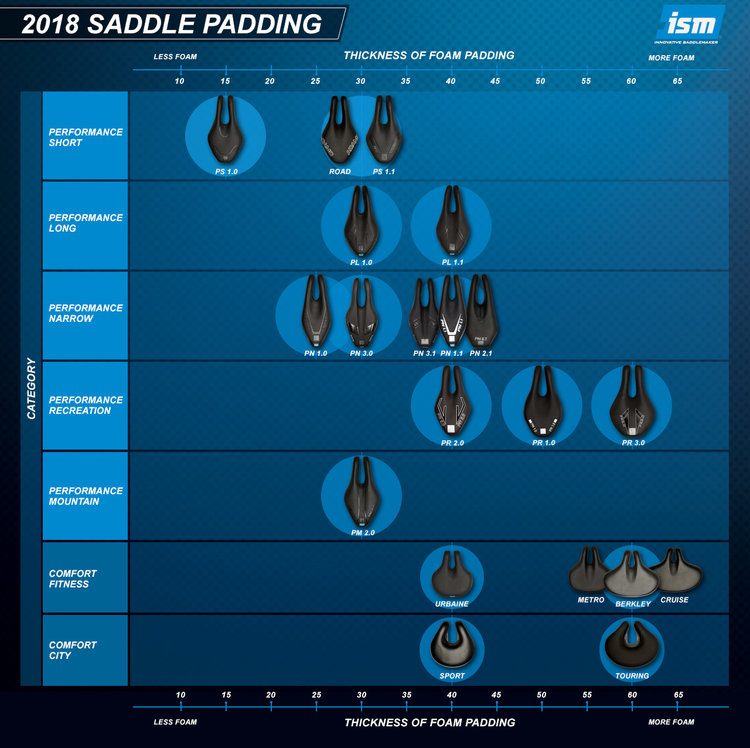
Padding is a separate choice. A plush surface feels welcoming for a short sit, but on a longer ride the effect depends on the rest of the saddle and how you move across it. A firmer saddle with the right support shape can be just as comfortable.
| Feature | Reason to try it | Possible failure | What to notice |
|---|---|---|---|
| Flat or curved rear profile | Different support contours | Weight concentrated in an uncomfortable area | Where rear support feels stable |
| Pronounced side flare | More lateral platform shape | Upper-inner-thigh contact | Rubbing during normal pedaling |
| Longer or wider nose | Different contact and position options | Interference with movement | Pressure or friction near the nose |
| Thicker cushioning | Softer initial feel | Unwanted movement or pressure later | What changes on longer rides |
| Open cutout | Removes contact from part of the center | Pressure at the opening’s edges | Center relief and edge contact |
| Shallow channel | Recesses part of the center | Pressure beside the channel | Where contact falls along its sides |
| Continuous top | Unbroken supporting surface | Uncomfortable central contact | Pressure across the middle |
If you’re replacing a saddle because of chafing, check the side profile first. One rider found her wider, softer commuter replacement comfortable on short trips but rubbing her inner thighs on longer ones. Another cyclist, covering roughly 30 to 50 miles, wondered whether her shorts or her saddle caused the upper-thigh friction.
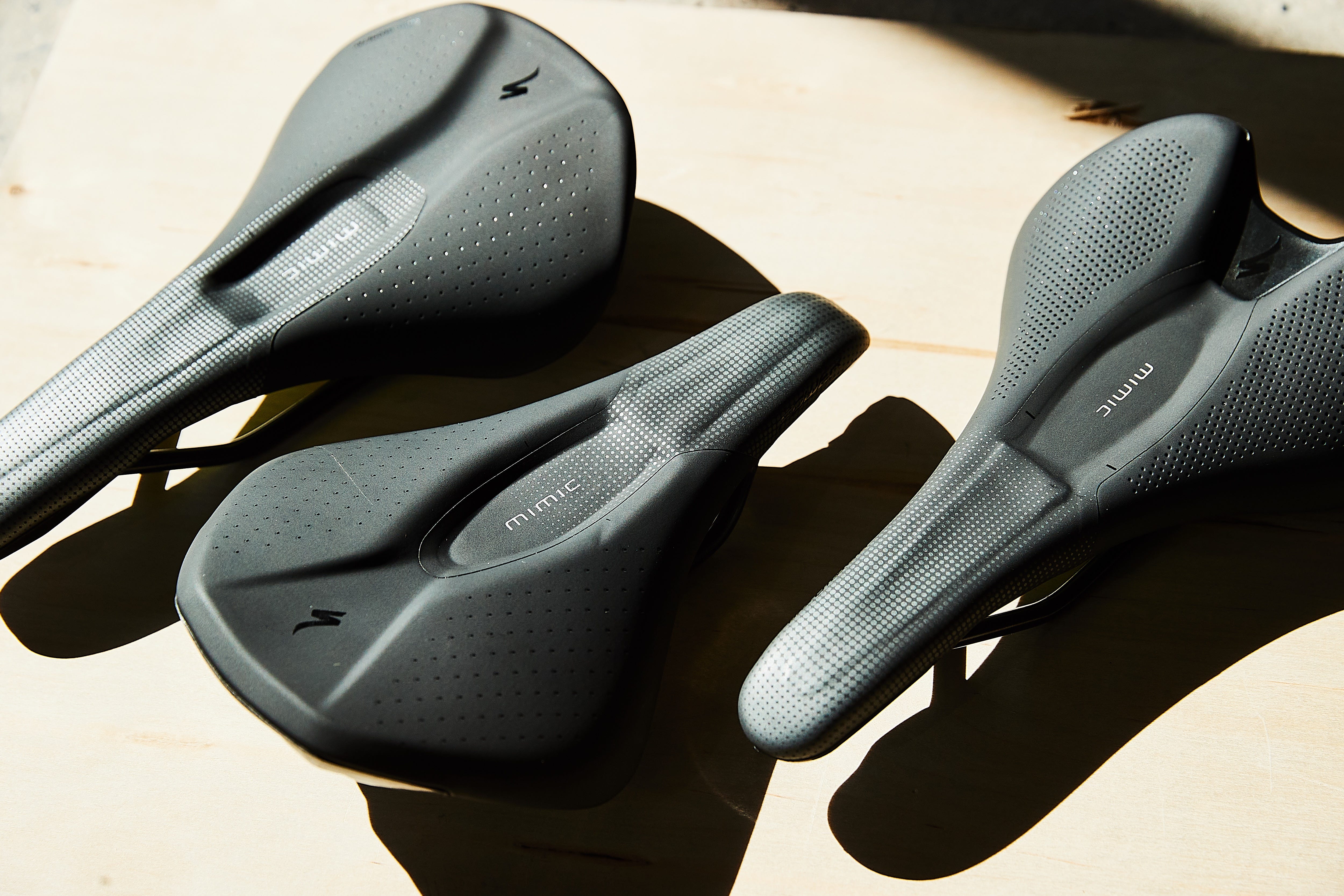
Pin down the contact point on a typical ride. If the shell edge is rubbing, try a different side contour. If clothing seems involved, wear the same garments for each comparison and treat them as a separate variable.
Cutout, relief channel or continuous saddle?
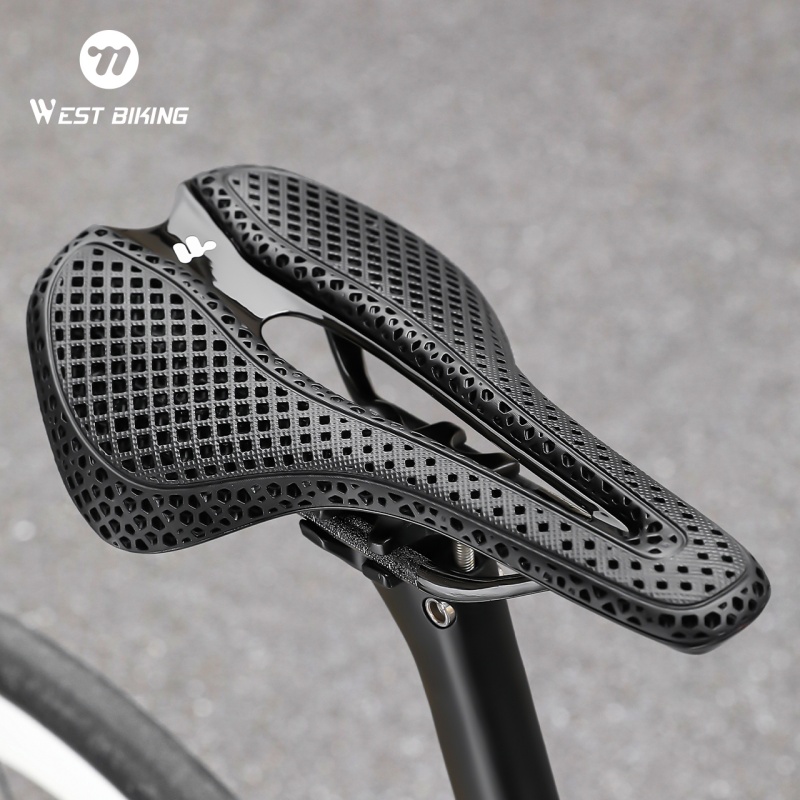
A cutout removes contact from the middle of a saddle, but your weight still has to go somewhere. The surrounding edges and rear platform carry it, so pressure location matters as much as the relief itself.
An open cutout is a physical opening through the center. A channel lowers the central surface without opening through the shell. A continuous top has no break in its surface. Each comes in different shapes, so the name alone says little about how it feels.
One cyclist in a rider discussion said an open cutout relieved central soft-tissue discomfort but caused painful contact at its edges after a 10-mile outing. Another discussion included riders who preferred a shallow dip. When you test, ask whether the discomfort is gone or has moved somewhere else.
What the pressure studies found
A 2011 cross-sectional study of 48 healthy premenopausal competitive female cyclists found that cutout saddle users had, after statistical adjustment, mean perineal pressure about 4 kPa higher and peak pressure 11 kPa higher than users of traditional saddles. The adjusted association between saddle type and measured genital vibratory sensation was not significant. The study compared pressure and sensation in an observational design, so it says nothing about long-term injury or individual comfort. The findings appear in the 2011 Guess and colleagues study.
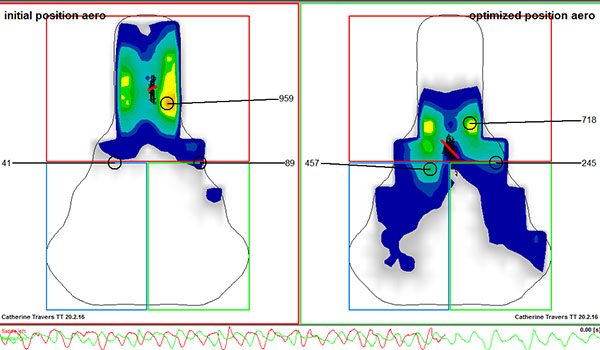
In a 2018 experiment, 19 women tried three saddle designs for 20 minutes each. The designs redistributed pressure across the contact area, and a medium experimental design gave a context-specific compromise. The results show why the location of support matters when you compare shapes.
A 2026 program studied 50 women with lichen sclerosus, lichen planus or vulvar cancer. Participants evaluated several cutout saddles, received posture advice and tested selected saddles at home for one to three months, and the share reporting moderate-or-worse cycling impediments fell from 76.0% to 30.4%. Because the study by van de Berg and colleagues combined several interventions in one clinical population, its improvements can’t be credited to the cutout design alone or applied to healthy recreational riders.
When you try a saddle, watch both the relief area and the edges around it. If the opening creates focused pressure, compare a differently shaped channel or a continuous surface.
Women’s-specific versus unisex saddles
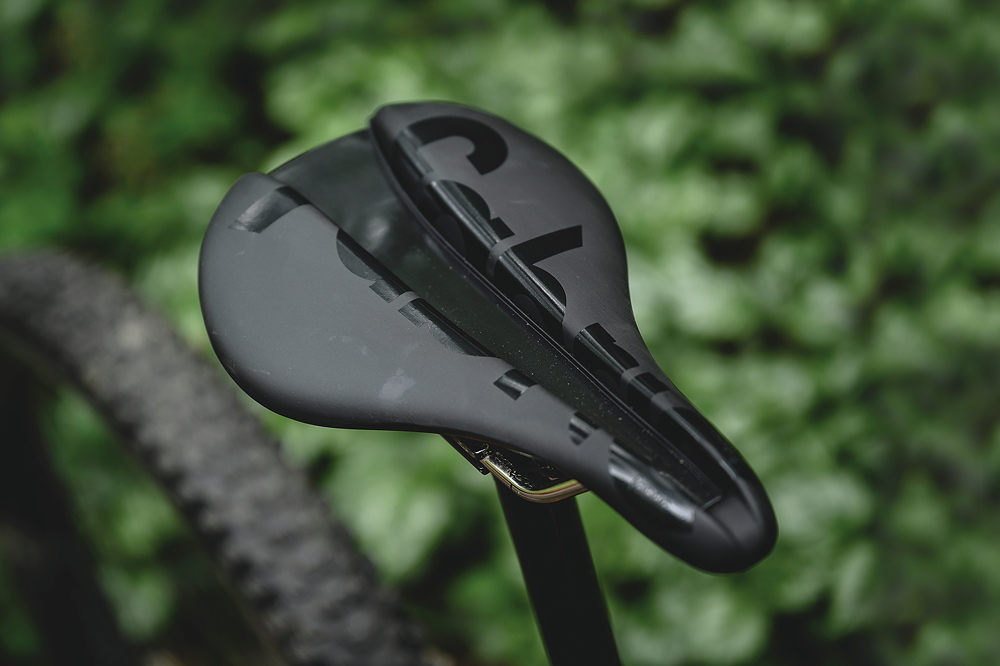
A women’s-specific saddle can offer useful dimensions, contours and relief options, but the label doesn’t decide the fit. A rider with narrower sit bones may find good candidates among unisex models, while another prefers a women-labeled design with the right support shape. Compare each saddle’s measurements, profile, nose and relief construction in your normal riding position.
Check that the saddle fits your bike
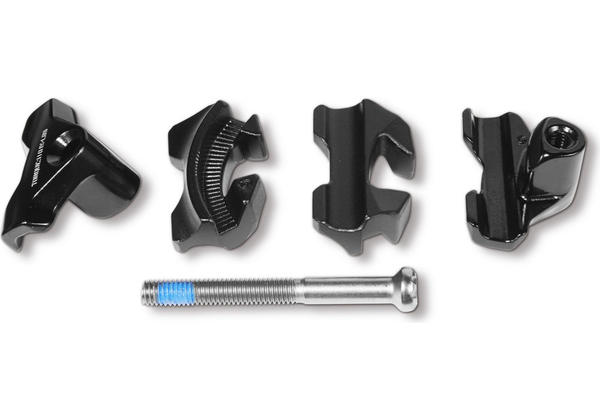
Rail compatibility can rule out a promising saddle before you buy it. The rails under the shell must fit your seatpost’s clamping system, and rail shape matters. Round metal rails and some oval carbon rails need different clamps, so never assume a clamp built for one suits the other. Check the seatpost maker’s approved hardware against the saddle maker’s rail specifications for the version you plan to install.
For example, the Ergon SR Sport Gel Women M/L lists CroMo rails and the Liv Approach Women’s Saddle 2021 lists 7 mm steel rails. Whether either fits your seatpost depends on your clamp.
- Identify the saddle: Record the model, size, rail material and stated cross-section.
- Check the clamp: Compare those rails with the seatpost manufacturer’s approved dimensions and profile. If the manufacturer offers an adapter or a different clamp, confirm the combination against both components’ instructions.
- Install by the book: Follow the specified mounting and tightening procedure for your hardware.
Build a shortlist you can defend
A good shortlist holds saddles you can explain choosing. Start with your riding posture and the manufacturer’s fit information, then compare contact shape and hardware. Rider-tested reviews help you find candidates, especially when the reviewer states the riding context and the saddle’s drawbacks.
For intended use, the manufacturer lists the Ergon SR Pro Women S/M and SR Sport Gel Women M/L for road and allroad/gravel/cyclocross riding, and describes the Liv Approach Women’s Saddle 2021 as an endurance saddle.
Rule out a model when its size range excludes your measurement or its rails don’t fit your clamp. Chase down any missing specification before you count the saddle as an option.
Test the saddle on your normal rides
The test that counts is the ride you want the saddle to handle. A few minutes on a stationary bike can expose an obvious mismatch, but pressure and rubbing change with time, posture and repeated pedaling.
Read the seller’s actual demo and return terms before you buy. A shop demo, a saddle-specific trial and a standard unused-item return give you different rights, and mounting or riding the product can change whether it qualifies. Terry Cycling’s saddle selector has described a 30-day trial offer, but check the terms for your saddle, seller and transaction. If a shop won’t take back a saddle after a road test, look for a demo program or another seller whose terms allow it. Otherwise weigh the cost before buying, since ordinary unused-goods returns can exclude ridden components.
Make the comparison useful
- Record the starting setup: Note the original saddle position and any changes the candidate needs, following the hardware instructions.
- Ride as usual: Use your normal posture, terrain and clothing, and ride long enough to reach the point where discomfort usually starts.
- Change one thing at a time: Keep other fit and clothing variables steady so you can isolate the saddle.
- Locate the contact: Separate rear support, central pressure, cutout edges, nose interference and upper-thigh friction.
- Compare the later part of the ride: Check whether comfort holds or a new pressure point appears.
- Act on the result: Keep a promising candidate or try a meaningfully different contour.
Keep a short record: model and size, rail specification, baseline position, route, duration and clothing, where pressure shows up early and late, and the return policy.
When another saddle purchase may not help

The saddle is only one point of contact with the bike. Angle, setback, reach, handlebar position and the clothing between you and the shell can all contribute. If several substitutions leave the symptom unchanged, have a qualified bike fitter review the whole setup.
If friction seems tied to your shorts or chamois liner, treat that as its own question. Persistent or worsening genital numbness, major pain, wounds or lesions, bleeding, or symptoms that continue off the bike need medical assessment. Don’t ride through them while you try more saddles.
Before you decide
Give any new saddle several normal rides in your usual position before you decide, and note whether the discomfort is gone or has just moved somewhere else. If several different saddles fail in the same way, stop buying and have a qualified bike fitter look at the whole setup.