
You’re ready to go when the route has a turn-back option, the bike passes a basic check, and you know how you’d get home. Weigh traffic, weather, daylight, phone coverage, and access to help first. If one of those falls through, pick an easier route, change your start time, or stay home. Gadgets are worth carrying only if you know what they do and what they don’t.
Riding alone lets you choose your own route and pace. It also leaves every decision to you: a mechanical problem, a detour, a change in the weather.
Is this solo ride a good idea today?
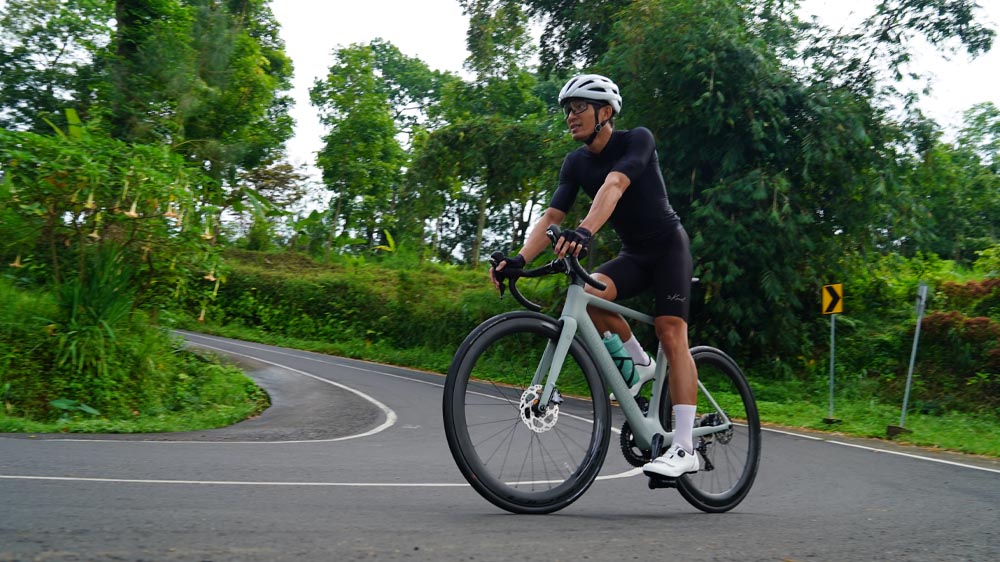
Judge the planned ride against your experience, your equipment, and the conditions. A familiar local loop on a clear afternoon is a different ride from an unfamiliar, hilly route that may take you past reliable phone coverage. You can go as planned, change the ride, or postpone it.
| What you find | Go as planned when | Change the plan when | Postpone when |
|---|---|---|---|
| Route and distance | Terrain and distance match your recent riding. | The route is longer, hillier, or less familiar than you expected. | You can’t find a route that fits the conditions. |
| Bicycle condition | Essential components work. | You can fix the problem before leaving. | Brakes, tires, or wheel retention have a significant fault you haven’t fixed. |
| Weather | The forecast supports riding. | A different time or route avoids bad conditions. | Thunderstorms or other dangerous weather threaten the ride. |
| Daylight and visibility | You can ride with enough visibility and the right lights. | An earlier start or a shorter route solves it. | Conditions exceed your equipment or your ability to handle the route. |
| Communication and return options | Your communication and exit plan suit the route. | A shorter or more accessible route makes the plan work. | A serious support or return problem is still open. |

Compare the proposed mileage and elevation with rides you’ve finished recently. A route that looks easy on a map feels different once the climbing starts. In a 2024 discussion, a cyclist in the UK planned a ride of approximately 50 miles, hit unexpectedly hard hills, and finished about 30.
Before you leave, name the single issue most likely to cause trouble: uncertain weather, an unfamiliar section, or no way home if the bike breaks. Fix it if you can. If you can’t, pick an easier ride.
Choose a route with ways to shorten or leave it
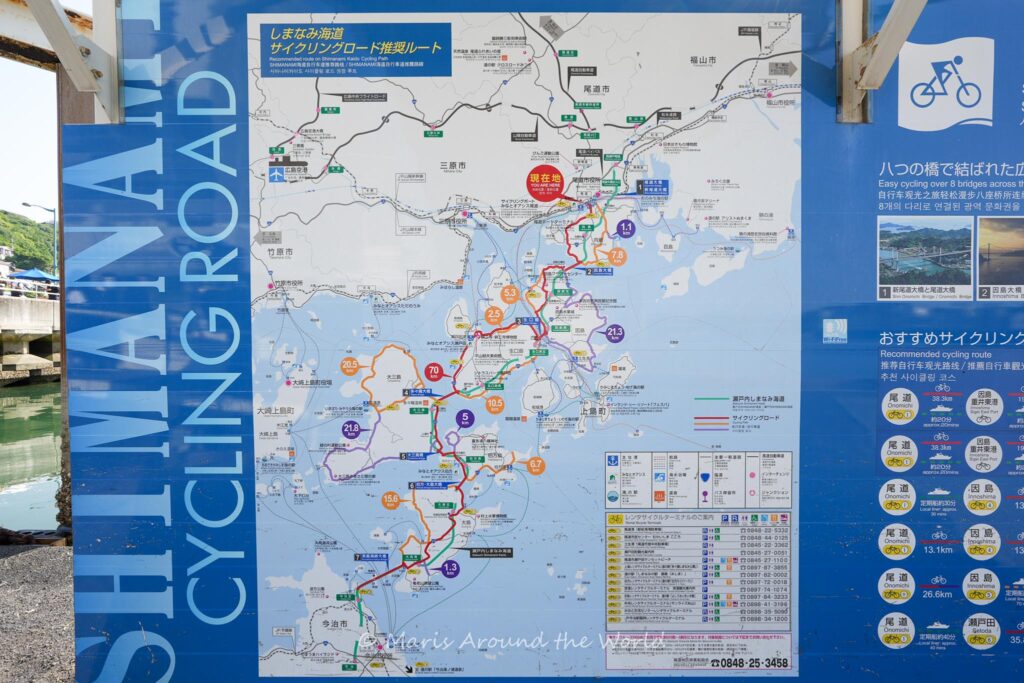
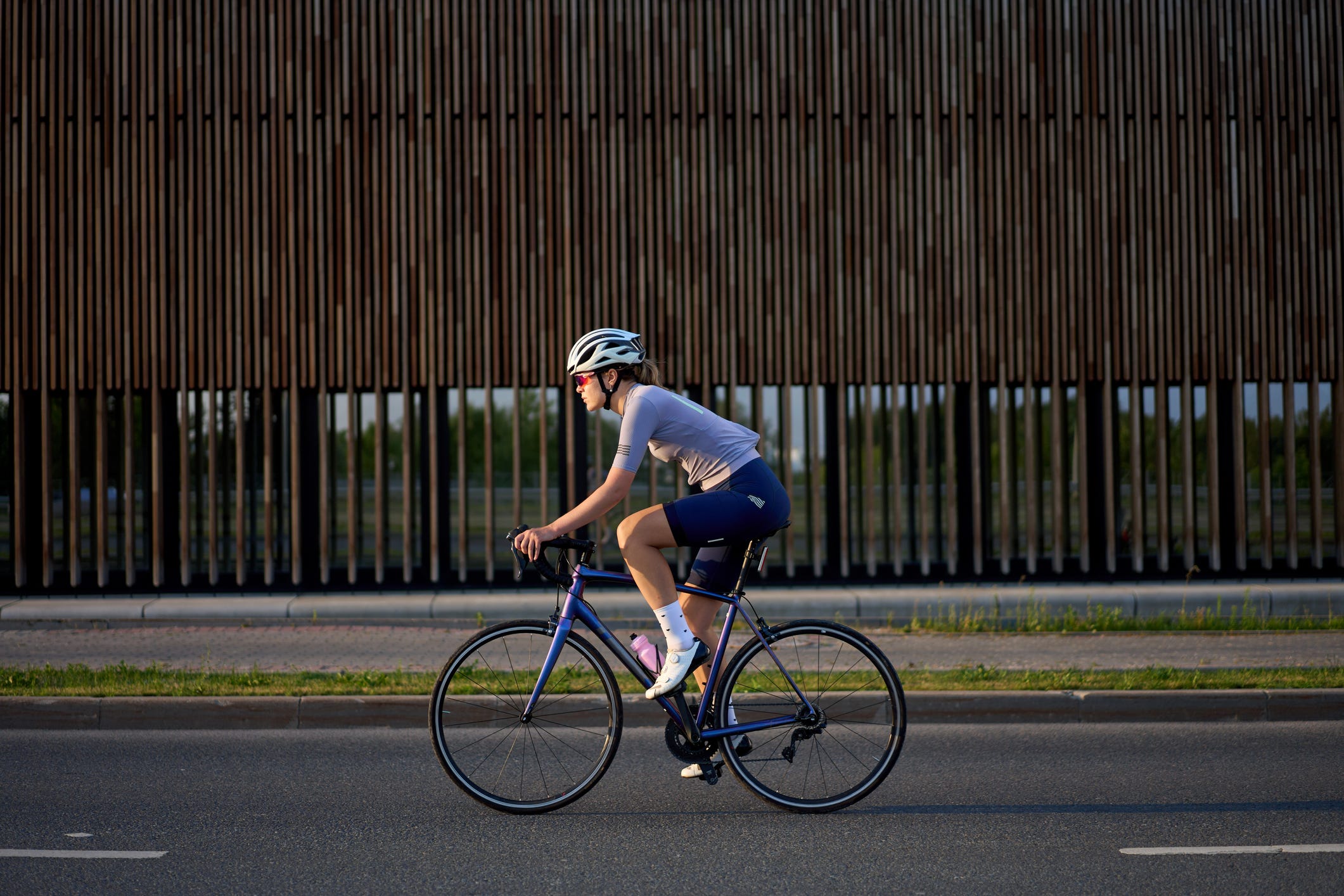
A good solo route gives you options. Weigh traffic, road surface, familiarity, access to help, and places to turn back. A quiet country road has lighter traffic but sits farther from shops, public places, and phone coverage. A busy urban route has more services but tougher intersections and faster vehicles.
In a 2021 US cycling discussion, one rider described main-road traffic sometimes reaching 65 mph or more on roads with narrow shoulders. Quieter back roads were an alternative, but cell service could be spotty.
Look for an exit
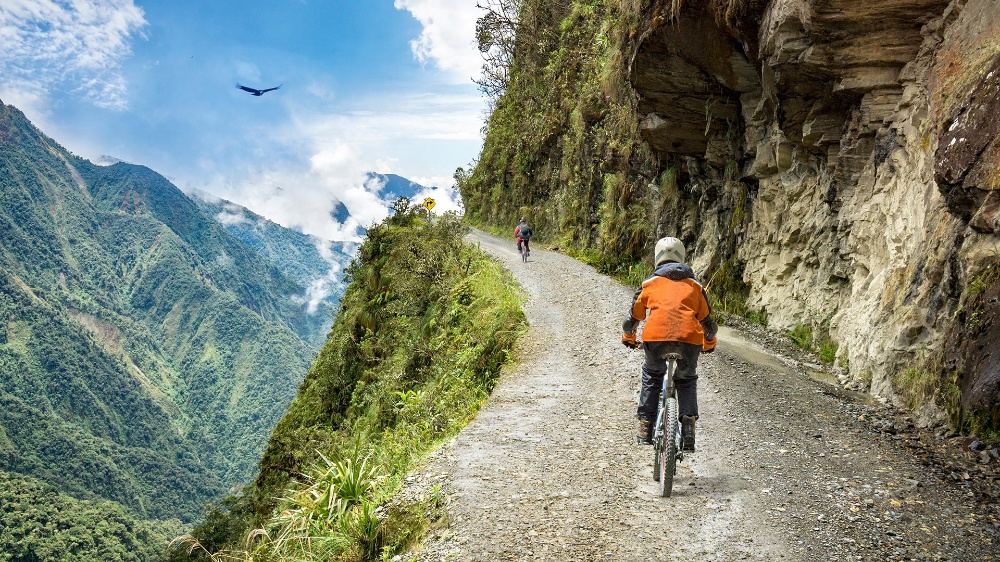
An exit option, sometimes called a bailout option, is a place where you can shorten or end the ride safely. It might be a familiar road back toward town, a shorter loop, or a public place where you can get help.
Before you set out, check the route against these points:
- You should know the main turns, intersections, and difficult sections.
- Fast roads, narrow shoulders, and crossings beyond your skill call for a different route.
- Elevation and surface should match what you’ve ridden recently.
- Make sure you can turn back or shorten the ride without landing on an unsuitable road.
- Note where you could stop or find services.
- Make sure your contact arrangement works in areas with limited cellular reception.
A loop through familiar streets can offer several ways home. A long out-and-back leaves fewer alternatives once you’re far from the start. Traffic and daylight shift through the day, too, so a route you enjoy on a quiet morning can feel different later.
The National Highway Traffic Safety Administration’s bicycle safety guidance stresses a functioning bicycle, visibility, and predictable riding around traffic. Pick roads and paths that let you do all three with confidence.
On a remote route, add navigation backups and plan how you’d reach assistance. Extended bikepacking trips need more preparation than a short neighborhood ride. You should be able to point to an alternative if your original route turns unsuitable. If the map shows none, change the route before you leave.
Check your bike, visibility, and essential supplies
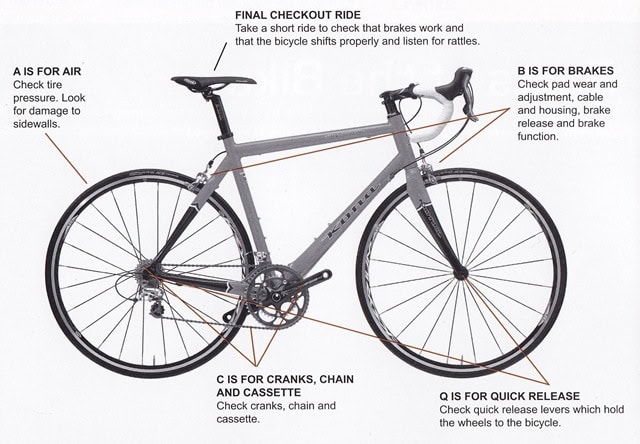
Check the essential components before you leave, even if the bike felt fine on your last outing. The League of American Bicyclists teaches the ABC Quick Check, a basic inspection to run before setting out.
Do the ABC Quick Check
- A: Air. Check tire inflation and visible tire condition. Use the pressure guidance for your tire and setup; squeezing a tire can’t tell you its pressure in psi.
- B: Brakes. Confirm both brakes work and check the pads.
- C: Chain and cranks. Look for looseness, heavy rust, or grime that keeps the drivetrain from running normally.
- Quick: Wheel fastenings. Confirm quick releases are secured. With thru-axles, follow the fastening procedure for that system.
- Check: Functional ride. Take a short, slow ride somewhere suitable to confirm the bike behaves as expected.
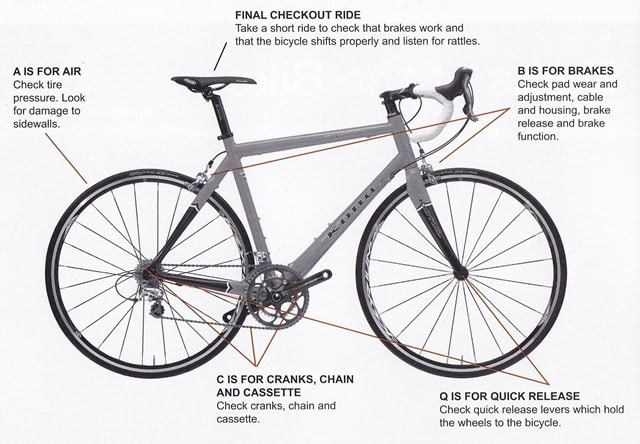
The League of American Bicyclists’ basic bike check provides the framework. It reveals problems, though an unexplained fault or suspected defect still needs a mechanic. Fix any known brake fault, damaged tire, or insecure wheel fastening before you ride.
Check your helmet and visibility
Your helmet should fit properly, sit correctly, and be made for bicycling. Bicycle helmets sold for US cycling are subject to the federal CPSC performance standard in 16 CFR Part 1203.
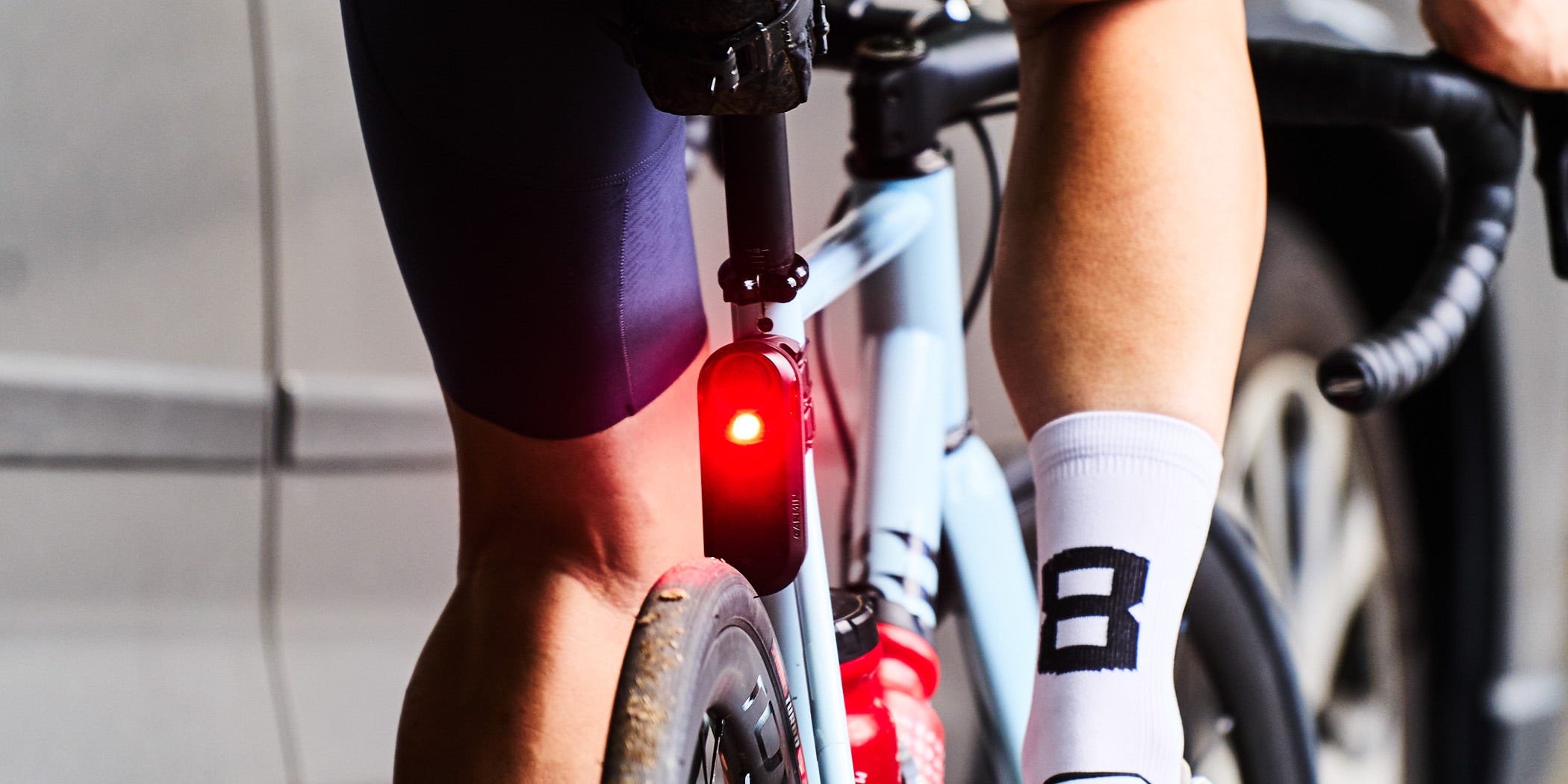
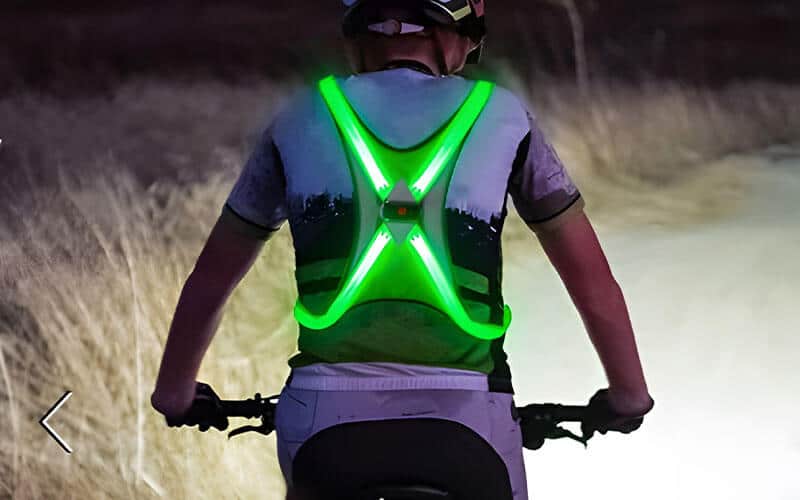
For low light or darkness, check the white front light, the red rear light, and reflective or conspicuous clothing and equipment suited to the conditions. Test the lights before leaving. Equipment requirements differ by jurisdiction.
Take supplies you can use
Pack for your bike, your route, and the help within reach. Bring a charged phone, water, navigation, and a way to pay. Add repair gear that covers likely problems on your route and that you know how to use: for a puncture, that means a compatible tube or repair method, tire levers, and an inflation tool. Practice with them on your own bike before you rely on them far from home. A pump that does not fit your valve is no help at the roadside.
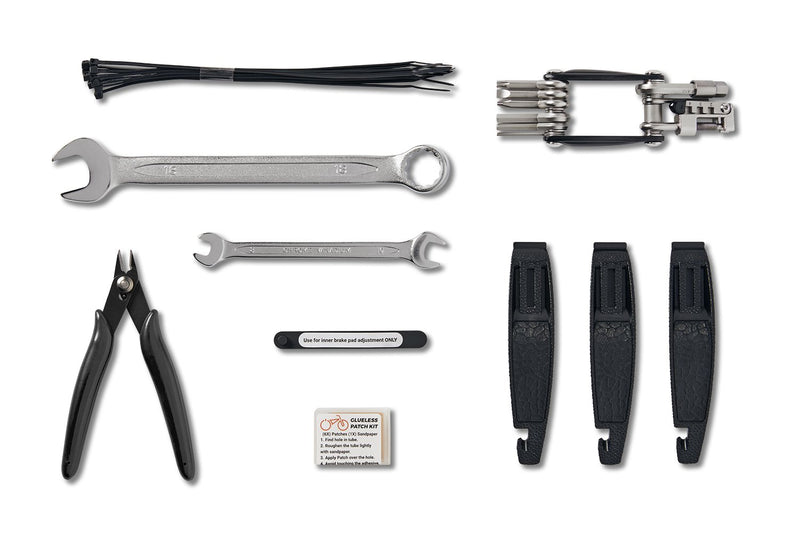
Carry identification and emergency-contact details in a form someone else can find if your phone stops working. Leave unnecessary tools at home.
Agree on a check-in plan before you leave
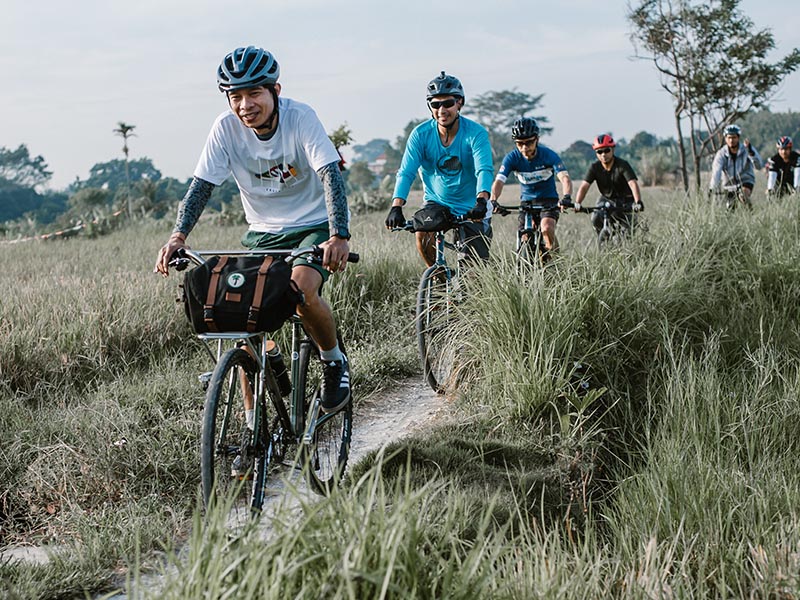
If you have a willing, available trusted contact, agree on a simple check-in before you go. Tell them the general area or route, when you expect to be back, and how to reach you. Then settle what they should do if you miss the check-in. An ordinary message handles this without a tracking service.
For example:
“I’m riding the [general route] and expect to be back around [time]. If I haven’t checked in by [agreed time], please try calling me and follow the next steps we’ve discussed.”
Agree in advance what happens if the first call goes unanswered: trying another agreed contact, checking the route or location information you shared, and deciding which circumstances justify contacting emergency services. Set times and actions that fit the route and your contact’s schedule. Make sure the contact has received the message and agreed to the arrangement. If you change the route or expect to return much later, update them when you can do it safely.
Share only what your contact needs
Your contact needs useful information. The public does not need your home address, departure time, or live location. Think about who can open anything you share, especially a link that can be forwarded.
A contact who can take your call may not be able to collect you and your bicycle, so don’t count on a pickup unless someone has agreed to it. If nobody can monitor your return, you can still ride solo. Pick a familiar, shorter route with accessible stopping points, verify any services you might rely on, and build a contingency plan that works without a pickup.
Know what live tracking and crash detection can do
Location sharing, incident detection, and emergency communication solve different problems. A location link lets someone see your transmitted position. Incident detection can notify configured contacts under supported conditions. A human check-in makes one person responsible for acting when you don’t come back.
| Method | What it provides | Dependency or limitation | What to verify |
|---|---|---|---|
| Agreed human check-in | A person knows your intended route and expected return. | Needs an available contact who understands the arrangement. | That your contact got the message and knows the missed-check-in response. |
| Strava Beacon | A shareable location-tracking link. | You must send the link, and updates depend on cellular reception. | That you actually sent the link. |
| Compatible Garmin incident detection | Can send incident information or location to configured contacts during supported activities. | Needs compatible hardware, configuration, and a connection. | The exact device, activity, pairing, and recipients. |
| Supported iPhone satellite features | Communication options where cellular and Wi-Fi connections are unavailable. | Depends on supported hardware, software, service, region, and sky visibility. | The exact phone and feature. |
Confirm the recipient can open whatever you share.
Strava Beacon requires an actual share
Strava’s Beacon documentation, updated September 16, 2026, describes choosing up to three safety contacts and generating a shareable link for a recording. Switching Beacon on does not send the link. You have to send it yourself. With reception, location updates arrive approximately every 15 seconds. When cellular service is unavailable, live updates pause until reception resumes.
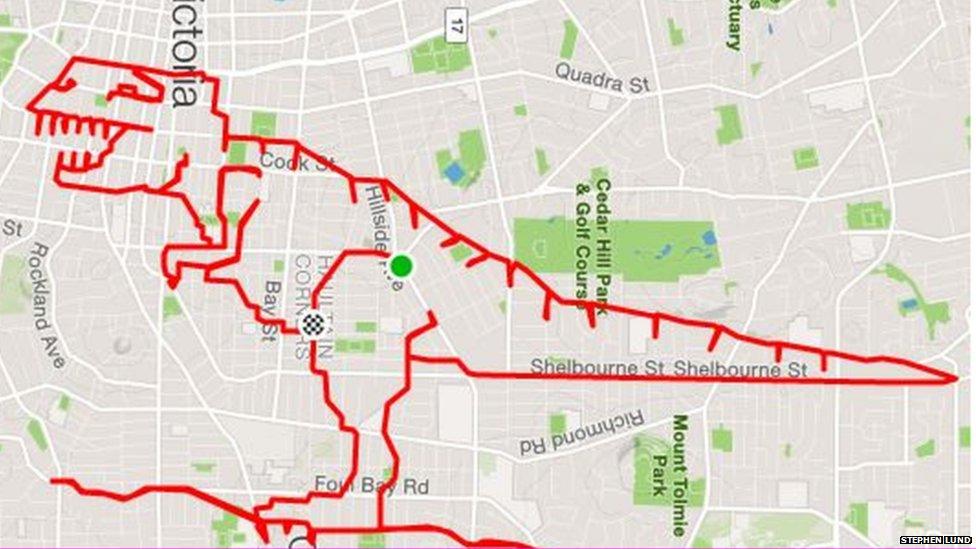
Beacon does not alert contacts when you stop, and its link carries no estimated arrival time. Your contact can see where you last transmitted without knowing when you were due home, so you still need a separate check-in agreement. The link shows your location and history to anyone who has it, so choose recipients deliberately.
Garmin alerts and satellite options have their own conditions
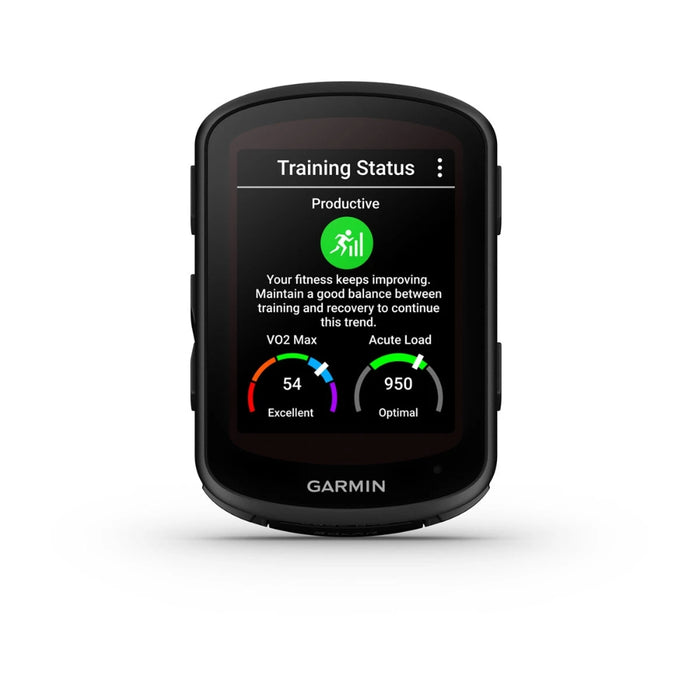
On supported Garmin devices, incident detection and assistance features can send messages or location information to configured contacts. They work only with the right Garmin model, a supported activity, a paired phone, and a signal.
Garmin describes these features as supplementary safety tools. Garmin Connect does not contact emergency services for you, and detection does not guarantee a useful notification after every crash.
For remote riding, Apple documents satellite capabilities on compatible iPhone 14 or later hardware where the relevant features are available. They have software, service, and regional requirements, and trees, canyons, buildings, or an obstructed view of the sky can interfere with the connection. Consider them for an off-grid ride. An ordinary local trip doesn’t need them.
Test whatever you plan to use before departing: charge the device and check its configuration. A GPS position on your screen does not mean anyone else is receiving it.
Plan for flats, bad weather, or being unable to ride home
Plan your return as carefully as your route out. A flat, a broken bike, and an injury each call for a different response.
| Situation | Sensible response | What to establish beforehand |
|---|---|---|
| Ordinary puncture or repairable fault | Get clear of moving traffic where possible, then decide whether you can repair the problem safely. | Compatible tools, repair knowledge, and a backup option. |
| Bicycle cannot be ridden, but no emergency exists | End the ride at a suitable location and use verified transport or another safe way home. | Accessible services, bicycle-transport arrangements, and route exits. |
| Rider cannot continue for a nonemergency reason | Take a shorter route or use local help. | Access to help that doesn’t assume a friend can collect you. |
| Serious injury or immediate danger | Seek emergency assistance, including 911 in the United States, when you can. | How to communicate your location and describe the emergency. |
| Dangerous weather interrupts the route | Stop the exposed activity and find shelter. | The forecast, available shelter, and alternatives to the planned route. |
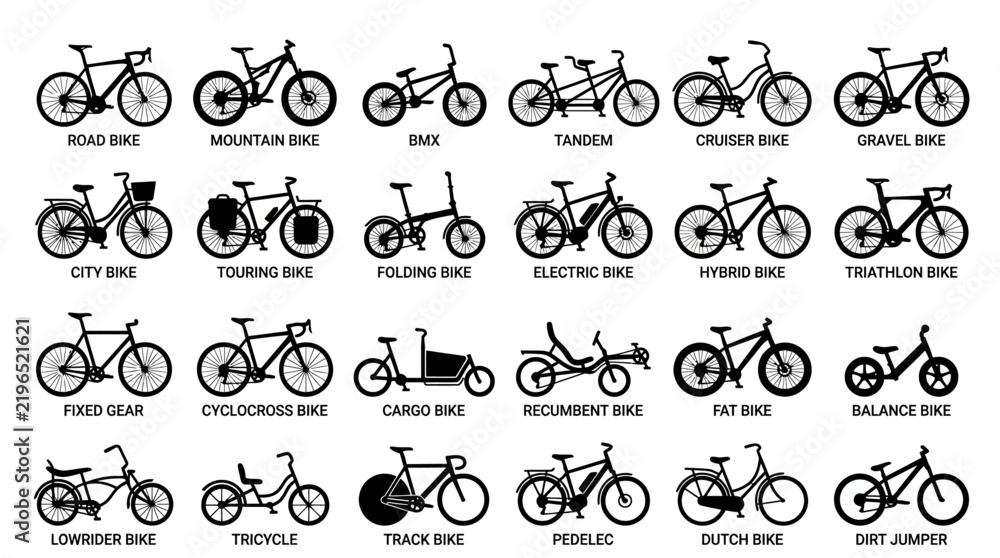
In a cycling discussion about being unable to get home, riders suggested taxis, trains, ride-hailing, and other assistance. A respondent from rural America pointed out that neither taxis nor passenger trains were available locally.
If transport is part of your backup plan, check that the service operates where you ride and can carry a bicycle. A ride-hailing app on your phone does not confirm that a vehicle will come. A familiar shortcut, a reachable public place, or an established local service is more dependable than an unverified option.
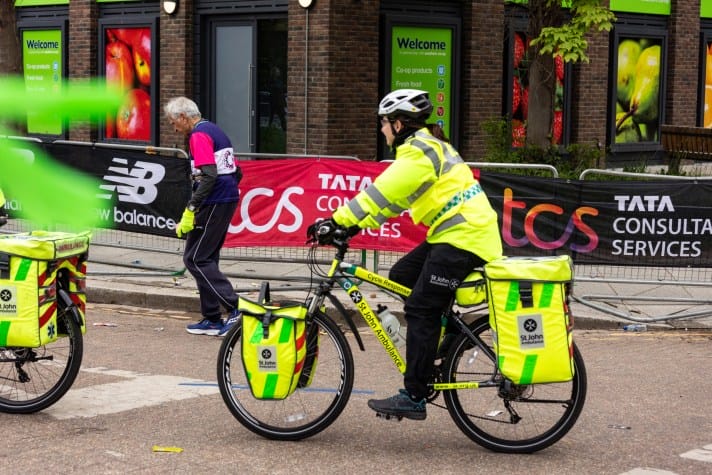
If you are seriously injured or face an immediate threat, call for emergency help. When you call 911, tell the call-taker where the emergency is, give a callback number if you have one, and say what happened. Follow their instructions and stay on the line as directed.
Don’t try to ride through a serious injury, and don’t send a location link when you can make the call yourself.
If an encounter feels uncomfortable, keep your options open
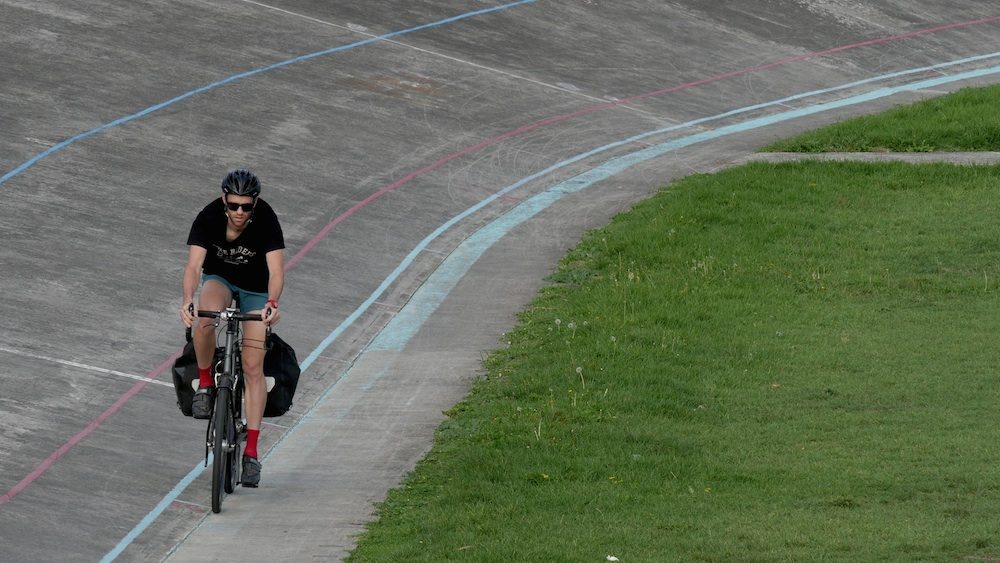
You can decline unwanted conversation, directions, or mechanical help. You don’t need to work out another person’s intentions before you decide to keep your distance.
If an interaction leaves you uneasy, avoid further engagement, change course when traffic permits, head for an accessible public or staffed place, or contact someone who can help. One UK rider turned back after an unsettling encounter and approached a member of the public.
Seek emergency assistance if you face an immediate threat. If you’d rather have company on your next outing, ride a familiar route in daylight or join a group.
Keep reassessing the ride and know when to stop
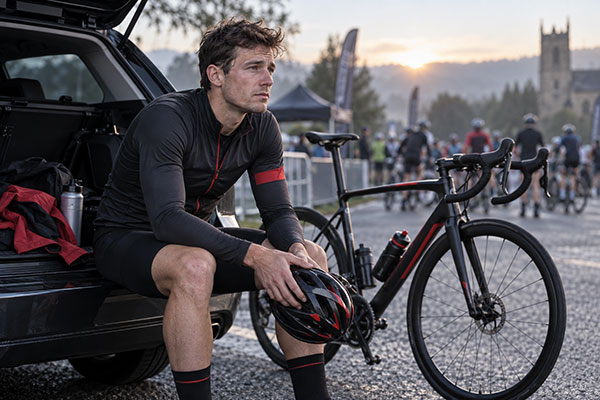
A plan that worked at home may need changing halfway through the ride. Watch for unexpected traffic, fading daylight, worsening weather, an unfamiliar detour, an unstable bicycle, and fatigue that affects your handling and judgment. Pull over before you check navigation or send messages.
If the terrain is harder than you expected, stop at a suitable place and reassess. Ride home on a familiar route, shorten the remaining distance, or end the ride where help is available. Turning around is a normal route decision, and you don’t have to finish the original mileage first.
Thunderstorms require a specific response
If thunderstorms threaten the ride, change the plan before you’re exposed. When thunder or lightning is occurring, get into substantial enclosed shelter, such as a suitable building or a hard-topped vehicle. A small open shelter, roadside canopy, or shed is not adequate lightning protection.
The National Weather Service’s lightning safety guidance explains that outdoor locations are unsafe during thunderstorms. It recommends waiting 30 minutes after the last thunder or lightning before going outside again.

Your solo-ride safety checklist (save this)
Before you roll out
Before each ride
Save the checklist above and run through it before each ride, since traffic, weather and daylight change from day to day. Turning around halfway counts as a normal decision.