Look for proven UV protection, a lens whose light transmission fits where you ride, and a frame that stays secure with your helmet on. Riding after dark or needing a prescription changes which lens setup works, so read the specs of the exact version.
Start with verified UV protection
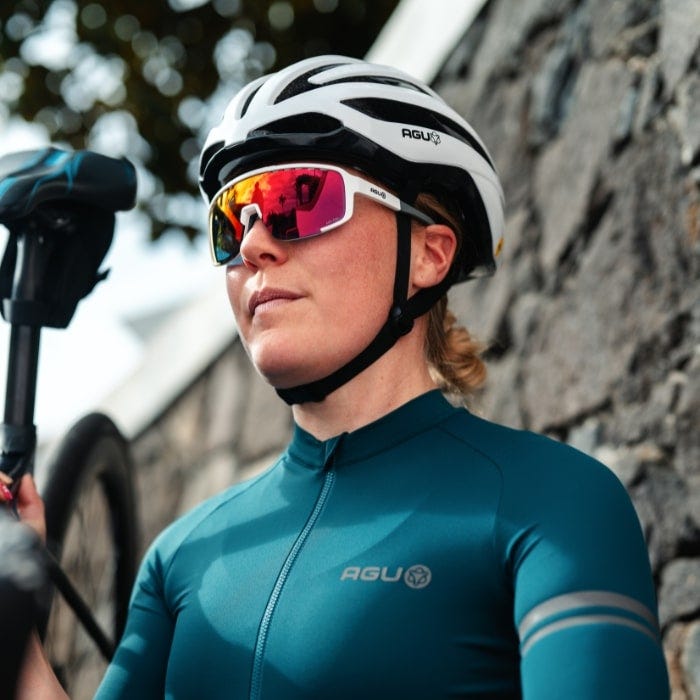
Look for sunglasses labeled UV400 or offering 99 to 100% protection against both UVA and UVB. The National Eye Institute recommends those levels and favors a comfortable fit that limits light entering around the lenses.
| Product claim | What it describes | Buying consequence |
|---|---|---|
| UV400 or 99 to 100% UVA/UVB blocking | Ultraviolet protection | Look for a documented claim on the exact lens |
| Dark or mirrored tint | Visible light and lens appearance | Choose brightness separately from UV filtering |
| Polarized | Filtering light by its polarization | Consider reflected glare and display visibility |
| Impact resistant | Resistance to a specified impact test | Does not mean unbreakable or crash-proof |
U.S. eyewear impact-resistance rules are addressed in FDA guidance on sunglasses and spectacle lenses under 21 CFR 801.410. Don’t assume ordinary sunglasses give the impact protection of specialized sports safety eyewear. A high price doesn’t mean stronger UV blocking either.
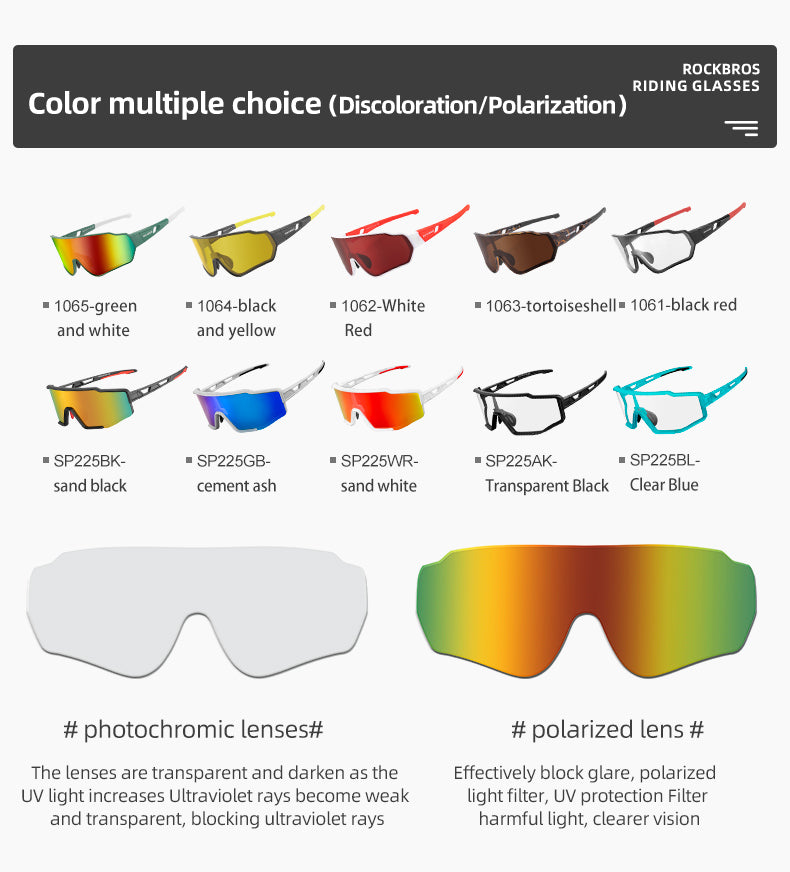
If an older pair has no UV information, an optical shop can measure its filtering with a photometer. For casual rides, ordinary sunglasses that fit well and have documented protection work fine. Wraparound sports frames add retention and coverage.
Choose the lens transmission for your riding light
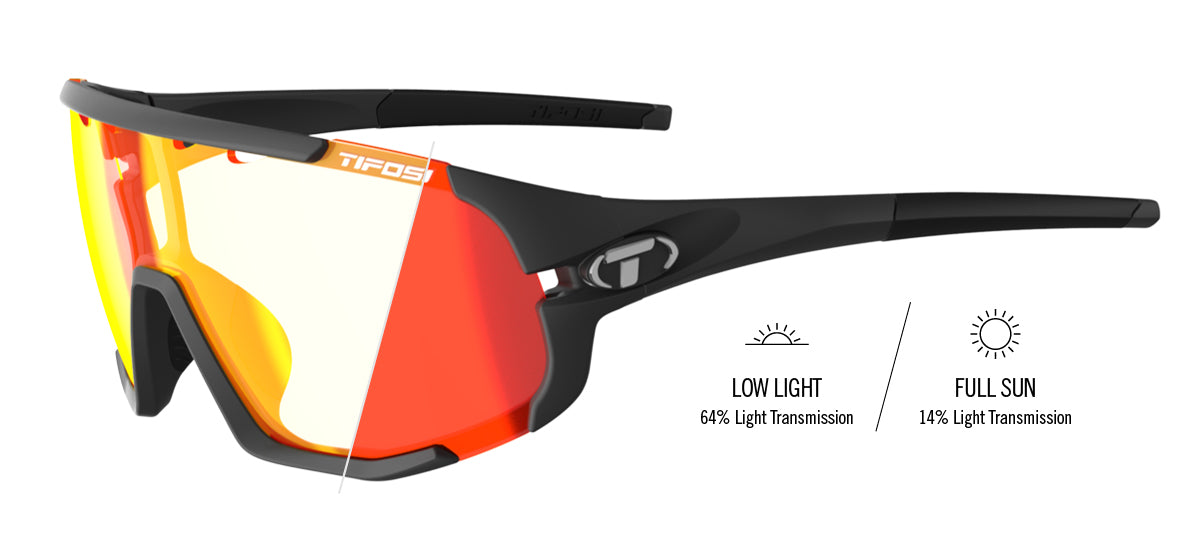
Visible light transmission (VLT) is the percentage of visible light a lens lets through. Higher VLT gives a lighter view, lower VLT a darker one. It’s the number to watch when your ride passes through bright pavement, tree shade or dusk.
| Your ride | Lens strategy | Trade-off |
|---|---|---|
| Bright, exposed roads throughout | Fixed dark tint | May become too dark when the light fades |
| Sun mixed with tree shade | Moderate fixed tint or photochromic lens with the right range | A fixed tint compromises; an adaptive lens has a model-specific range |
| Daytime followed by darkness | Interchangeable tinted and clear lenses, or another high-transmission option | A spare lens needs storage and a lens change |
| Dark rides | Clear or appropriately high-transmission protective lenses | Little reduction of daytime glare |
One commuter who rides in both daylight and darkness likes the convenience of photochromic lenses, since they need eye protection around the clock.
Julbo specifies a 13% to 72% VLT range for its FURY REACTIV 1-3 High Contrast configuration, reference J5313414. Even its lightest state transmits 72% of visible light. Ranges vary by model, and a photochromic lens can stay too dark for real night riding.
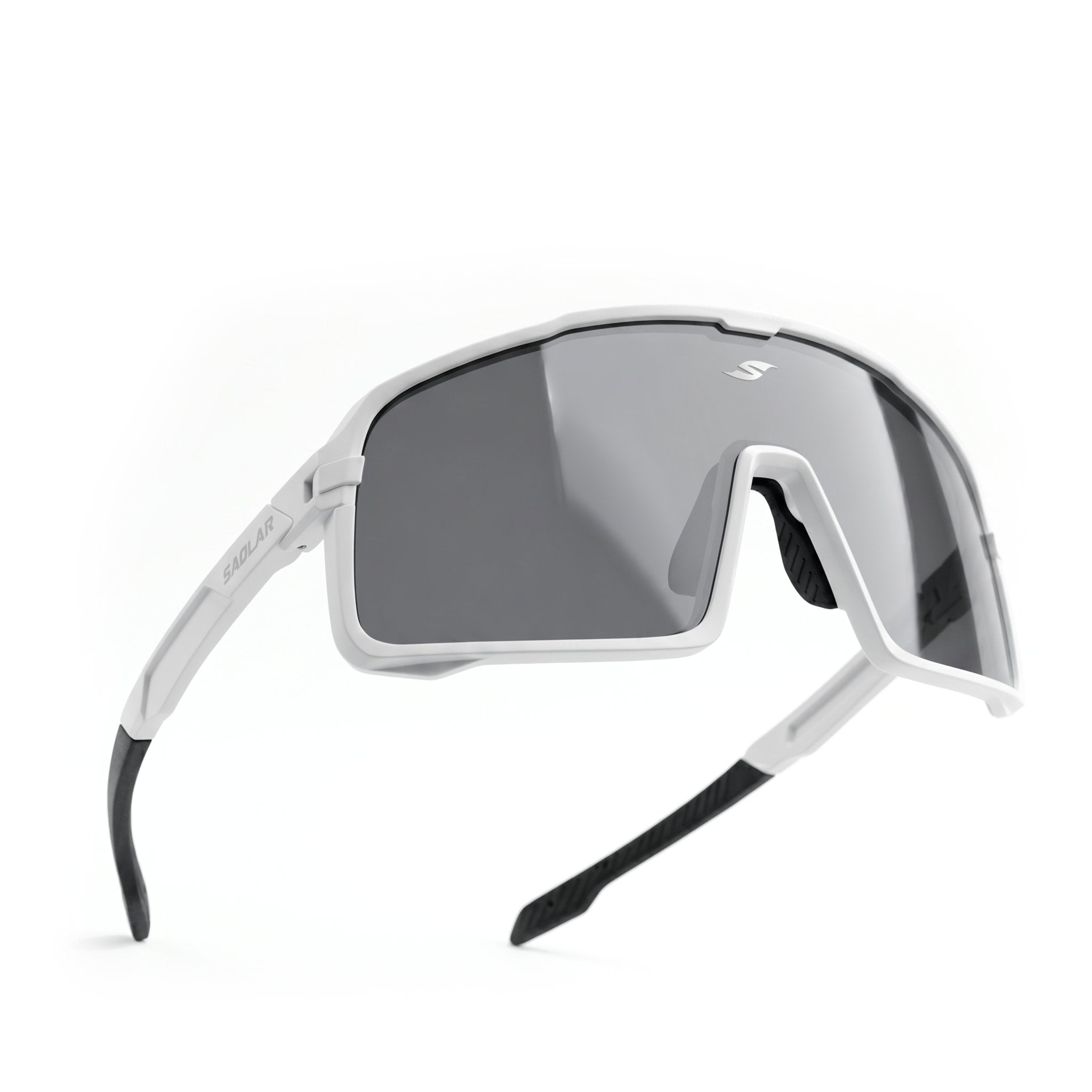
Lens color also changes how contrast looks to you. A 2013 laboratory study involving 24 students compared five lens conditions and found some differences by visual task and lighting. It didn’t show that any tint prevents cycling crashes.
Note the brightest and dimmest stretches of your usual ride, then pick the VLT range that covers both.
Polarized lenses and reflected road glare
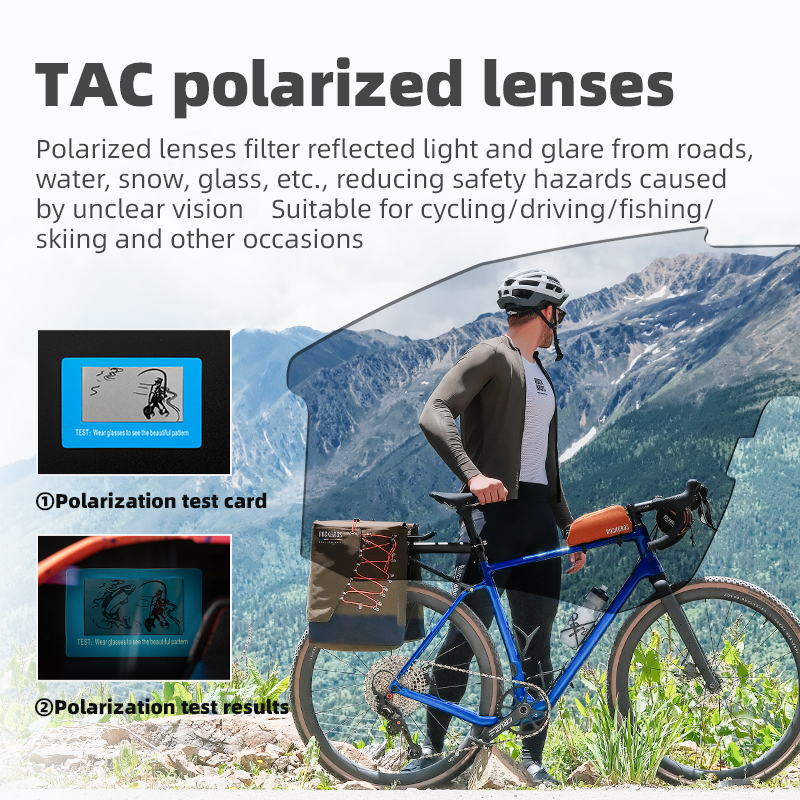
Polarized lenses can reduce reflected glare on sunlit roads, and a 2023 road-sports study measured that benefit. A separate controlled study found no statistically significant changes in several visual functions. Neither measured cycling crashes. Look at your bike computer and reflective road surfaces through the lenses, and skip them if essential details get hard to see.
Choose frames that fit your face
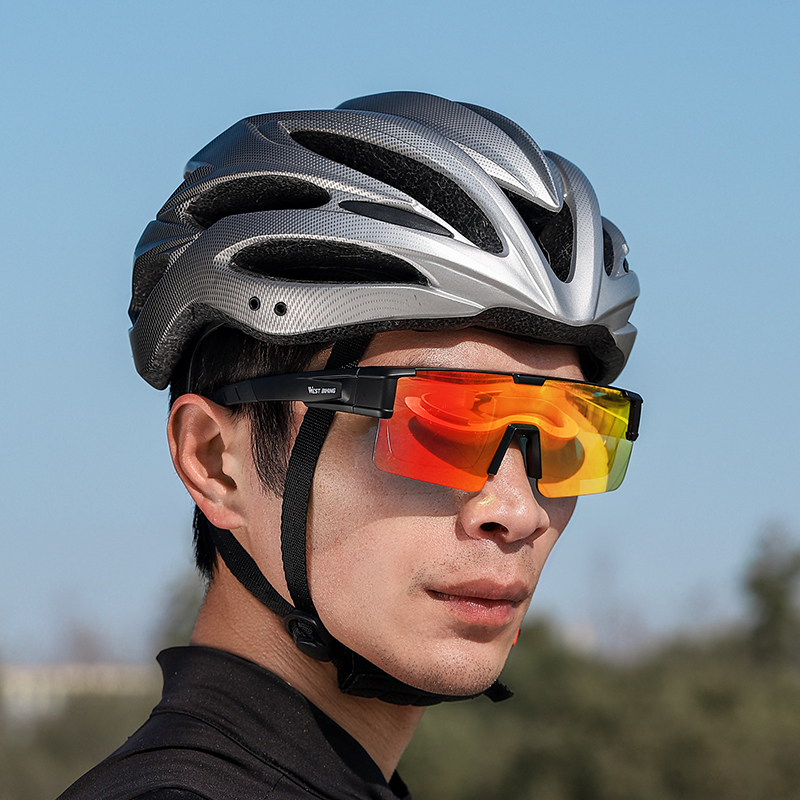
A “women’s,” “small,” or “unisex” label gives you a category, but the frame still has to sit properly on your face.
A rider preparing for RAGBRAI worried that unisex frames wouldn’t suit a head and face on the smaller side.
Five features that change the fit
- Frame width: Too wide and the glasses loosen; too narrow and they press on your temples.
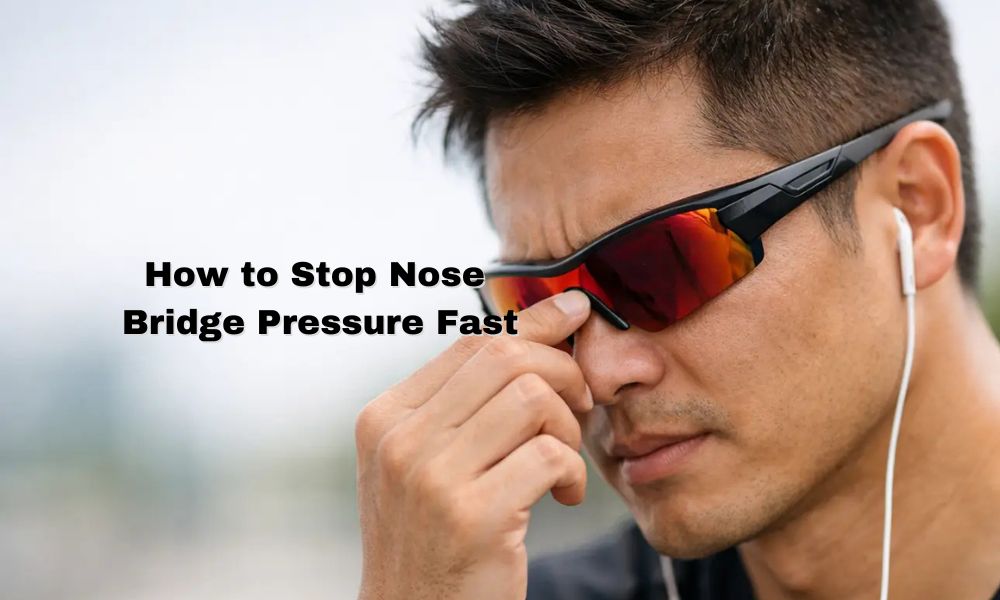
- Nose bridge and pads: Support here sets how high the lenses sit and whether they slide.
- Cheek clearance: Deep lenses can touch your cheeks, especially when you smile or move your face.
- Temple contact: The arms should hold the frame without pinching near your ears.
- Coverage: A broad shield blocks wind and light from the sides, as long as it clears your cheeks and nose.
A larger lens suits a narrow face if the bridge and temples hold it securely, while a narrow frame with a shallow lens shape gives less coverage.
Smith markets the Bobcat as a small-to-medium frame with generous coverage and two-position adjustable Megol nose pads. Those specs help you shortlist. Comfort only shows when you try frames on.
If you own a comfortable pair, look for a marking such as 52-18-140. It gives lens width, bridge width, and temple length in millimeters. Use those numbers to compare published frame measurements, then try the glasses on to check bridge support, temple pressure, cheek clearance, and stability.
Check helmet compatibility and your riding sightline
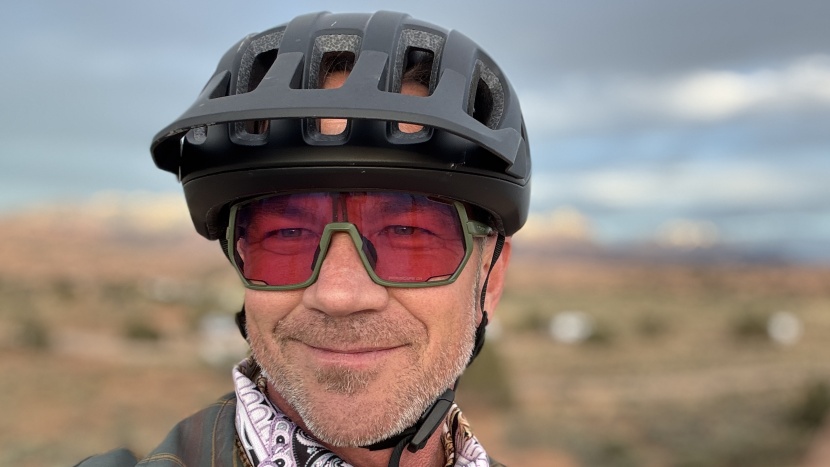
A pair that feels fine in the shop can press or shift once your helmet is fastened. Temple arms can touch straps, shell edges, or retention hardware. Your forward view also changes when you lower your torso over the handlebars.
A 5-foot-2 rider in r/ladycyclists said of oversized sunglasses: “Not only do they look funny, but they also let in wind from the sides, which is getting on my nerves.”
Try the glasses and helmet together
- Fasten your usual helmet as you would for a ride, then put on the glasses.
- Feel the contact points. Notice pressure where temple arms meet straps, shell, or retention parts.
- Look forward from your riding positions. Try an upright posture and your lower position over the bars, and watch for the upper frame entering your sightline.
- Turn and move your head. Look for slipping, bouncing, or changed pressure against your cheeks.
- Check coverage and airflow. Notice gaps where wind can enter without forcing the frame against your face. Vents and the gap between lens and face change airflow and fogging, though they won’t end fog completely.
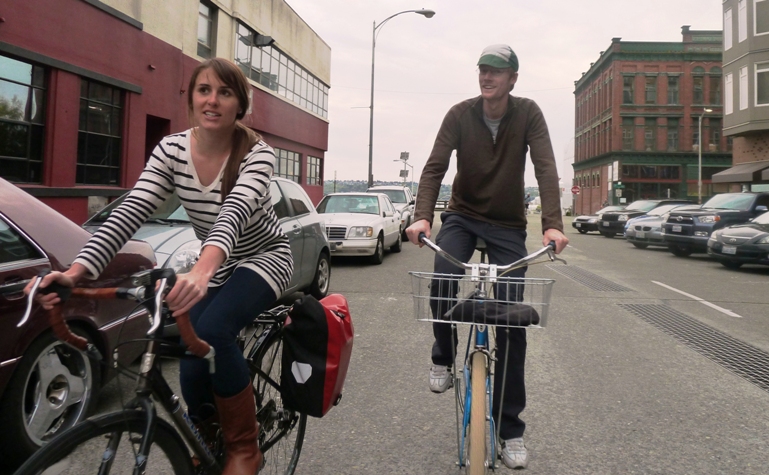
Don’t push a correctly fitted helmet into an unsafe position to make glasses comfortable. If the pair blocks your vision or keeps pressing, choose a different frame geometry.
If you need a prescription, choose the correction method first
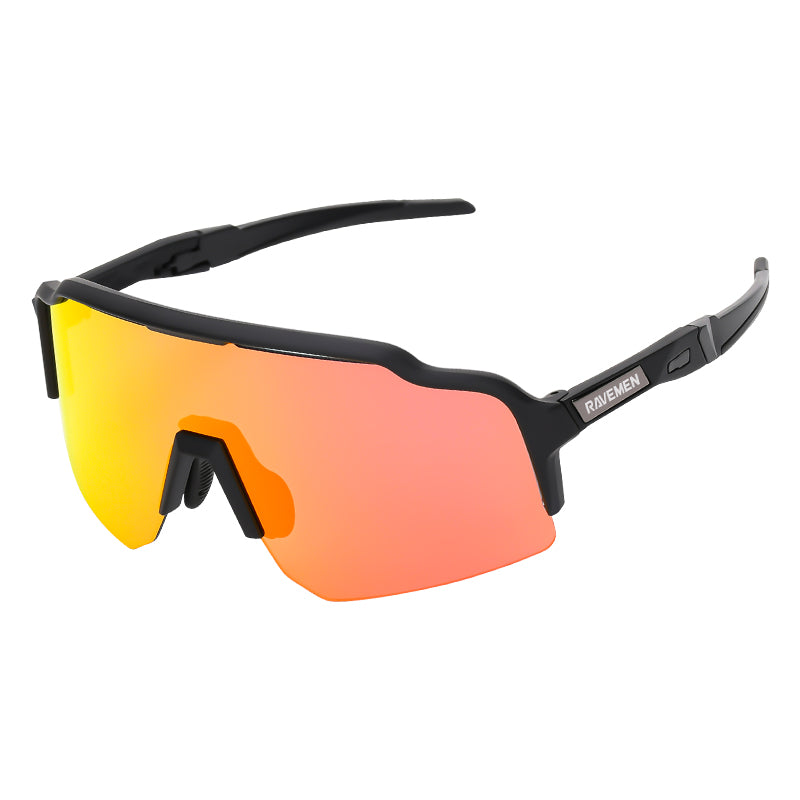
Check prescription compatibility first. It can rule out a frame before color or tint matter, and strongly curved lenses are the hardest to correct.
- Direct prescription sports lenses: The correction is built into the sports eyewear, within the limits of your prescription and the available lens construction.
- Prescription insert: A separate corrected component sits inside a compatible frame. The extra surfaces can cause reflections, fogging, or a smaller corrected field of view for some users.
- Contact lenses with sports eyewear: This keeps conventional sports lenses available if your eye-care professional considers contacts appropriate.
- Existing prescription sunglasses: A pair you already know can work when its vision, coverage, and retention suit the ride.
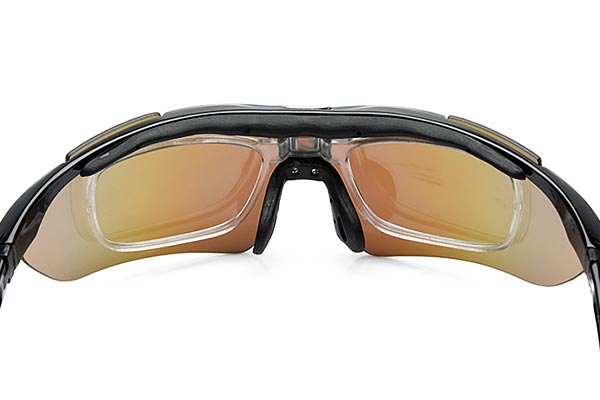
A rider considering inserts reported in r/cycling, “I’ve looked into cycling glasses with prescription inserts, but reviews are mixed at best — fogging, annoying reflections, limited field of view.”
Prescription strength, corrected viewing area, and the lab’s available designs decide what works. Before you order, ask the optician or optical laboratory whether it can supply your correction in that exact frame and lens arrangement.
Compare the exact version before you buy
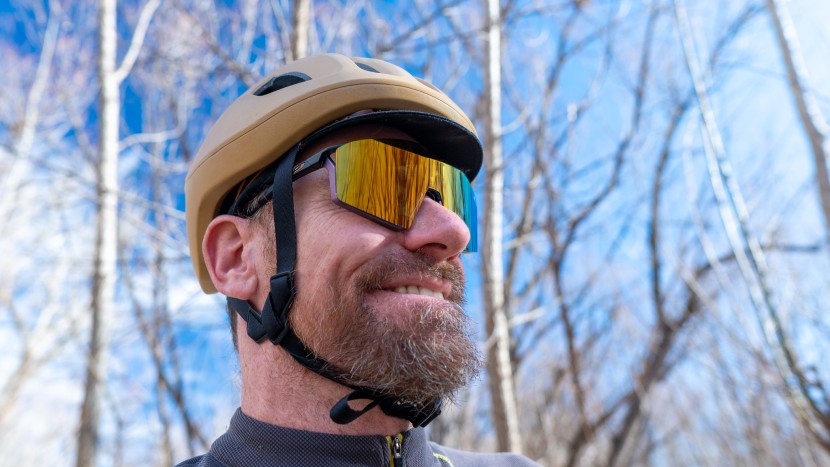
Product families often contain more than one lens or package option.
| Comparison point | Smith Bobcat | Julbo FURY REACTIV |
|---|---|---|
| Model code | 20492700399B6 | J5313414, REACTIV 1-3 High Contrast |
| Lens setup | ChromaPop bright-light lens with a clear spare lens | Photochromic lens, published 13% to 72% VLT |
| Published fit details | Small-to-medium; two-position nose pads; 5-base curvature | Medium; 135 mm frame width, 15 mm bridge, 115 mm temples, 131 mm lens width; 25 g |
| Package items | Clear spare lens, case, microfiber pouch | Not listed |
The Julbo FURY REACTIV High Contrast listing identifies the exact variant in the table. Other FURY lens versions can have different transmission ranges.
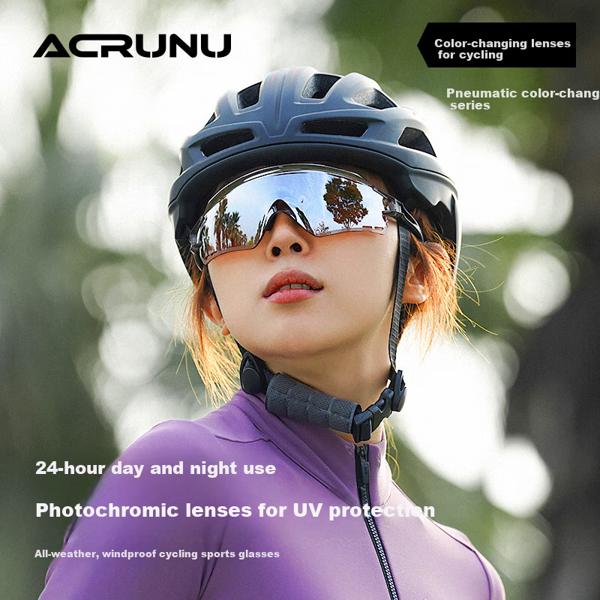
The table uses manufacturer specifications, and this publication hasn’t independently tested the glasses.
For the exact retail SKU, confirm which lenses come in the box, whether replacement lenses or nose pads are sold, the total cost, and the warranty and return terms. Custom prescription orders may have different exchange rules.
Before you decide
Put the glasses on with your helmet on before you decide, and check that the frame holds still and your sightline stays clear. Don’t push a correctly fitted helmet into an unsafe position to make glasses comfortable; if they only work that way, they’re the wrong pair.