
For most beginners, short, easy rides need no special on-bike food. Sustained longer or harder rides call for a tested carbohydrate plan and appropriate fluids. Check ride duration and effort, then pack only the food and drink that fit that plan.
Do you need extra food for your bike ride?
A relaxed ride after lunch and a hard two-hour training session ask different things of your body. Before you worry about gels or grams of carbohydrate, think about how long you’ll ride, how hard you’ll work, and when you last ate.
The Australian Institute of Sport (AIS) separates brief exercise from sustained endurance when it talks about carbohydrate intake.
| Exercise | What the guidance indicates | What it means for a beginner |
|---|---|---|
| Under 45 minutes | Extra carbohydrate isn’t needed | A 30-minute spin needs no sports snack |
| 45 to 75 minutes at sustained high intensity | Small amounts of carbohydrate may help performance | A hard 60-minute session counts. An easy one doesn’t |
| 1 to 2.5 hours of endurance exercise | Planned carbohydrate intake can support performance | A two-hour ride at a steady, hard pace calls for food |
| Beyond about 2.5 to 3 hours | Prolonged exercise may call for a more substantial strategy | A three-hour ride needs enough food you like eating |
These categories come from sports-performance guidance.
Distance tells you little. Ten flat miles feel manageable. Ten hilly miles are much harder. Judge a ride by time and intensity.
After a normal meal, a short ride needs only water and maybe a backup snack. The backup helps when your route or return time is uncertain.
If a medical condition affects what you can eat or drink, follow your doctor’s advice.
What to eat before a bike ride
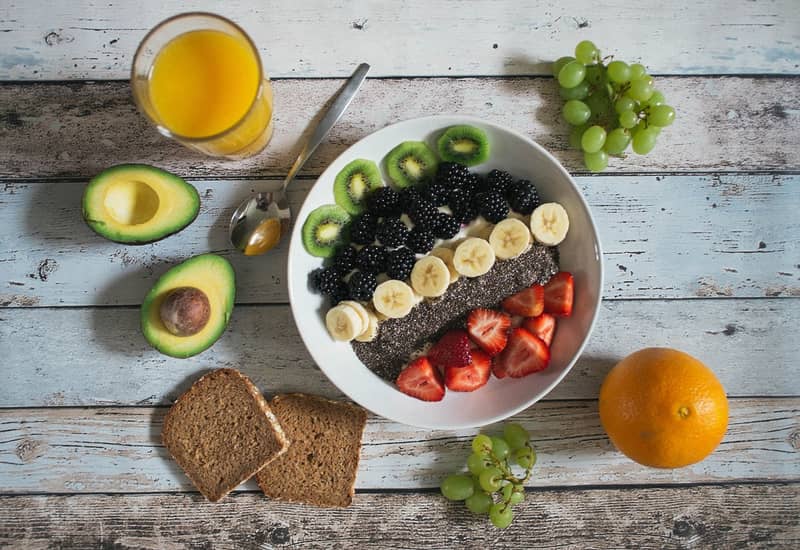
Start with food you know sits well. A normal meal with carbohydrate gives you a base. Adjust its size and timing to the ride ahead and the time you have before leaving.
With a few hours to spare, oatmeal with fruit or toast works. A large meal shortly before a hard ride can feel uncomfortable once the pace picks up.
Morning rides add a second problem: appetite. One rider who wanted to exercise before work had trouble eating breakfast.
If a small snack such as a banana has already proved insufficient for a longer morning ride, make time for a bigger breakfast or plan to eat during the hard effort. A short, gentle outing needs much less preparation.
The joint sports nutrition position statement from the Academy of Nutrition and Dietetics, Dietitians of Canada, and American College of Sports Medicine says to match food and timing to what the exercise demands.
How many carbs do you need during a longer ride?
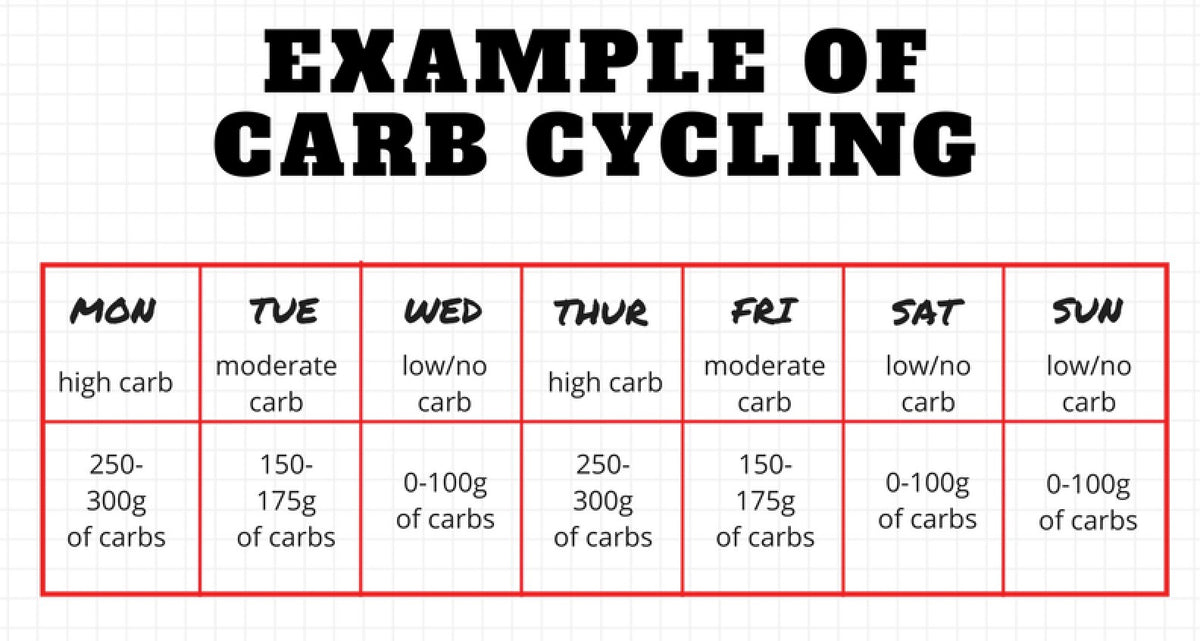
For endurance exercise lasting roughly 1 to 2.5 hours, the AIS gives a sports-performance range of 30 to 60 grams of carbohydrate per hour. During prolonged endurance exercise beyond about 2.5 to 3 hours, guidance allows up to 90 grams per hour in suitable circumstances. Those higher intakes require experience and gastrointestinal tolerance, and an easy recreational ride doesn’t call for them.
Use the total carbohydrate line on the label. Calories and snack weight give you the wrong number.
At 30 grams per hour, two hours of riding gives you 60 grams in total. At 60 grams per hour, you get 120 grams over those two hours.
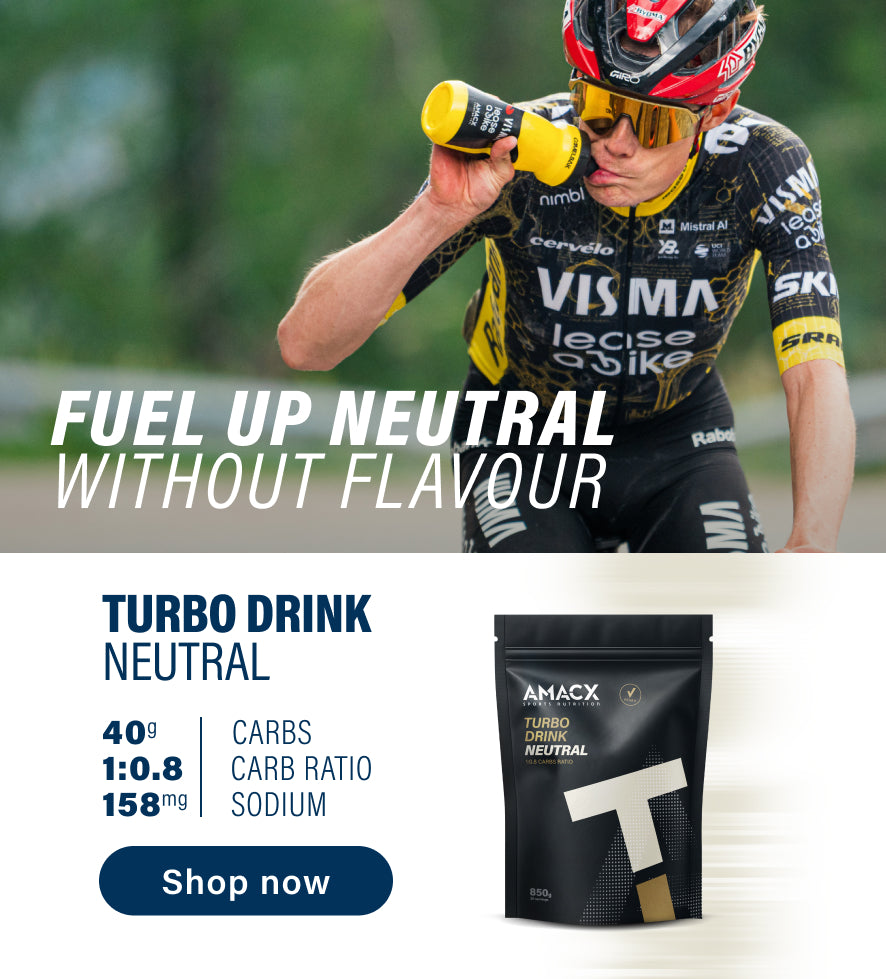
Say two snack portions each have 15 grams of carbohydrate on the label. Together that’s 30 grams. Check the serving size printed on the package so you count portions correctly.
Traffic lights, café stops, and breaks complicate a simple hourly calculation, and riders ask whether to count carbs by moving time or by elapsed time.
Base it on the effort you actually put in, and count any food you eat at stops. Four hours away from home with long breaks is a different situation from four hours at a hard pace without stopping.
What to pack: everyday food, bars, gels, or sports drinks?
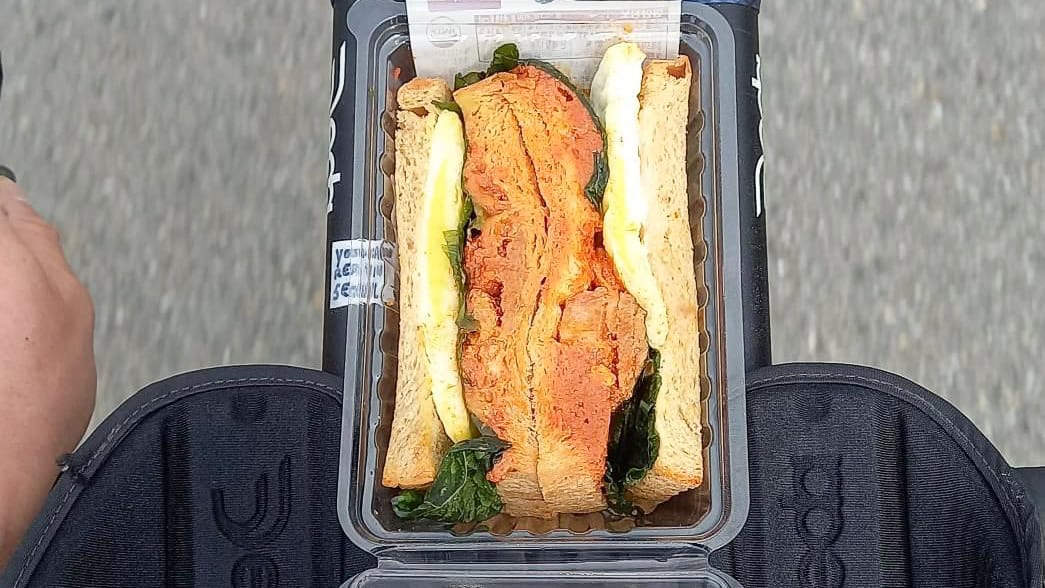
Pick food that fits your ride, travels well, and tastes good enough to eat while riding. A banana, dried fruit, gummy candy, or a sandwich you already like all work alongside packaged sports nutrition.
Price often decides the format. One rider in r/cycling, weighing the cost of commercial fuel, wrote, “But I’m broke, unfortunately, gels are very expensive. I can’t fulfill 90g of carbs/h for my wallet’s sake.”
| Format | Useful feature | Potential drawback | Selection check |
|---|---|---|---|
| Everyday foods | Familiar, with flexible portions | Bulk, freshness, and composition vary | Carbs in the portion you carry |
| Energy bars | Convenient packaging | Texture and nutrients differ | Carbs per bar, serving size |
| Energy chews | Small, divisible pieces | Serving counts can confuse | Carbs per serving, servings per pack |
| Sports gels | Compact, concentrated carbohydrate | Concentration, taste, and cost | Carbs, caffeine, water directions |
| Carbohydrate drinks | Fuel you can drink | Fluid and carb needs may differ | Mixing instructions, carbs per serving |
The Australian Institute of Sport’s sports gel guide describes typical sachets with about 20 to 30 grams of carbohydrate and 80 to 120 calories. Exact figures and water directions depend on the product.
Some gels described by the AIS contain about 25 to 100 mg of caffeine. Check the label if you’re also drinking coffee or using another caffeine-containing product.
A bar sold for its protein might have less carbohydrate than you expect. Compare foods by carbohydrate per serving, portability, taste, tolerance, and price. Sports products are convenient, but you don’t need to buy any to start riding.
When to eat on longer bike rides
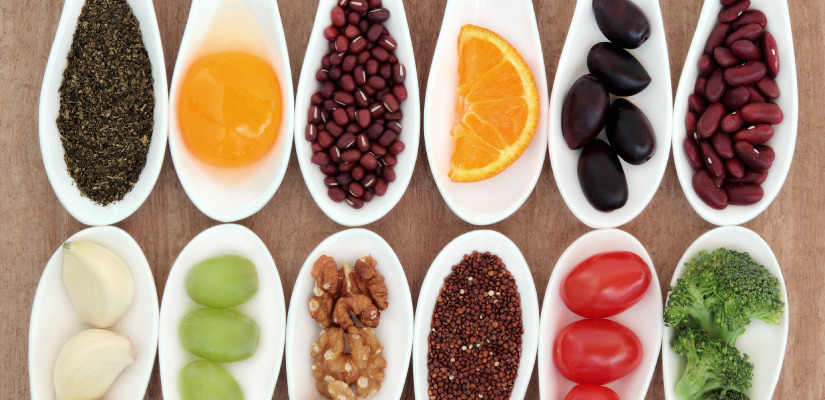
On a long ride, keep food easy to reach and pick things you’ll want to eat. Waiting until you’re severely hungry or exhausted makes the rest of the ride harder.
Eat small portions at safe moments, such as a planned stop or a stretch of route where eating is easy. A packet in an accessible pocket beats a sandwich buried under spare clothing.
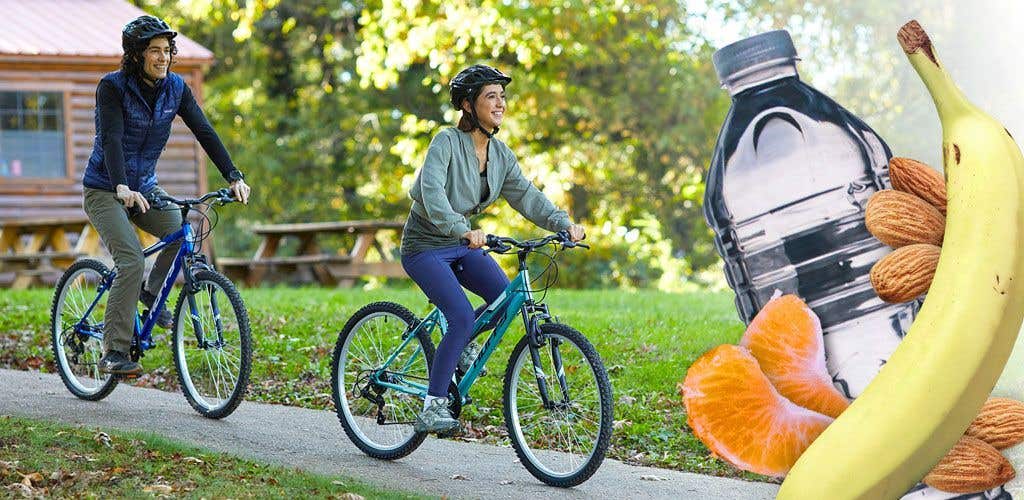
Bring variety on very long rides. Something sweet that appeals at the start can turn unappealing after several hours, while another food may still sound good.
AIS guidance says to practice your fueling routine in conditions similar to the ride you’re preparing for. Work out where eating fits along the route, and use a schedule you can keep up.
How much should you drink while cycling?
Weather, effort, duration, and how much you sweat all affect fluid needs. Water suits a short, uncomplicated ride. On longer rides, especially in the heat, access to fluids matters more.
The National Athletic Trainers’ Association’s fluid replacement guidance describes risks from both too little fluid and too much drinking. Thirst works as a guide for many healthy recreational exercisers, though prolonged hard exercise may need more individual planning. No bottle-per-hour quota fits everyone.
A carbohydrate drink does two jobs that don’t always line up. On a hot ride you might need extra water without extra carbohydrate. On a hard ride you may need carbohydrate from food while managing fluid separately.
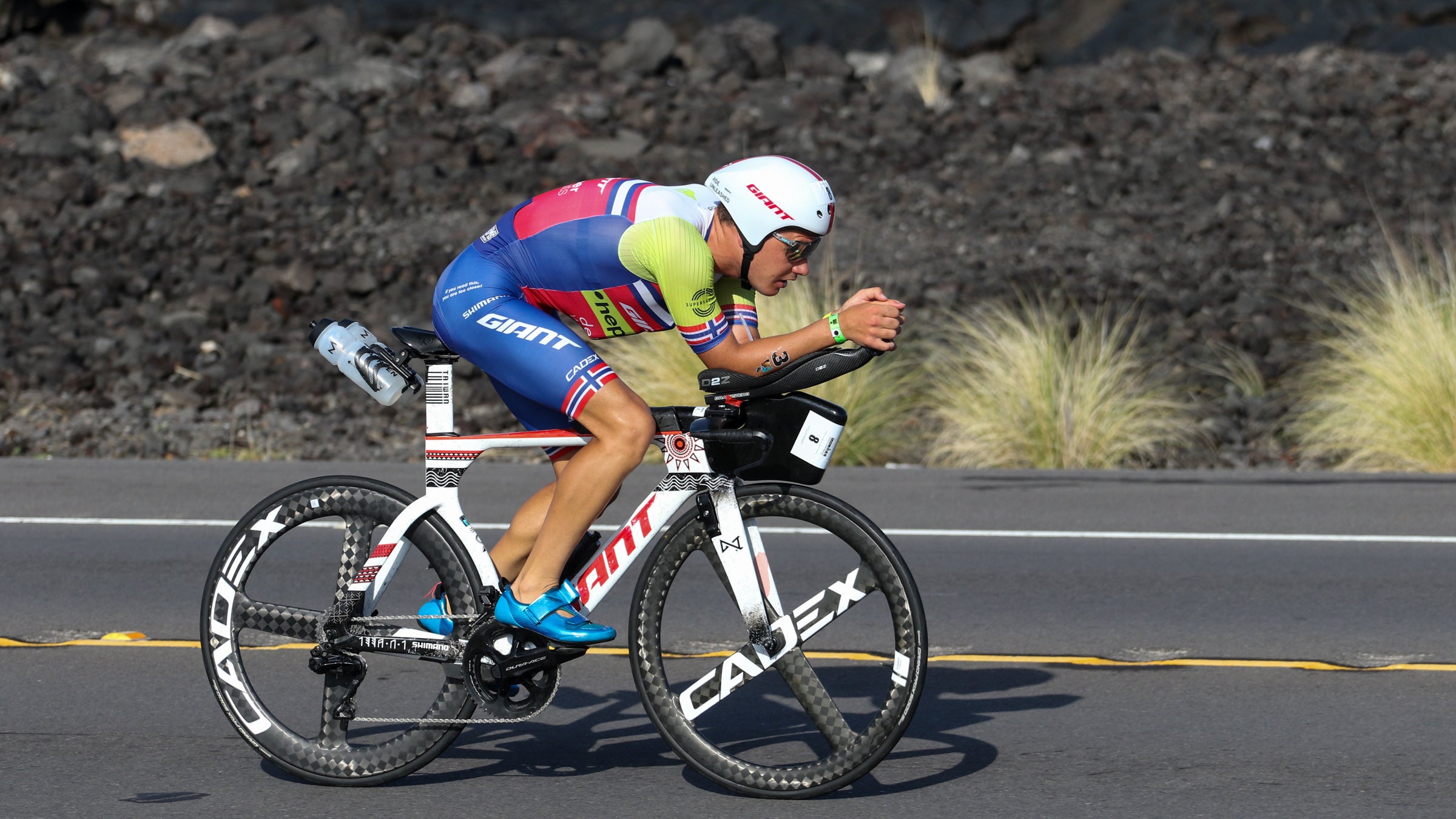
Electrolyte drinks can help in the right circumstances, but exercise-associated muscle cramps have several possible causes, so an electrolyte drink can’t guarantee prevention.
Check where you can carry or refill water on your route, then drink to the conditions and your thirst without forcing a set volume.
What if eating on the bike upsets your stomach?
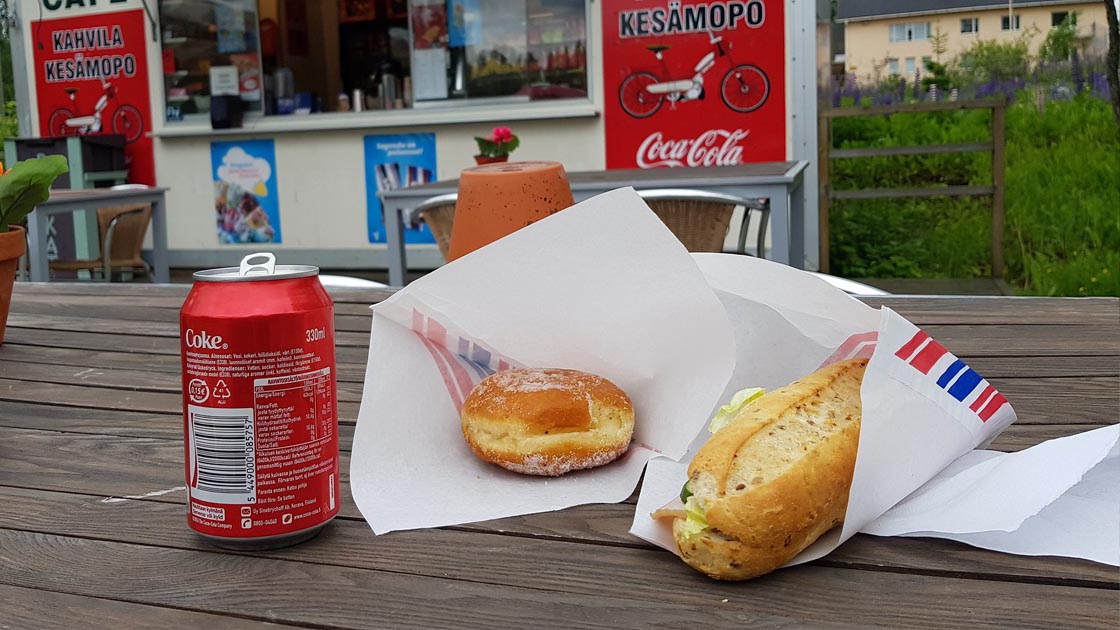
Food feels different during exercise than it does at home. Portion size, timing, concentration, and intensity all affect how well you tolerate eating on the bike.
A large meal just before hard riding can feel heavy. Concentrated gels or drinks are hard on some riders, especially when they skip the water directions.
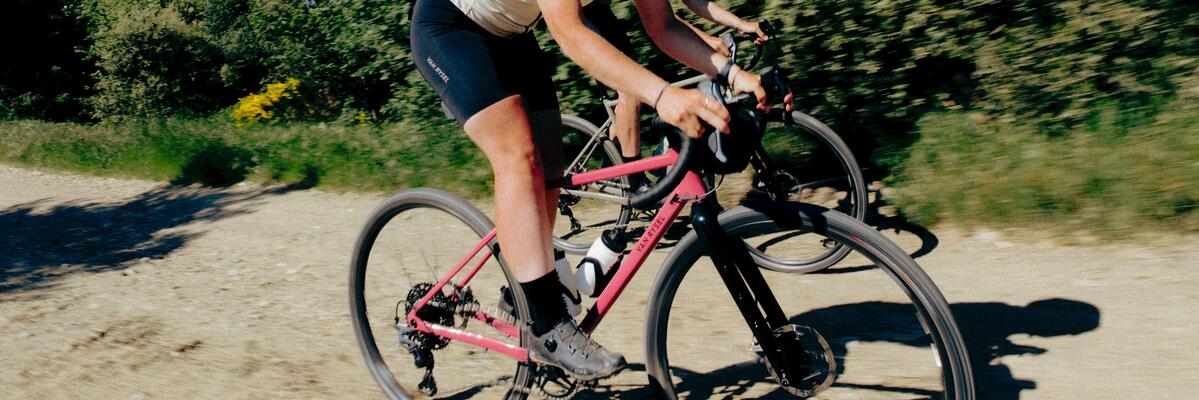
On an ordinary training ride, change one thing at a time: a smaller portion, a different time to eat it, or another format. Keep the rest of the routine steady so you can read the result.
See a doctor about persistent, severe, or recurring stomach symptoms. If the discomfort is bad, stop.
What if you feel dizzy, sick, or suddenly exhausted?
Cyclists use bonking to describe a sudden collapse in energy. Dizziness, faintness, and unusual illness can also come from heat problems, fluid imbalance, too much effort, or medical conditions.
A new rider commuting by bike wondered whether eating better could at least prevent the sick feeling at the end of the ride, since feeling tired seemed normal for someone new to biking.
Food is one possible cause among several. Heat, fluids, and effort can produce the same feeling.
If you become unusually ill while riding, stop somewhere safe and finish the route another day. Seek emergency help for fainting, confusion, chest pain, or other severe symptoms. Episodes that persist or recur deserve medical evaluation.
What to eat after a bike ride
After an ordinary ride, a normal meal with carbohydrate and protein, plus fluids, supports recovery. Rice with a protein-containing food and oatmeal with a protein source are two easy options.
Recovery is more time-sensitive after demanding exercise when another session follows soon. For most recreational rides, a specialized shake is optional.
Persistently inadequate energy intake relative to demanding training is a separate health concern, which the International Olympic Committee describes in its work on low energy availability.
Three realistic fueling plans for beginner bike rides
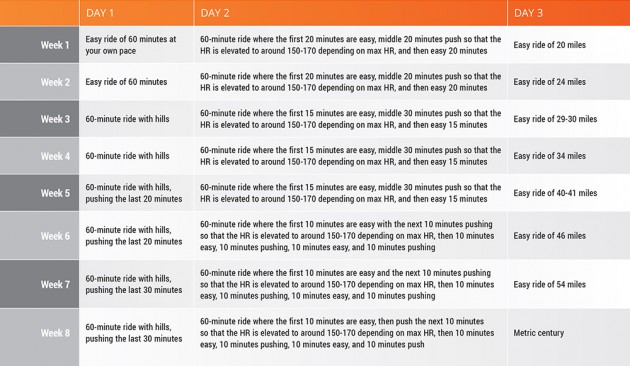
Match your plan to the effort you expect and what you’ve already eaten.
| Planned ride | Before setting off | Food to consider | Fluid access |
|---|---|---|---|
| About 40 minutes at an easy pace | Normal meal beforehand | No on-bike carbohydrate needed | Water for the conditions |
| About two hours at a steady pace | Check your last meal and effort | Portable carbs matching an endurance plan | Carry drinks or know refill points |
| Three hours or longer | Check duration, breaks, and intensity | Enough food, easy to reach, with variety | Reliable drinking and refill stops |
If you pick 30 grams per hour for a two-hour training ride, that’s 60 grams of carbohydrate during the ride. Two bar portions and two chew portions, each labeled as 15 grams of carbohydrate, hit that total and fit in separate pockets.
After the ride, jot down the planned and actual duration, what you ate and drank, and whether your energy or stomach changed. Change one specific thing on a comparable ride, and you get useful feedback.