Use a floor pump at home and carry a reusable mini pump on rides. An electric inflator saves your arms but needs charging, and CO₂ gives you the fastest roadside stop but runs out of gas.
Which pump setup do you need?
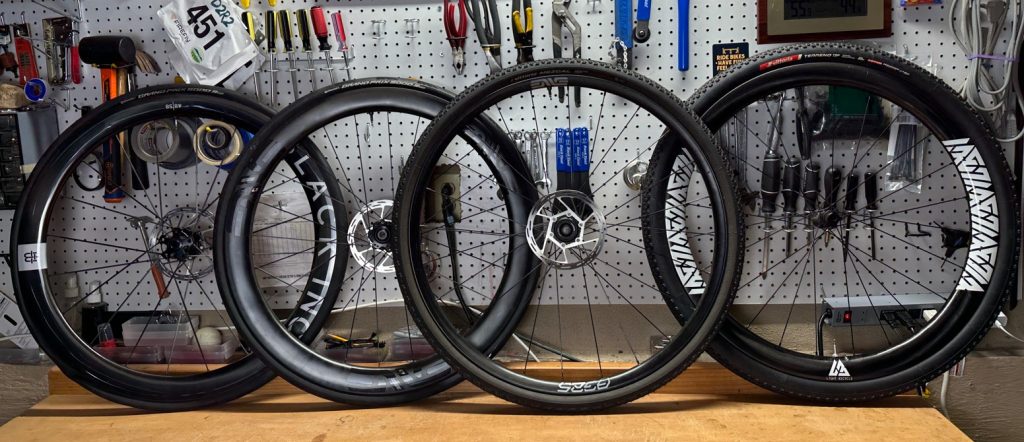
If you inflate at home, you want a floor pump. A stable base and a readable gauge make regular top-ups easy. If you ride, you need something that fits in your kit and restores enough pressure after a repair: a mini pump, an electric inflator or CO₂. Some compact inflators cover both jobs, but two separate devices are easier to live with.
Floor, mini, electric or CO₂: how they compare
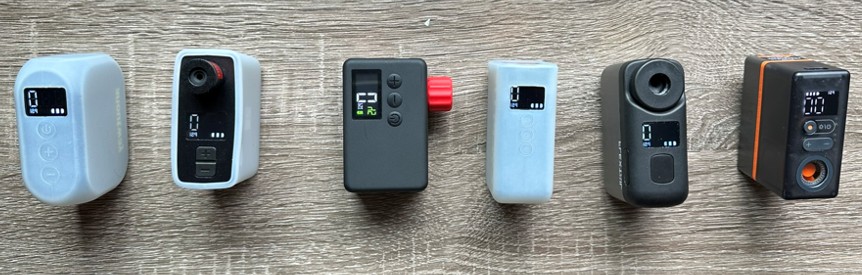
The four types ask for different things: storage room, pumping effort, battery charge or cartridges. A rider with a small saddlebag and a rider who keeps gear in a garage will choose differently.
| Type | Typical use | Advantage | Trade-off | Pressure feedback |
|---|---|---|---|---|
| Manual floor pump | Home or workshop | Stable operation and a larger air chamber | Bulky to carry on rides | Usually has a gauge; accuracy varies |
| Manual mini or frame pump | Roadside repairs | Reusable air supply, no charging | Repeated strokes and physical effort | Many have no gauge |
| Portable electric inflator | Home, travel or rides | Low hand effort; preset inflation on some models | Battery capacity, charging and heat | Digital reading on some models |
| CO₂ inflator | Fast roadside or event inflation | Compact, rapid gas delivery | Finite cartridges and dispensing technique | Often no built-in gauge |
Five representative models:
| Model | Reason to consider it | Published specification | Limitation |
|---|---|---|---|
| Topeak JoeBlow Sport III TJB-S6 | Regular home inflation with a visible gauge and multiple valve types | 160-psi gauge scale, 318 cc per stroke, 1.68 kg, 72-cm hose; Presta, Schrader and Dunlop | Takes full floor-pump storage space; the gauge scale says nothing about measured accuracy |
| Park Tool PMP-4.2 | Frame-mounted manual inflation with a locking head | 90-psi maximum; 130 g; 265 mm; Presta/Schrader | Manual effort; 90 psi has to cover your tire |
| Lezyne Pressure Drive | Compact manual inflation with a flexible hose | 120-psi maximum; ABS Flex Hose for Presta/Schrader; valve-core tool | Threaded-hose connection needs care around removable Presta cores |
| Topeak E-Booster Digital TDP-E01 | Preset powered inflation with little hand pumping | 120-psi maximum; maker-stated ±2-psi accuracy; 162 g; 7.4-V, 600-mAh battery | Charging, battery capacity and heat precautions |
| Lezyne Control Drive CO₂ | Cartridge inflation with adjustable gas flow | Presta/Schrader head, flow knob, insulating sleeve; threaded 16-g and 25-g cartridges | Requires compatible cartridges; gas supply runs out |
The Park Tool PMP-4.2 stops at 90 psi. If your tire needs more, within its approved tire and rim limits, choose another pump.
Floor pumps: the home baseline
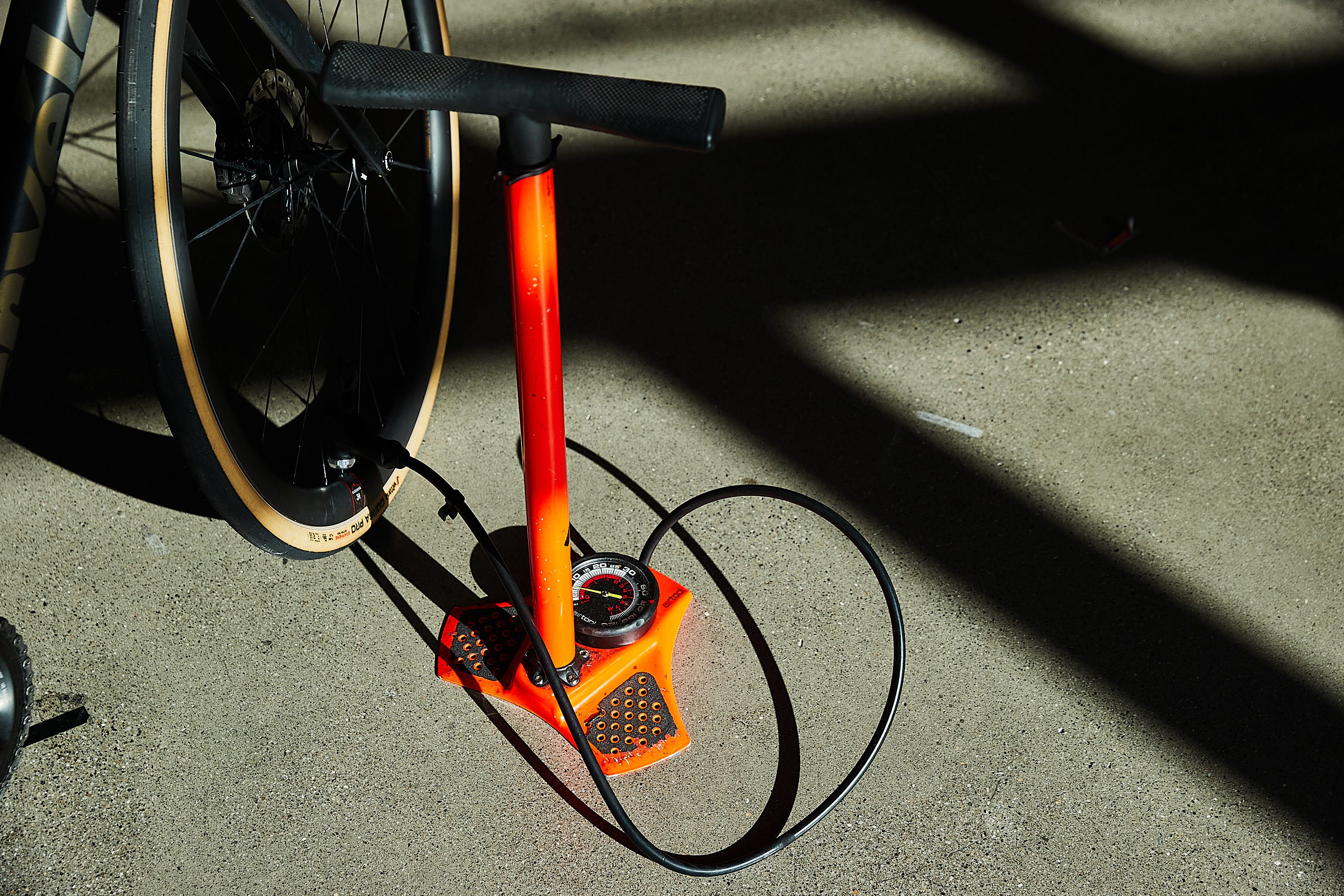
A floor pump gives you a full-length handle on a stable base. You stand over it while the hose reaches the wheel, and the dial makes routine pressure checks easy.
Wider, high-volume tires reward a pump that moves more air per stroke. Narrow road tires need a pump that reaches higher pressure.
A dial you can read from your usual pumping position helps, but only a check against a reference gauge shows how accurate it is. Look for measured accuracy near the pressures you ride.
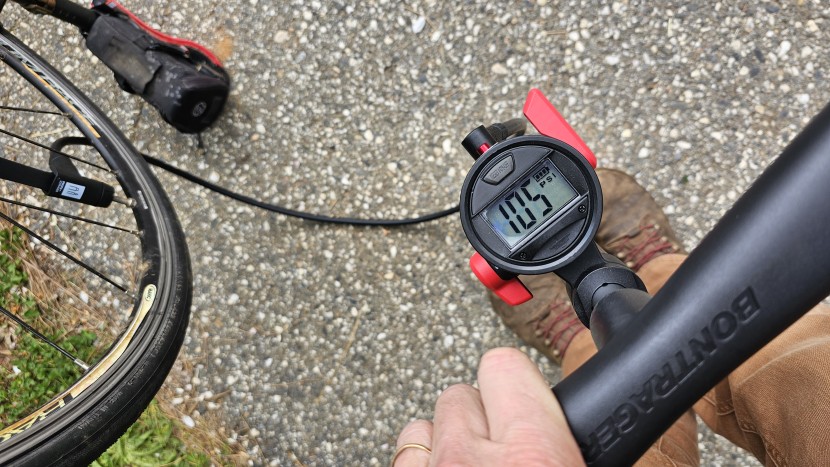
In a test of ten floor pumps, Cycling Weekly counted strokes to 40 and 72 psi and compared the pumps’ gauges with a Topeak D2 Smart Gauge. The SKS Air-X-Plorer 10.0 took 21 strokes to reach 40 psi and 23 to reach 72 psi. Its gauge read 39 and 70 psi at those reference pressures.
That puts the SKS dial 1 psi under the 40-psi reference and 2 psi under the 72-psi reference. Stroke counts only compare when pumps are tested on the same tires, starting pressures and targets.
Mini and frame pumps: reusable roadside inflation
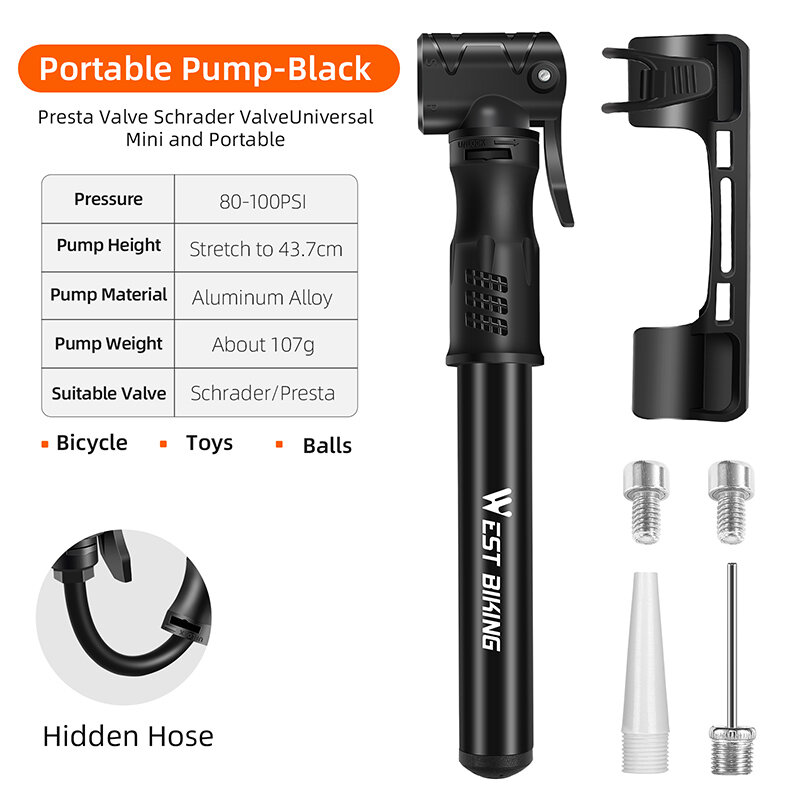
A mini pump draws in fresh air with every stroke, so it needs no charged battery and no spare cartridges. You pay in time and effort, especially with a very small pump and a nearly empty tire.
Longer frame pumps give you a different grip and more leverage than short pocket pumps. High-volume versions move more air per stroke, and high-pressure versions suit tires that need more psi. A flexible hose makes pumping easier at the valve.
The Lezyne Pressure Drive comes with a trade-off. Cyclingnews reports that its threaded hose can loosen a removable Presta valve core during detachment.
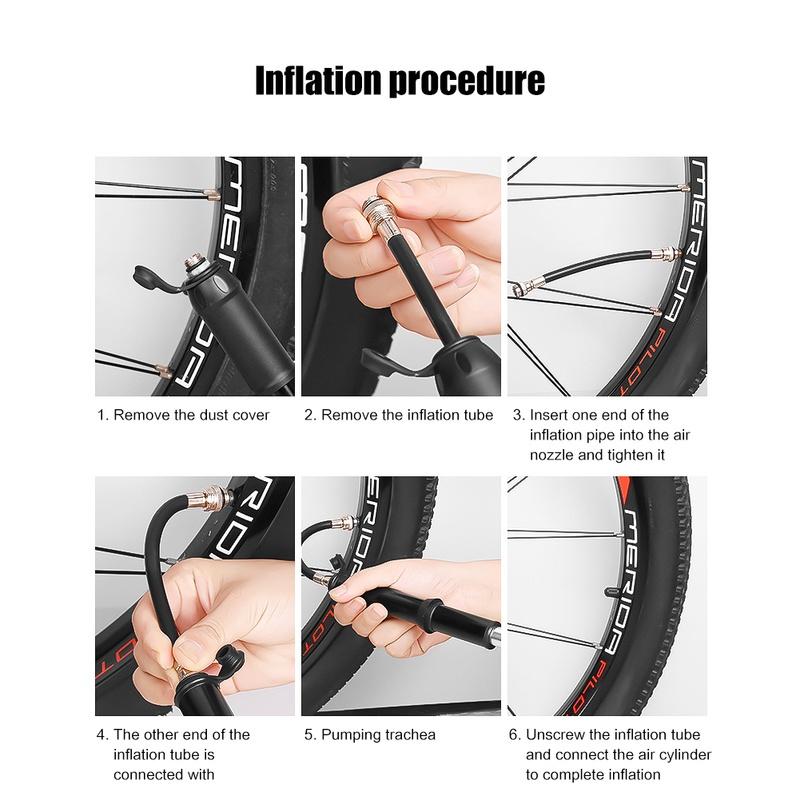
A rider testing a Pro Bike Mini Hand Pump at home wrote in a r/ladycyclists discussion, “Just tried to pump my tires using my Pro Bike Mini Hand Pump and I’m so happy I tried it in the safety of my house. What an awful experience.”
Try your portable pump on your own wheel at home and work up to a usable pressure. Watch whether the head stays attached and whether the effort is realistic for you. A stated maximum pressure says little about the work on the roadside.
Electric mini pumps: less effort, finite battery
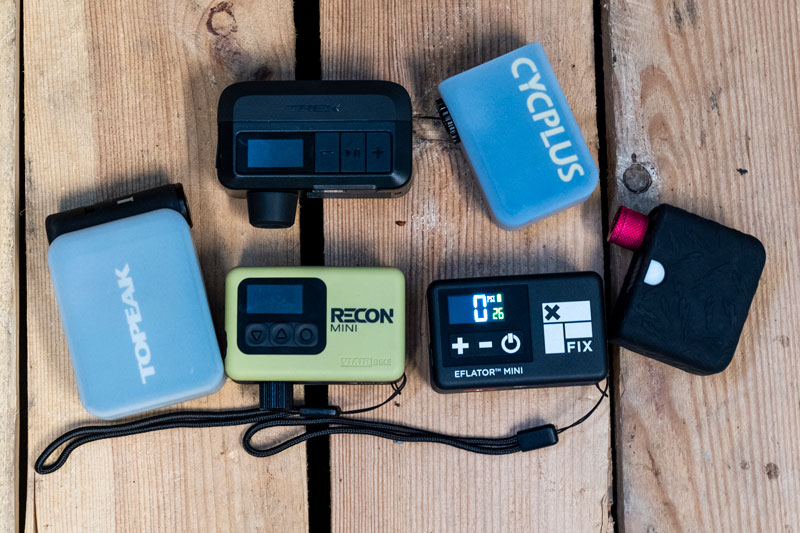
Rechargeable inflators remove most of the hand pumping. On models with a preset, you pick a target and the pump runs the inflation cycle. How much inflation the battery delivers decides how useful the pump is for your tires.
Tire volume, starting pressure, target pressure and temperature all change the usable capacity. For the Topeak E-Booster Digital, the manufacturer gives approximately 45 minutes of USB-C charging under its specified input and uses five-minute pauses between inflations in its capacity comparisons.
An electric unit is also convenient at home. On rides, check that its size and weight fit your storage, and add charging to your routine.
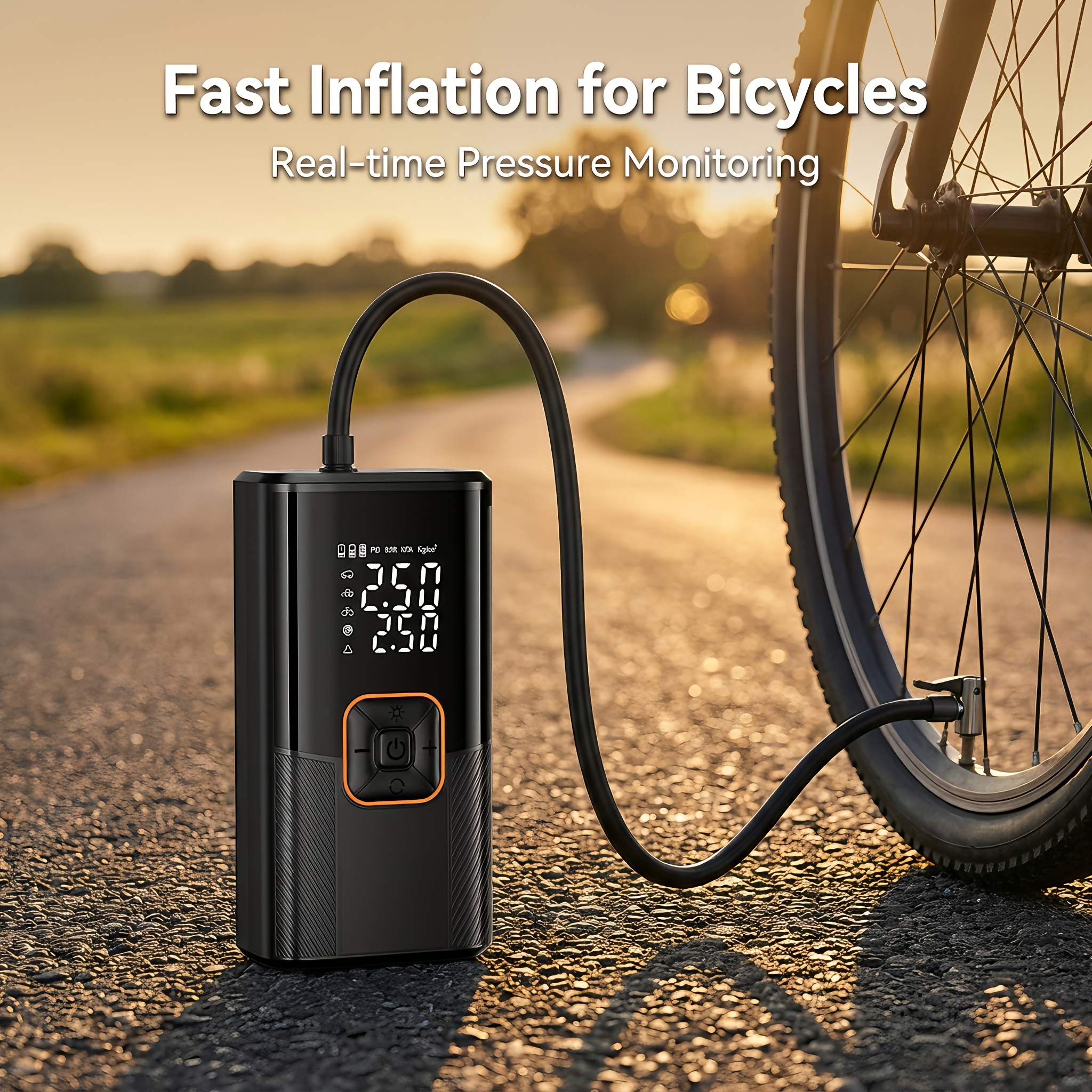
A rider weighing a Cycplus AS2 Pro asked whether an electric mini pump is worth it or whether to stick to CO₂ cartridges.
On speed, Cycling Weekly measured 37 seconds for a Cycplus AS2 Pro to inflate its 700 × 30 mm test tire to 50 psi.
Before you buy an electric model, check its stated inflation capacity for your tire sizes, its charging input, the accessories in the box and whether it fits where you plan to carry it.
CO₂ inflators: fast deployment, finite supply
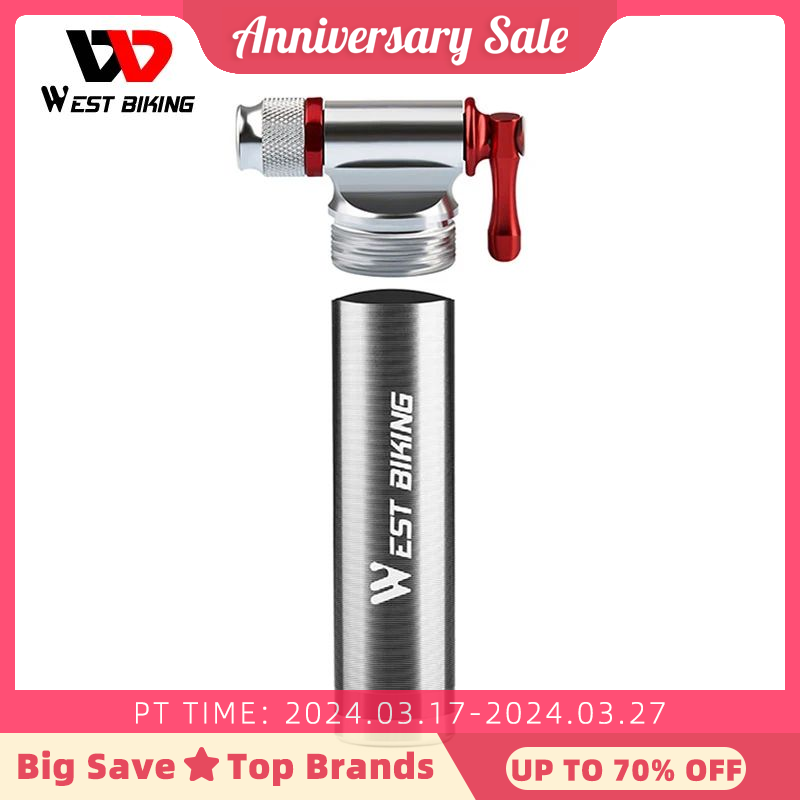
A CO₂ inflator pushes compressed gas from a cartridge into the tire. The small head and fast release suit riders who value compactness and speed, including some supported events where repair time matters.
The Lezyne Control Drive uses threaded cartridges and a flow-control knob, so you can adjust the release while the head sits on a Presta or Schrader valve. Its insulating sleeve matters because the cartridge and inflator become extremely cold during discharge.
Cyclingnews compared eight CO₂ inflators using a controlled tire setup and considered their handling as well as inflation.
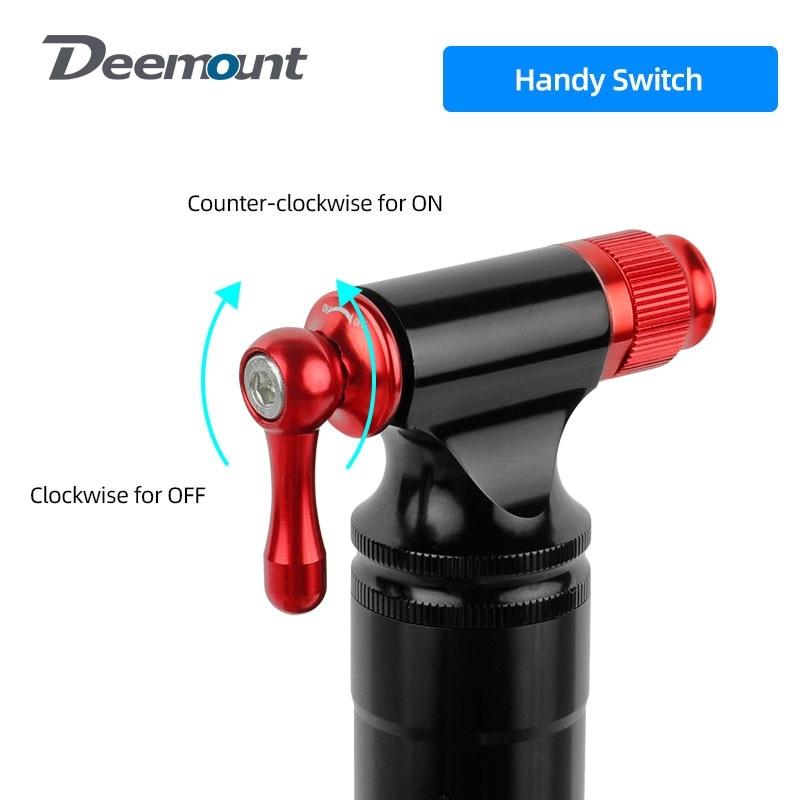
After unsuccessful roadside inflations, a rider wrote in r/cycling, “Two flats, four failed CO2 cylinders, two long walks home.”
Each cartridge holds a finite amount of gas, and a poor connection wastes it. Extra cartridges give you more attempts, each with the same limit. A manual pump draws new air on every stroke.
Match the head to your cartridge’s thread and size, and decide whether you want adjustable flow and an insulating sleeve. Then work out how many cartridges your rides call for.
Before you buy: valve, pressure, sealant and heat
Check that the model’s connection and inflation method suit the wheel in front of you. A high pressure rating or a dual-valve label means little if the head cannot seat on the installed valve.
Presta valve stems are approximately 6 mm wide and normally have a small locknut that you loosen before inflating. Schrader valves are approximately 8 mm wide and have a spring-loaded central plunger. Deep rims, short exposed stems, valve extenders and removable cores change how a pump head attaches.
The approved tire and rim combination sets safe tire pressure, not the pump’s maximum. SRAM/Zipp specifies a maximum of 5 bar (about 72 psi) for certain Zipp TSS configurations. That limit applies to the specified system, and the lower tire or rim ceiling governs.
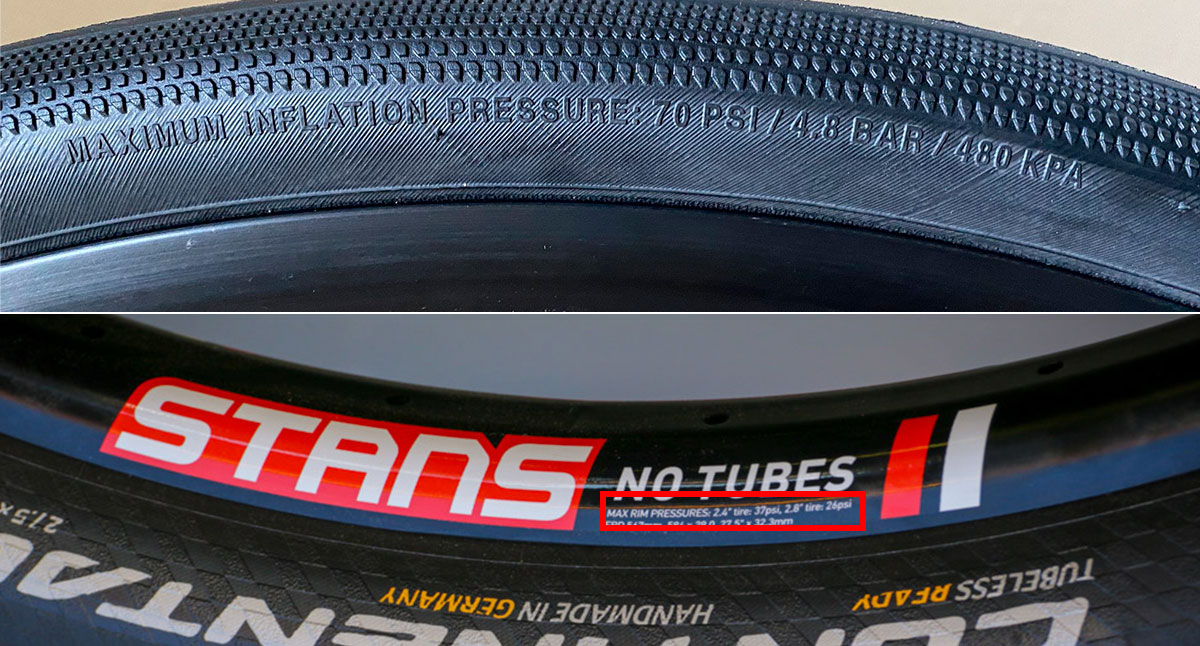
Two material-specific instructions deserve attention. Schwalbe cautions against using CO₂ with its tubeless puncture-protection fluid, so read the instructions for the sealant in your tire. Topeak’s E-Booster Digital documentation calls for an extension hose when inflating TPU tubes with resin valve stems, to prevent heat damage at the connection.
Seating a tubeless tire is a separate job from routine top-ups. Some setups need a strong initial rush of air to seat the bead, and a portable inflator needs a design or test results that show it can deliver that.
| Check | Passes when | Stop if |
|---|---|---|
| Valve interface | The head or specified adapter fits and seals on the installed stem | Stem exposure, an extender or a core prevents a secure connection |
| Pressure | The equipment reaches the approved range without exceeding tire/rim limits | You are treating the pump’s maximum as the tire’s target |
| TPU valve material | The required hose or heat safeguard is available for the installed valve | A resin-stem setup lacks the safeguard |
| Tubeless sealant | The manufacturer’s instructions allow your planned inflation method | A specific CO₂ restriction applies or compatibility is unknown |
If a model fails a check, an adapter or protective accessory may fix it. If not, choose another inflation method before you are standing at the roadside.
Pack your roadside kit
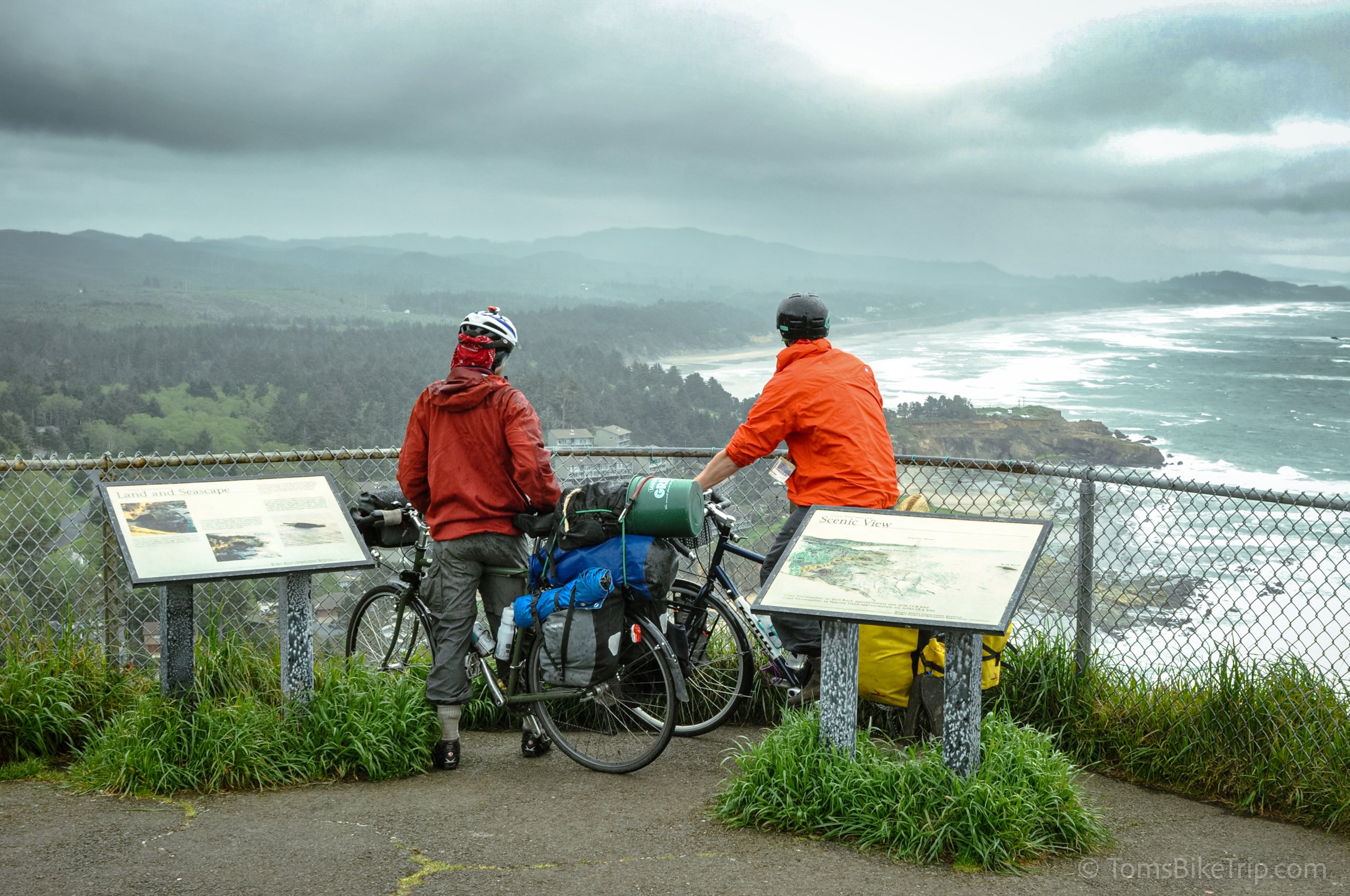
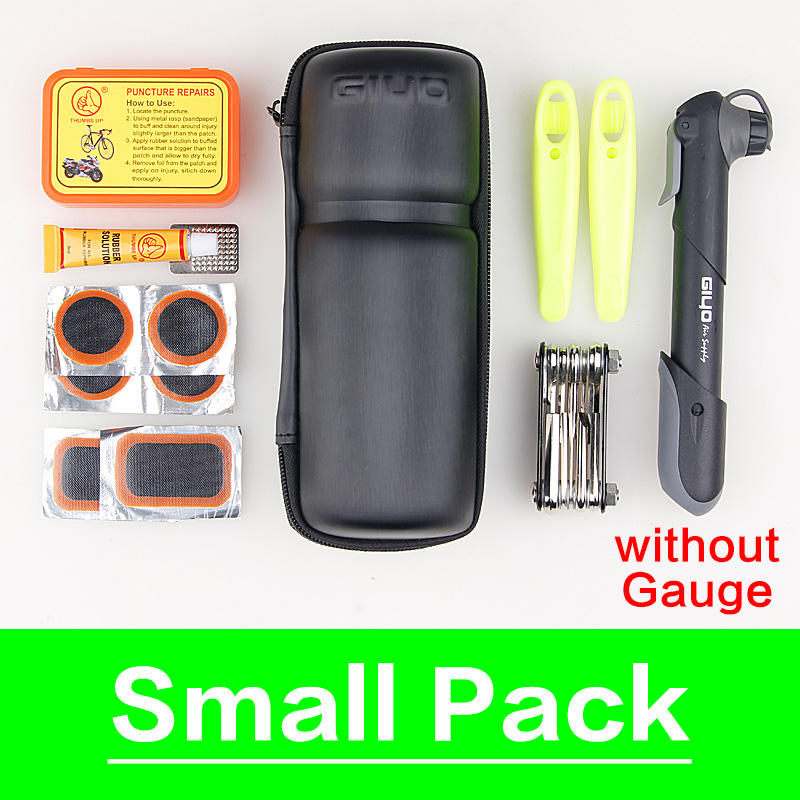
An inflation device replaces air after a puncture repair, so your kit also needs the repair supplies. Pack it exactly as it will travel on the bike:
- Inflation equipment: Your pump or inflator, with a detachable hose, head or adapter if it needs one.
- Repair supplies: A compatible spare tube or puncture-repair material and the tools your repair method requires.
- Consumables and accessories: CO₂ cartridges, if you use them, and any mounting parts your system needs.
- Storage: A secure bag or frame location that keeps the whole kit within reach at a roadside stop.
Add a backup way home for the day an inflator fails, a battery empties or the cartridges run out. What suits you depends on route length, terrain and how easy it is to get help. And a damaged tire needs repair or replacement, not just air.
Test it before you rely on it
Whatever you carry on rides, test it at home before you depend on it on the road. A mini pump can turn out to be an awful experience, and CO₂ cartridges run out or fail, so check that the head fits your valve and that you carry enough cartridges for your rides.