
A no-drop group ride is one where the organizers plan for riders who fall behind. They do it by slowing the group, regrouping at agreed points, or assigning a sweeper to stay with the slowest rider. Whether it suits you depends on its pace, distance, and terrain.
How do no-drop group rides work?

A no-drop group ride has a plan for cyclists who fall behind. On a drop ride, anyone who can’t hold the required pace has to navigate and finish alone. The group doesn’t wait.
New Haven Bicycling Club names two ways to keep a no-drop promise: moderate the group’s pace, or wait periodically so everyone can finish together.
| How it works | What the group does | What the rider experiences | Example clubs |
|---|---|---|---|
| Stay together | Adjusts speed when gaps open | More continuous riding as a group | New Haven Bicycling Club |
| Regroup at stops | Waits at agreed locations, often after climbs | Time apart between meeting points | New Haven Bicycling Club; Park Ridge Cycling |
| Use a sweeper | Assigns a rider to stay near the back | Company at the rear while the front may move ahead | Florida Cycling; All Bodies on Bikes |
A regroup point, sometimes called a muster point, is where separated riders meet again. A sweeper or sweep rider stays toward the back, usually with the slowest participant.
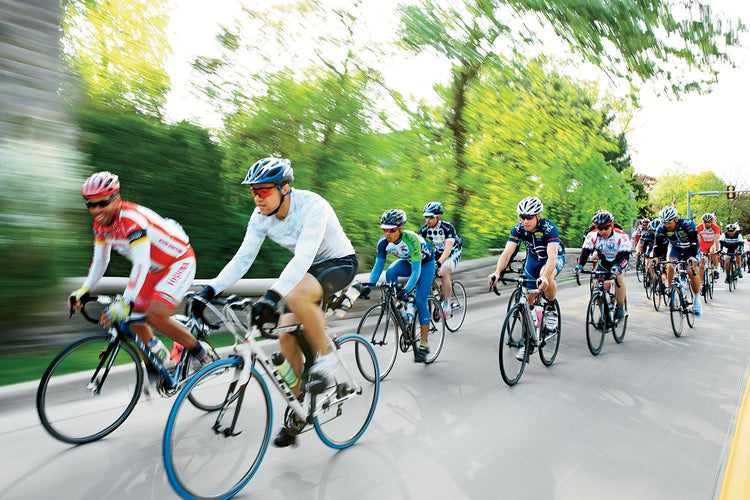
Regrouping alone doesn’t make a ride no-drop. Berkeley Bicycle Club says its groups stretch out and regroup, yet it singles out its Introductory Ride as no-drop.
All Bodies on Bikes lists a pre-ride safety briefing, a designated sweeper, and regrouping at the tops of hills.
Does no-drop mean slow or beginner-friendly?
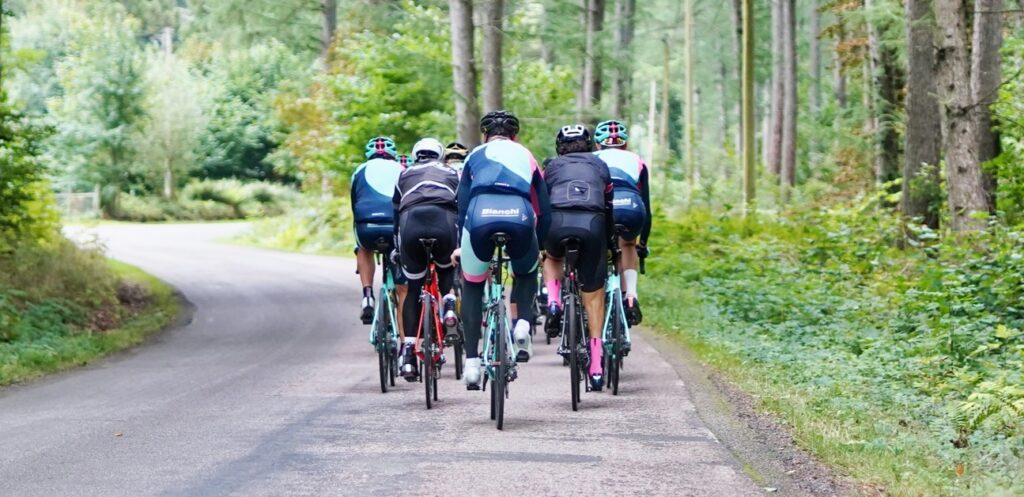
No. A no-drop ride can still be demanding. Park Ridge Cycling’s promise holds only if you meet the posted pace and duration. Its Group B description covers about 55 miles and lists a 17 to 18 mph cruising speed alongside a 16 mph average.
Solomons Island Cycling’s no-drop C group lists a 12 to 14 mph average moving speed, while other clubs quote flat-road speed. Compare the listed speed, distance, and hills with a recent ride you’ve finished on similar terrain. If the numbers sit at the edge of what you’ve done, pick a shorter or slower group.
Five things to check before you join

| Check | Look for | If it is missing |
|---|---|---|
| Pace | Posted mph and what it measures | Ask if it’s a moving average, a whole-route average, or flat-road cruising speed |
| Route | Miles, climbs, road conditions, and technical requirements | Ask for the route and the skills the group expects |
| Support method | Staying together, planned regroups, or a named sweeper | Ask who waits for slower riders, where, and under what conditions |
| Mechanical policy | Whether the group waits or offers limited help | Ask what happens after a flat or a long repair |
| Separation and exit | Contact plan, regroup points, and ways to shorten the route | Ask whom to tell if you need to stop or leave |
Compare two sample listings. “No-drop, 18 mph” doesn’t say what the 18 measures or who waits. “No-drop, 12 to 14 mph average moving speed, planned hilltop regroups, named sweeper” answers both.
USA Cycling’s group-ride guidance says to communicate the route, expected pace, and technical difficulty clearly, and to be ready for ordinary mechanical problems.
Send the leader this:
“Hi, I’m thinking of joining your no-drop ride. What pace and distance should riders be comfortable with? Will the group stay together, regroup, or use a sweeper? What happens if someone gets a flat or needs to turn back?”
What if you fall behind, get a flat, or need to leave?
Riders can separate on a climb or at an intersection and meet again at the regroup point. If you lose contact, stop somewhere safe, stay on the agreed route, and contact the leader or sweeper using the ride’s contact plan. Don’t chase the front group at a speed beyond your ability.
A cyclist with monocular vision described a women’s no-drop ride in a June 24, 2026 r/ladycyclists discussion. “I wind up riding most of the way pretty much by myself,” the cyclist wrote.
Chatting in the pack the whole way is easier on a stay-together ride, where the group adjusts speed when gaps open. On a sweeper ride, you get company at the back while the front may move ahead.
Park Ridge Cycling says its group may continue when a repair takes more than ten minutes, so carry basic supplies for a flat and follow the club’s stated procedure.
Take the agreed exit route if you leave early or can’t finish. Staten Island Bicycling Association expects riders who depart voluntarily to inform the leader or another participant.