
A chamois (pronounced SHAM-ee) is the shaped pad sewn into padded bike shorts, bib shorts and cycling liners. It’s usually technical fabric over layers of foam, sometimes with gel, and it eases pressure and rubbing where you sit on the saddle. Placement matters more than thickness: a thick pad that presses in the wrong place feels worse than a thinner one shaped for your riding position.
What does a cycling chamois do?
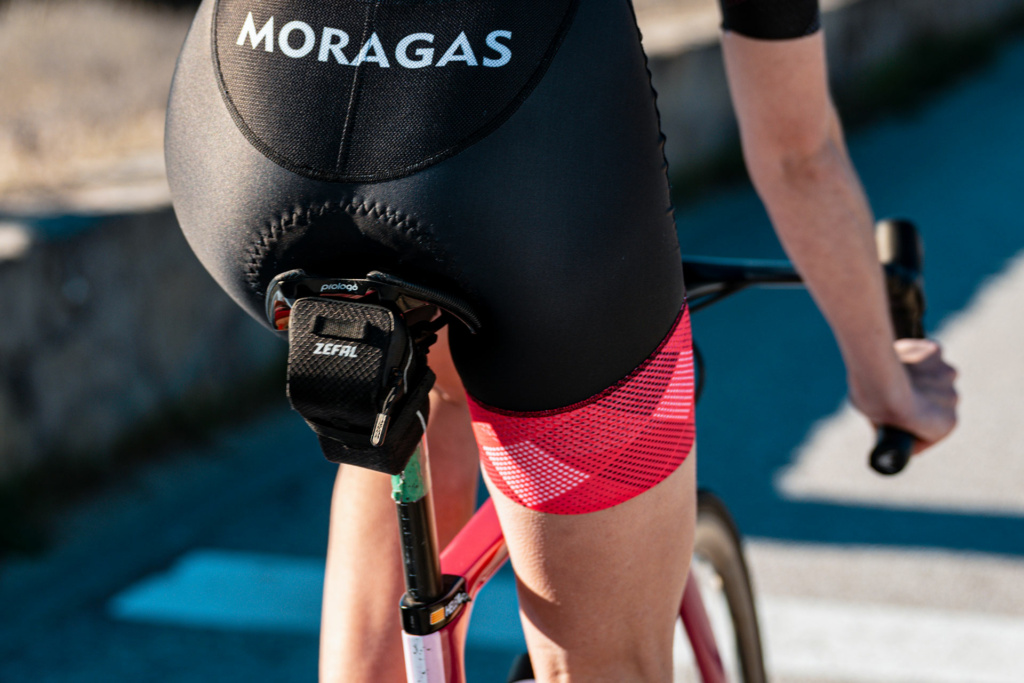
A chamois cushions you where your body meets the saddle. Its shaped foam supports the parts that carry your weight, and the fabric cover moves with the shorts as you pedal. That spreads out pressure, cuts rubbing and damps some of the vibration from the road.
The name comes from the soft leather once used inside cycling shorts. The pad in your shorts today is synthetic fabric and engineered foam.
You’ll find one sewn into fitted cycling shorts, bib shorts and padded liners that you wear under outer shorts.
The shorts matter almost as much as the pad. Snug, stretchy shorts hold the pad in place stroke after stroke. If the fabric shifts or folds, the extra padding forms a ridge that rubs your skin.
The saddle carries most of your weight. The pad changes how the saddle feels through your shorts.
What is a modern chamois made of?
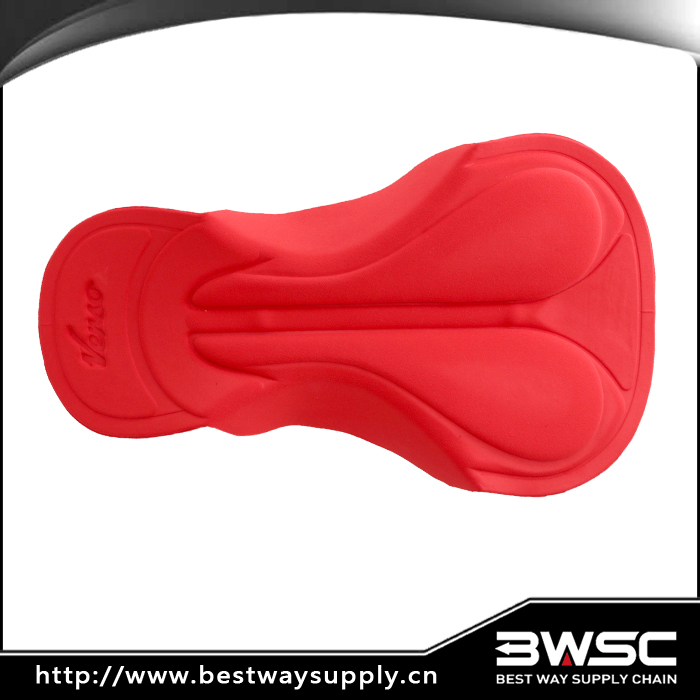
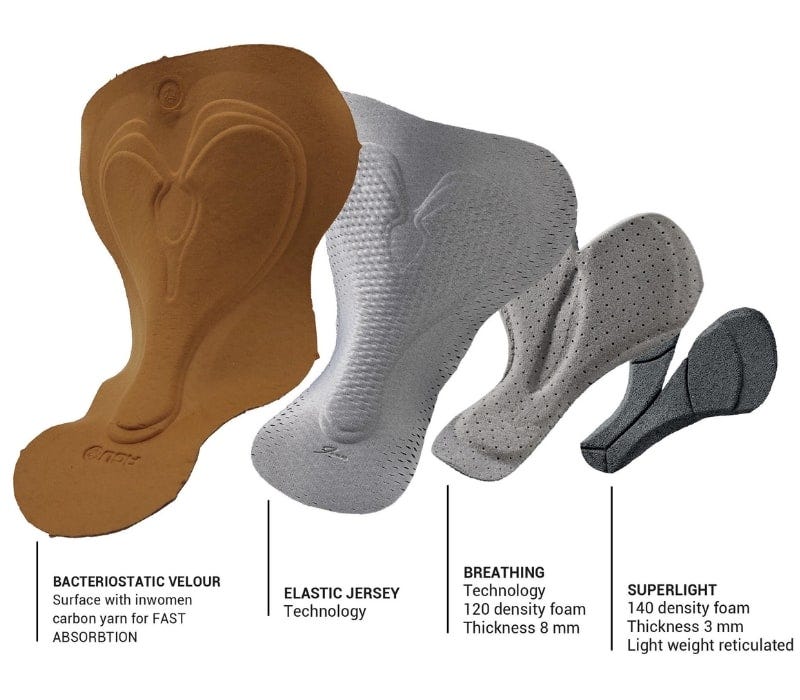
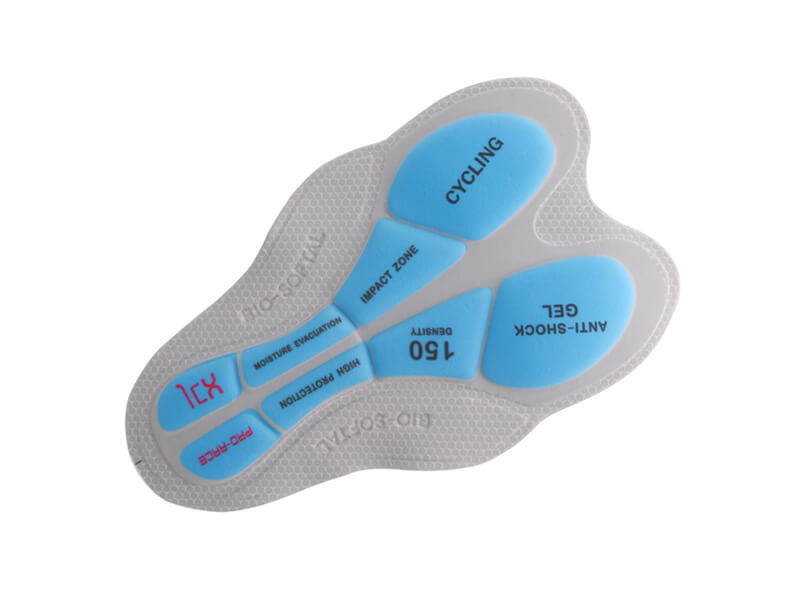
Most pads have smooth fabric on the side against your skin and shaped foam underneath. The top looks like one piece, but the foam under it changes in thickness, firmness and flex from zone to zone.
The top fabric stretches and wicks sweat, so it moves with you. Check the seams. A raised edge that touches your skin as you pedal makes a good pad irritating.
Under the fabric, some makers use open-cell polyurethane foam, which squashes under your weight and springs back when the load changes. Layers of different densities let designers put firmer support in one zone and thin the pad out elsewhere.

So two pads of the same thickness feel different on the bike. One is firmer at the back. Another uses less foam at the front or softer edges along your thighs. Some add gel, and others are all foam.
Liv lists the Race Day version of its ProComfor chamois among its triple-density designs. Other ProComfor versions layer their foam differently.
If the cover fabric hides the foam, look up the maker’s construction diagram. It shows you where the pad adds support and where it relieves pressure.
Where does each part of the chamois sit?
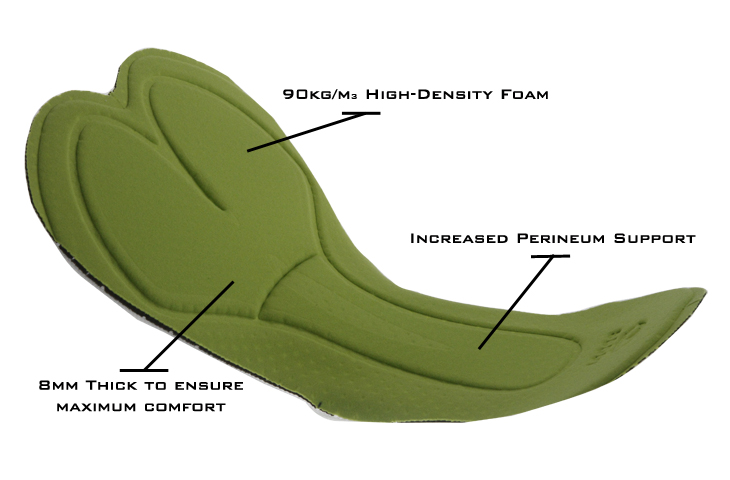
The rear of the pad sits under your sit bones, and the front and sides handle other pressure points and leave room for your legs to move.
“Sit bones” is the everyday name for the ischial tuberosities, the bones that carry your weight when you sit, and where they land on the saddle changes with your riding position.
Check these four parts of the pad:
| Region | What it does | What to check |
|---|---|---|
| Rear support | Cushions your sit bones | Your sit bones land on the thick padding |
| Front support or relief | Adds cushioning at the front, or thins out to cut bulk | Crowding, or too little support up front |
| Side wings and tapered edges | Blend the pad into the shorts | Edges stay flat as your thighs move |
| Top fabric and seams | Stretches with you against your skin | No ridges, folds or loose fabric against your skin |
If your shorts fit well at the waist and hips but the rear padding stops short of your sit bones, the pad’s outline or its position in the shorts is wrong for you. A wide side wing can also press into your upper inner thigh on every pedal stroke.
Are women’s chamois pads different?

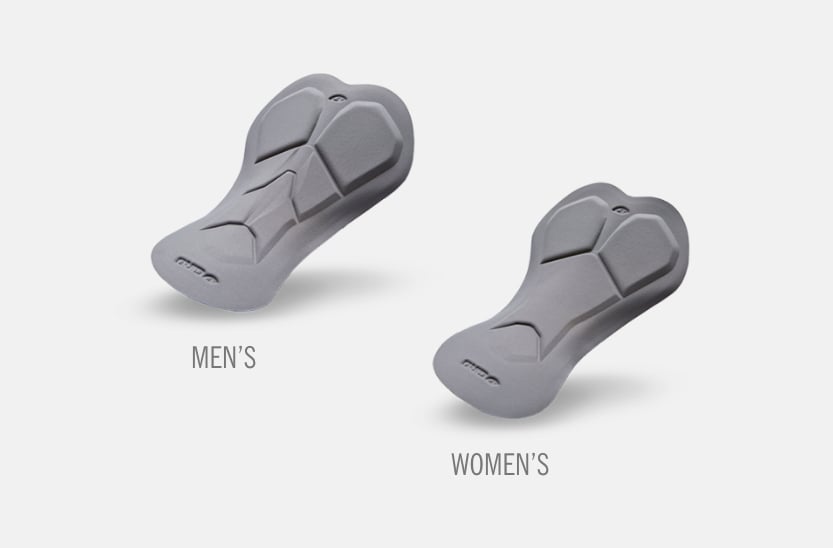
Women’s chamois come in different shapes. Some give full support at the front. Others thin out the foam there to take pressure off. If front padding feels crowded, try a lower-profile front. If you want more under you, pick one with continuous support.
Elastic Interface’s women’s protection systems show the range. WP1 uses continuous perineal support. WP2 has a lower-density relief area. WP3 combines thinner or lower-density material around the genital region with raised support under the sit bones and medium-density perineal cushioning.
Your hand position moves your weight around on the saddle. On a road bike, moving your hands from a more upright spot to the drops shifts your weight forward, so a front section you don’t notice sitting up can press in the drops.
In a 2008 saddle-pressure study by Potter and colleagues, 22 experienced cyclists, 11 of them women, rode with their hands on the tops and in the drops at 100 and 200 watts. In the drops, the center of pressure moved forward, and the women’s normalized anterior force and maximum pressure went up.
When you compare women’s and unisex pads, check the front profile and rear support in your usual riding posture.
Thick or thin? What about foam density and gel?
Thickness and foam density are two separate numbers. Neither tells you where the pad will sit on your body.
A thicker rear section adds support where your weight presses on the saddle. Extra foam at the front can feel bulky on some saddles or when you ride low and forward. A thinner pad stays out of the way but can leave you short of support.
How firm the foam feels under you, how it bends and how fast it springs back depend on its formula and how the layers are stacked. Elastic Interface lists densities from 40 to 200 kg/m³ across its own foams.
| Feature | What it describes | What to check |
|---|---|---|
| Thickness | Physical depth of padding | Where you get cushioning and where you get bulk |
| Foam density | Foam mass per unit volume | Which zones the maker made firmer or softer |
| Multi-density construction | Several foam densities in one pad | Where firm zones meet soft edges |
| Gel insert | Extra cushioning in some pads | How the whole pad feels on the bike |
| Pad contour | Shape and position of the pad | Firm and relieved zones line up with where you sit |
Pick by shape and placement first. A materials label won’t tell you if a broad edge will rub your thigh or the front will feel crowded.
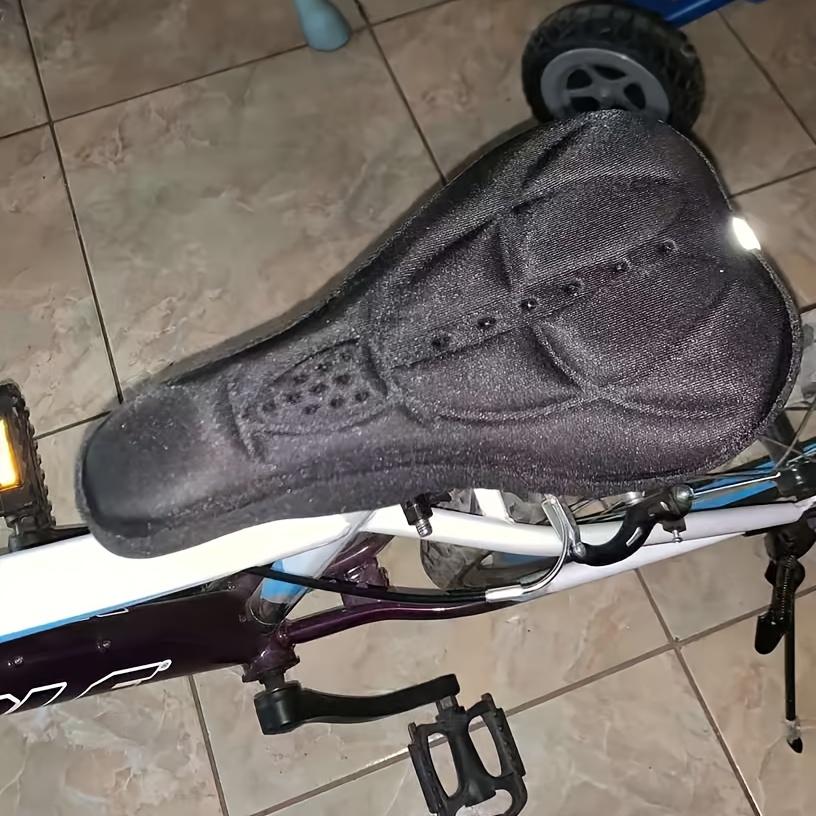
If you’re commuting in padded liners under ordinary shorts, go for a low-profile pad. If you sit for hours on a road bike, go for a more structured one.
How to tell if a chamois fits you
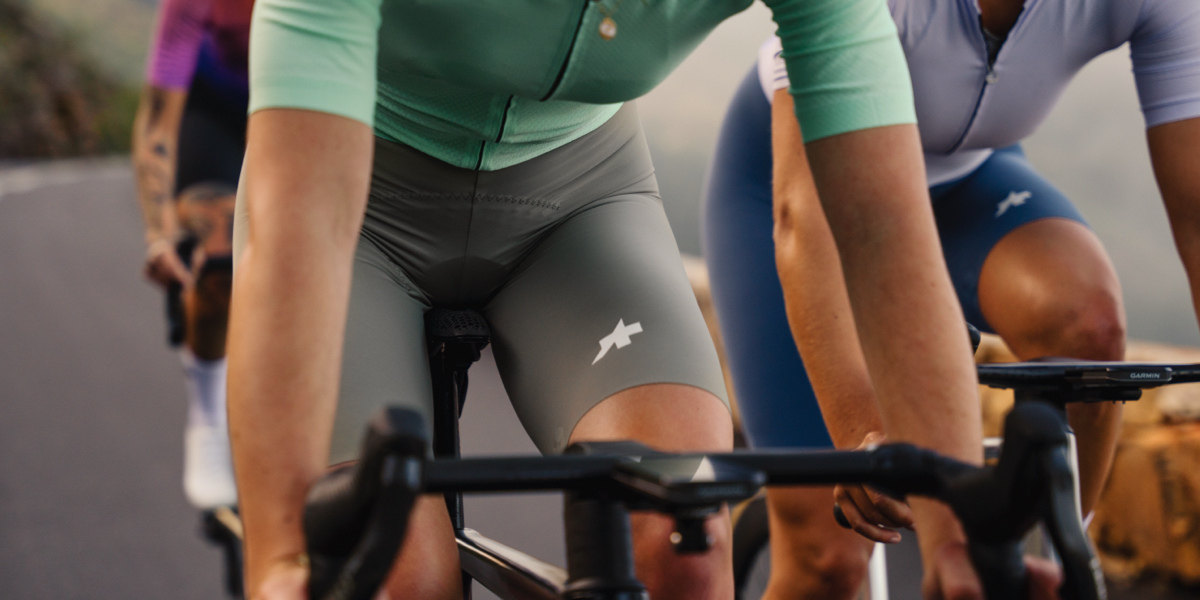
You’re checking three things: where you feel support, whether the pad stays put, and whether its edges or front press where they shouldn’t.
A mirror shows if the shorts are loose or twisted. Sitting on the bike in your usual position shows how the padding works under your weight.
Five steps to inspect chamois fit
- Look at the pad. Turn the shorts inside out. Find the rear support, the front profile, the side edges and any ridges or seams. Note where the thickness changes.
- Put the shorts on. Center the pad and smooth the fabric so nothing twists or folds.
- Sit on the bike. On a stable, safely supported bike, take your usual riding position. Feel for support under your sit bones and check if a pad edge digs in.
- Pedal a few strokes. Watch and feel for shifting, bunching, bulk at the front, or rubbing on your upper inner thighs.
- Name the problem. Is the pad moving, or pressing in one spot? Each one has a different fix.

REI’s padded cycling shorts guide also says to check pad placement in a riding position. A few minutes on the bike shows you folds and edges that dig in. A long ride is the real test.
When the padding feels wrong
If your shorts shift with each pedal stroke, the fit is the problem. Try a different cut or pad layout. If the rubbing follows the moving fabric, look for a pad with a smoother edge or a different outline.
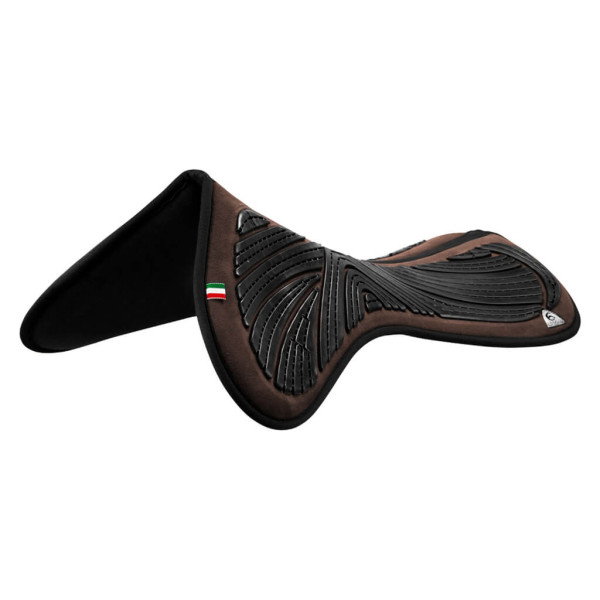
If your shorts stay put and the same spot still hurts, look at the saddle, because its shape, a cutout and your riding position all change where your weight lands. One cyclist found a saddle cutout comfortable until the front of the padded shorts filled the gap.
Some saddle problems have several causes at once. In a 2026 qualitative study, 20 competitive female cyclists described saddle sores tied to pressure, friction, sweat and equipment, which is why new shorts alone can leave your problem in place.
When to stop: Don’t ride through numbness that won’t go away or pain that’s severe or getting worse. A professional bike fit checks your position and equipment. See a doctor for symptoms that point to a medical problem.
How to wear and wash a chamois

Ride in padded shorts with nothing underneath, and keep your underwear on when you try them on in a store. Chamois cream is optional. Some riders use it against rubbing, but it won’t fix a pad in the wrong place.
Wash your shorts by the care label. For its pads, Elastic Interface recommends a delicate wash at 30°C (86°F) with neutral detergent and no fabric softener. Replace the shorts when the pad stays folded, the fabric tears or the foam loses its shape.