Women’s-specific and unisex hybrids are both worth considering. Pick the hybrid by your main surface and what you carry, size it by reach and standover instead of the size label, and buy only after a test ride that covers stopping, a hill and your bag.
A hybrid works well for neighborhood streets, bike paths, errands and exercise. It sits between a road bike and a mountain bike without committing you to either.
Two bikes sold as hybrids can still differ in riding position, tires and gearing. Start from your actual rides and narrow the field from there.
Which hybrid bike suits the riding you actually do?
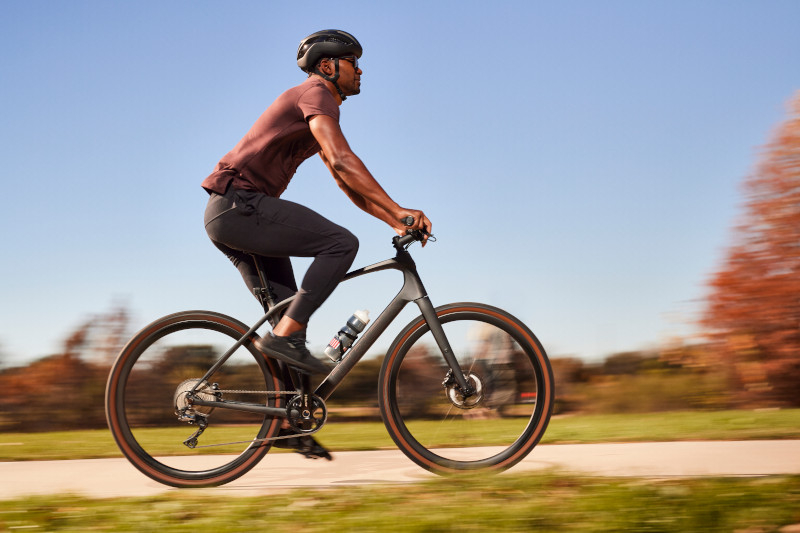
Shop for the kind of hybrid that matches your most frequent ride. Occasional rides on other surfaces matter only if they would expose a limit in the tires, gearing or frame.
| Your main riding | Prioritize | Rule out if | What to check |
|---|---|---|---|
| Fitness on paved roads and paths | Comfortable control, efficient pedaling, gears for local hills | Extra suspension weight or an uncomfortable riding position | Ride normal pavement and a typical hill |
| Town errands and commuting | Rack and fender mounts, easy stopping, practical carrying | No way to carry what you need | Inspect the mounts and try getting on and off with your bag |
| Pavement and smooth hard-packed paths | Suitable tires, clearance, predictable handling | Not built for the unpaved sections you ride | Compare the maker’s intended use with your route |
| Casual riding with frequent stops | Reachable controls, easy frame access, adjustable riding position | Awkward mounting or controls you can’t handle comfortably | Mount, stop, restart, turn and brake on the actual bike |
A paved-path fitness rider has no reason to start with luggage racks. Someone hauling groceries home needs carrying gear and an easy way onto the bike. Both may want flat handlebars, yet their shortlists look different.
The term comfort hybrid causes confusion. Trek presents its Verve range as comfort-first hybrids, built around a relaxed everyday ride and comfortable contact points. Compare the riding position, frame access, tires, fork and controls on each model you consider.

If you’re about 5 feet 1 inch and want an upright position on paved paths, you need to reach the brakes and handle the bike at a stop. A taller model with an appealing saddle is a worse pick than a smaller bike whose controls you can reach.
Before looking at brands, write down your regular surface, the hills you expect, anything you must carry and any trouble with mounting or handling.
When is a hybrid the wrong bike?
A flat-bar hybrid is built for everyday pavement and easy paths. If sustained road-racing performance is your goal, look at dedicated road bikes, though a hybrid still handles fitness rides and many casual group outings. Technical trails with rocks, roots or drops need a mountain bike. Demanding gravel routes suit a gravel bike. If you need motor assistance for distance, hills or loads, shop electric bikes as a separate category.
Women-specific, unisex or step-through: which do you need?
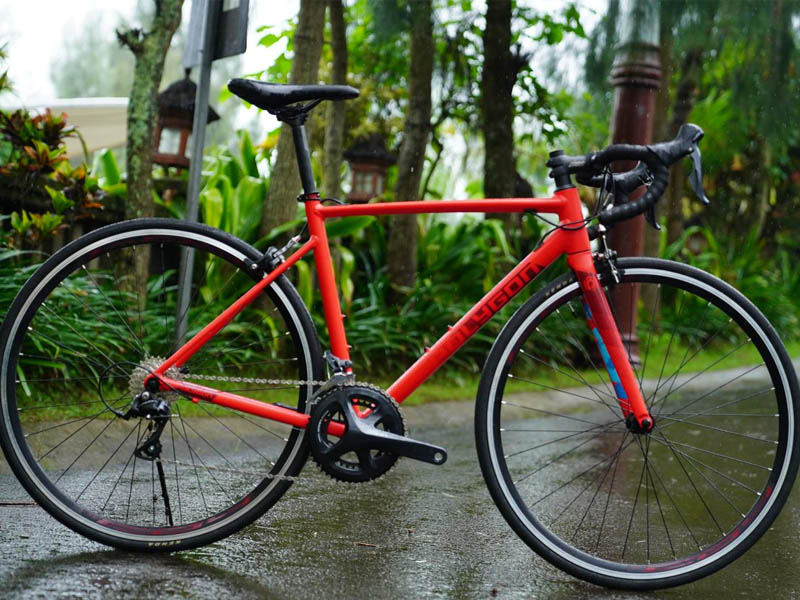
Choose the frame and component setup that fits you. Women’s-specific designs may offer useful sizes or contact points, and unisex bikes fit many women equally well. Neither label tells you anything about reach, saddle adjustment or control.
Two bikes with similar size labels can place your hands and body differently. With long legs and short arms, you can have plenty of room to pedal and still find the bars too far away. One cyclist found a women’s Liv medium unsuitable and got a better fit from a larger Giant hybrid. The label is where you start. The geometry decides.
Frame shape is the other choice:
- Traditional frame: The higher top tube suits a rider who can mount, dismount and stop without difficulty.
- Midstep or low-step: A lowered top tube helps when lifting a leg over a high frame is awkward.
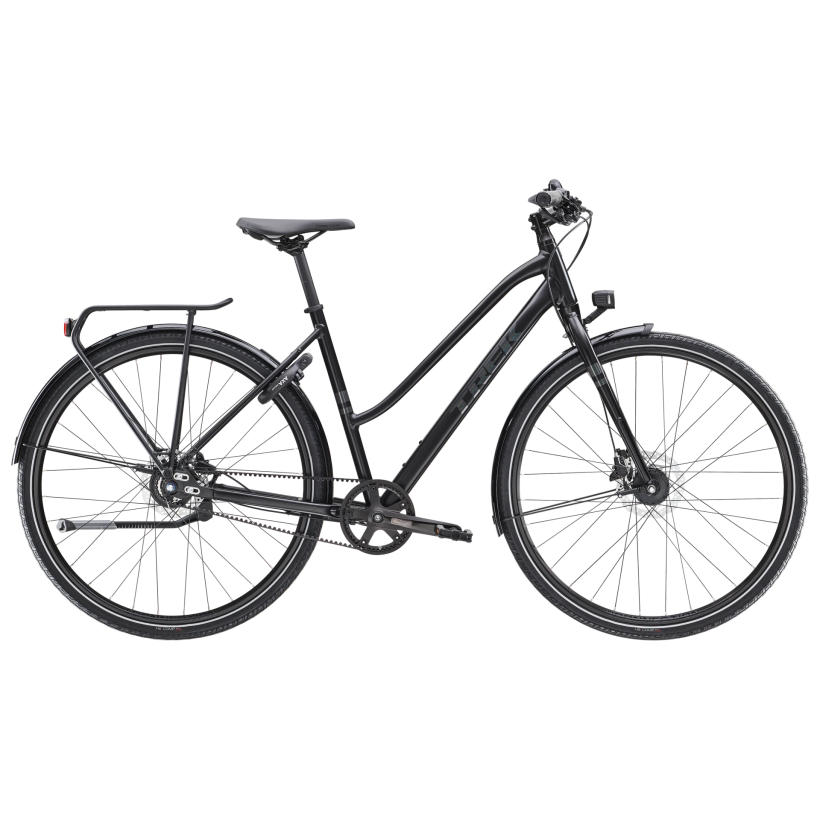
- Step-through: The open frame simplifies mounting, especially if you stop often or carry gear.
Trek’s US hybrid range includes an FX 2 Midstep. The name tells you the frame access. Your reach and overall fit depend on the geometry of the size you ride.
How to tell whether the frame really fits you

A height chart points you to promising sizes. To choose between them, check standover, reach, saddle adjustment and how confidently you handle the bike.
Standover is the space between your body and the frame when you stand over the bike. Reach is the forward distance to the front of the cockpit, which also depends on the handlebar, stem and their adjustments. Stack is the vertical position of the frame’s front end and explains differences in handlebar height between designs.
Compare these numbers with your own proportions. With a short torso or short arms, you can get a good pedaling position and still have the bars too far away.
Measure your inseam before comparing frame sizes
REI’s bicycle-fitting guidance describes a simple method. Wear the shoes you’ll ride in and stand against a wall. Hold a large book between your legs, its upper edge pressed firmly against your inseam. Mark that height on the wall, then measure from the floor to the mark. Repeat the measurement to check consistency.
Compare the result with the standover figure for the exact bike and size. Step-through designs may need a different reading of standover. A good standover number doesn’t show your reach or the bike’s handling, so finish those checks on the bike.
For a concrete sizing reference, the 2025 US Liv Alight Disc 2 came in XS through L. Liv’s XS height chart spans 4 feet 10 inches to 5 feet 4 inches. The XS and S have 165 mm cranks.
Size charts get unreliable at the edges. A rider about 5 feet 2 inches tall wanted a Liv Rove 4 Stagger XS, but the S was easier to find. Availability doesn’t tell you the frame fits a short inseam.
If your size isn’t available for a test ride, compare the manufacturer’s geometry for the exact sizes, including standover, reach and effective top-tube length where published. Ask a bike-shop technician to review the numbers, see whether you can try a comparable frame locally, and check the seller’s purchase and return terms before ordering.
Tires and forks: match smooth roads, broken pavement, and easy paths
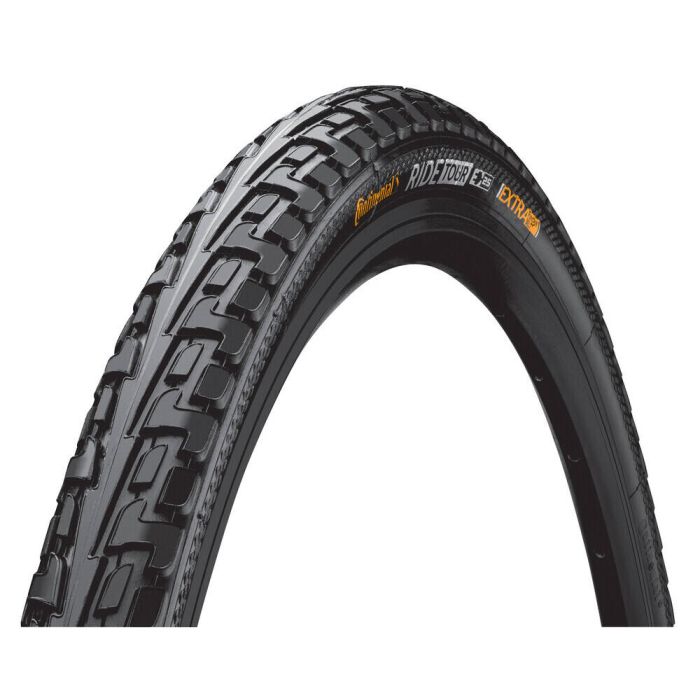
Pick tires and a fork for the surfaces you ride regularly. Smooth pavement, worn streets and firm unpaved paths ask different things of a bike, even within one casual ride.
A 700×38c tire has a nominal 700c wheel size and a width of 38 millimeters. Hybrid configurations come with 700×35c, 700×38c, 700×40c and 700×42c tires. Those figures help you compare equipment, while tread, construction, pressure and the route shape how a tire behaves.
For paved exercise rides, look for efficient rolling and a position you control. If your route includes smooth hard-packed sections, check each model’s intended use and tires. Tire width alone doesn’t rate rough-terrain performance.
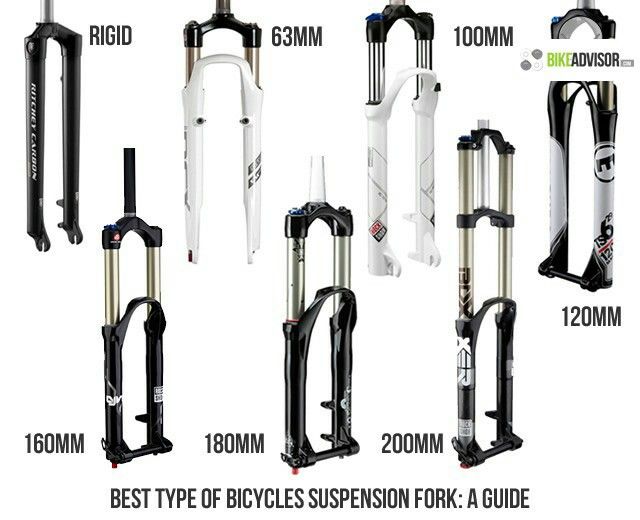
A rigid fork avoids the weight and pedaling-efficiency costs of suspension, particularly on smooth paved routes. Suspension makes sense where conditions justify it, so compare forks against your actual surface.
Find the roughest part of your regular ride and match it to the bike’s stated purpose. A hybrid built for everyday pavement and easy paths is the wrong pick for technical terrain, whatever its tire width.
Gearing and brakes: what matters more than the number of speeds
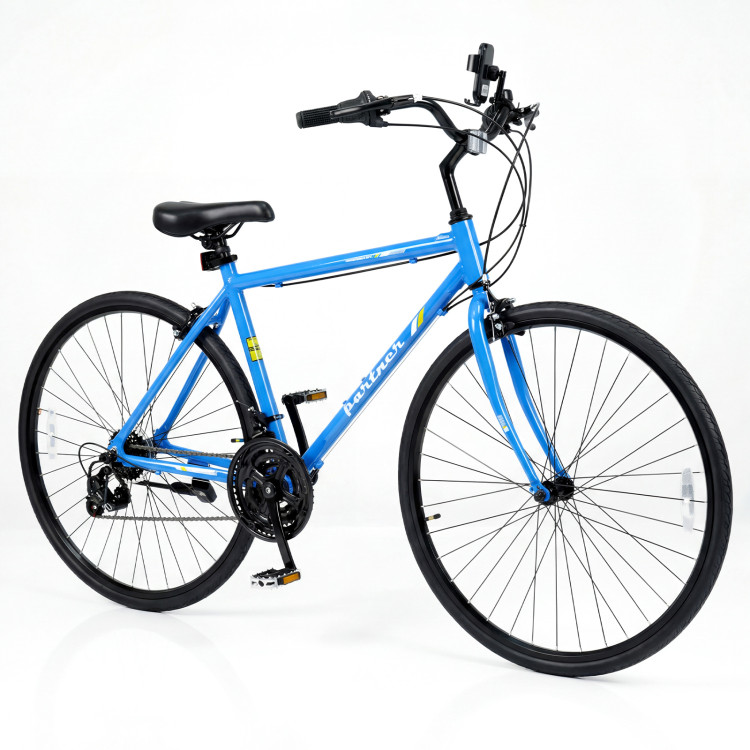
To judge a hybrid’s climbing gears, look at the chainring and cassette. The advertised number of speeds covers only part of the drivetrain. The tooth counts show what the lowest gear can do.
A 1×8 drivetrain has one front chainring and eight rear sprockets. A 1×9 has one front chainring and nine rear sprockets. A 2× system adds a second front chainring and front shifting.
To compare low gears, divide the front chainring teeth by the teeth on the largest rear sprocket. The 2025 Liv Alight Disc 2 has a 40-tooth chainring and a 46-tooth largest sprocket, a ratio of about 0.87. The Acolyte-equipped Sirrus X 2.0 uses 40 and 42 teeth, about 0.95. With comparable wheel sizes, a lower ratio means less wheel rotation per crank turn, so climbing is easier.
If your route has a regular hill, try the lowest gear on a safe climb. Check that you can keep a comfortable pedaling rhythm and shift reliably. That tells you more than the speed count.
The Liv Alight Disc 2 uses Tektro hydraulic discs. The Cannondale Quick 3 uses Shimano MT200 hydraulic discs, and both Specialized Sirrus X 2.0 configurations below specify hydraulic discs too. You should be able to reach both levers comfortably from your normal riding position. Make a few controlled stops in a safe area. If the levers stay hard to reach or the stopping feels unpredictable, have a shop look at the setup before you buy.
US hybrid-bike models to compare, with exact versions
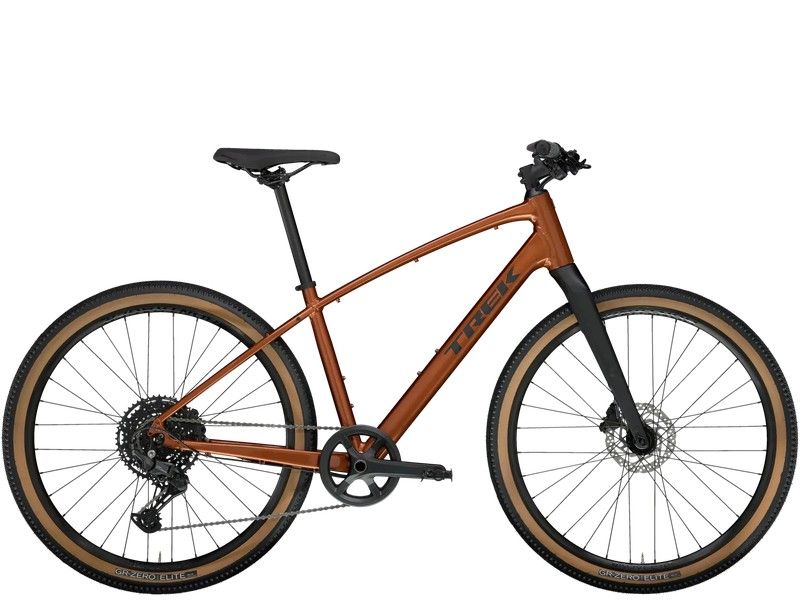
These manufacturer configurations give you concrete bikes to look up. They cover different versions and model years, and the specs come from manufacturer descriptions. This is not a ride-test ranking or a live store-inventory list.
| Model and exact reference | Drivetrain | Tires | Brakes | Fit and equipment |
|---|---|---|---|---|
| Liv Alight Disc 2, 2025 US | microSHIFT Advent 1×9 | 700×38c | Tektro hydraulic disc | XS through L; XS chart 4 feet 10 inches to 5 feet 4 inches; 165 mm cranks in XS/S |
| Specialized Sirrus X 2.0, p/4296260 | Shimano CUES 1×9 | 700×40c | Hydraulic disc | 165 mm cranks in XXS/XS |
| Specialized Sirrus X 2.0, p/4277661 | microSHIFT Acolyte 1×8 | 700×42c | Promax F1 hydraulic disc | Compare geometry for your frame size |
| Cannondale Quick 3, C3105GU | Shimano Essa 1×8 | 700×35c | Shimano MT200 hydraulic disc | Traditional and low-step choices; rack and fender mounts |
| Trek FX family and FX 2 Midstep | Gen 4 FX 2 and FX 3 use Shimano CUES; other specs vary by model | Varies by generation | Varies by generation | Gen 3 and Gen 4 differ; FX 2 Midstep is a frame option |
Turn the table into a short list for your own riding. For a shorter rider, the Liv XS range and the 165 mm cranks on the smaller CUES-equipped Sirrus X sizes are worth a look. Neither guarantees fit, so compare the full geometry in person.
For commuting, Cannondale lists rack and fender mounts on the Quick 3. The Trek FX Midstep is another frame-access option, with the generation determining equipment and mounts. For pavement with occasional smooth paths, the Sirrus X configurations give you 700×40c and 700×42c tire examples.
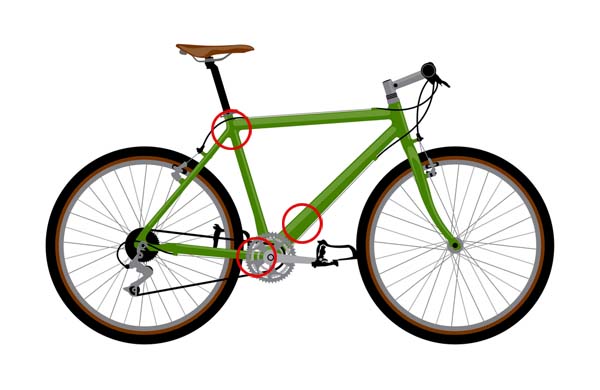
Don’t mix up builds. An earlier Quick Women’s 3 comparison listed Shimano Altus 2×9 gearing, while the Quick 3 with manufacturer code C3105GU has Shimano Essa 1×8. The spec for one doesn’t tell you what’s on the other.
When you talk to a retailer, give the full model, size, model year or product code, and component build. If the seller’s bike differs from the reference you read, go by the actual bike’s specs.
Carrying groceries, a pannier, or commuting gear changes the choice
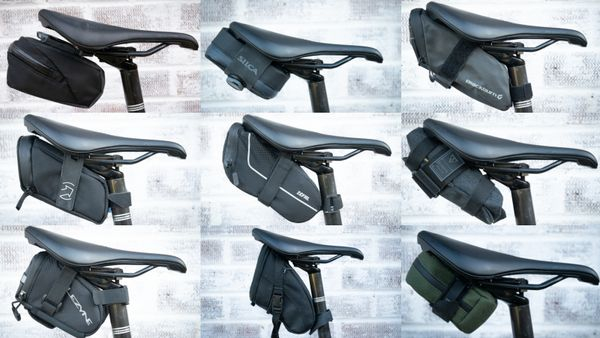
A commuting hybrid has to work with your stuff attached. A bike that handles well on an empty test ride can feel awkward to mount or park once a rear bag changes the space around the saddle.
Your gear depends on the ride. A rack and pannier carry clothes or shopping, fenders matter on wet roads, and lights, a lock and a basic repair kit depend on your route and parking. Decide what you need before comparing accessory compatibility.
Rack mounts are the starting point. The Quick 3 above lists mounts for racks and fenders. Match the actual rack, hardware and load limit to the manufacturer’s guidance.
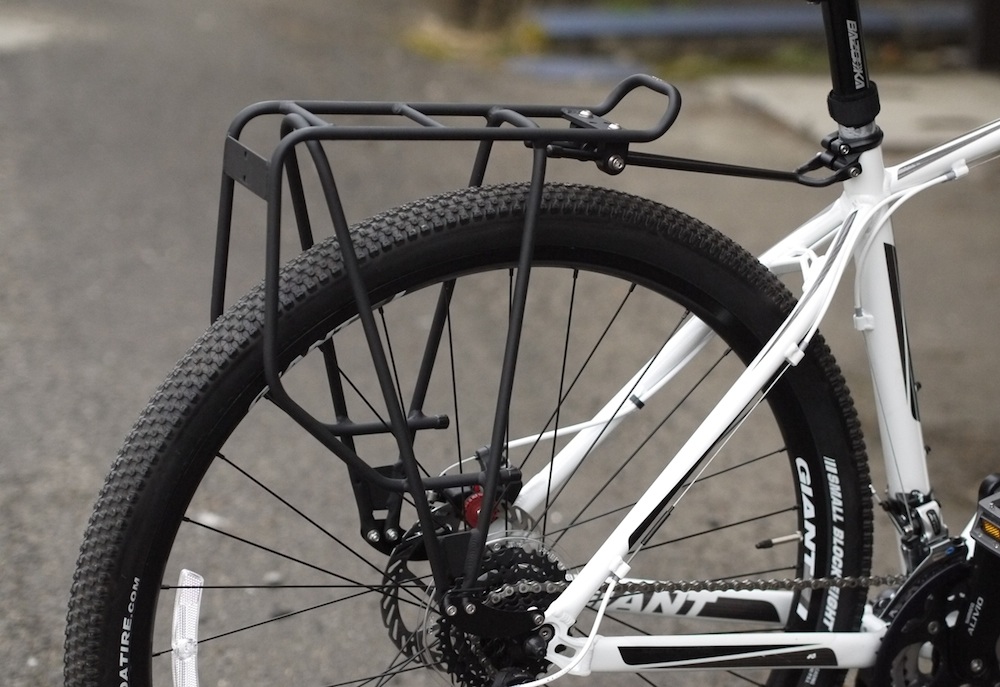
One commuter comparing a Trek FX with a Liv Alight worried about the top tube and getting onto a bike with carrying gear. You can test exactly that in the shop. Install the intended bag or a similar one, then try your normal mounting movement and a controlled stop. A bag behind the saddle can block the leg swing you use on an empty bike.
If you carry the bike upstairs, through a narrow doorway or into a crowded storage space, make sure you can handle the whole setup.
Budget: new, discounted, or used, plus costs beyond the tag
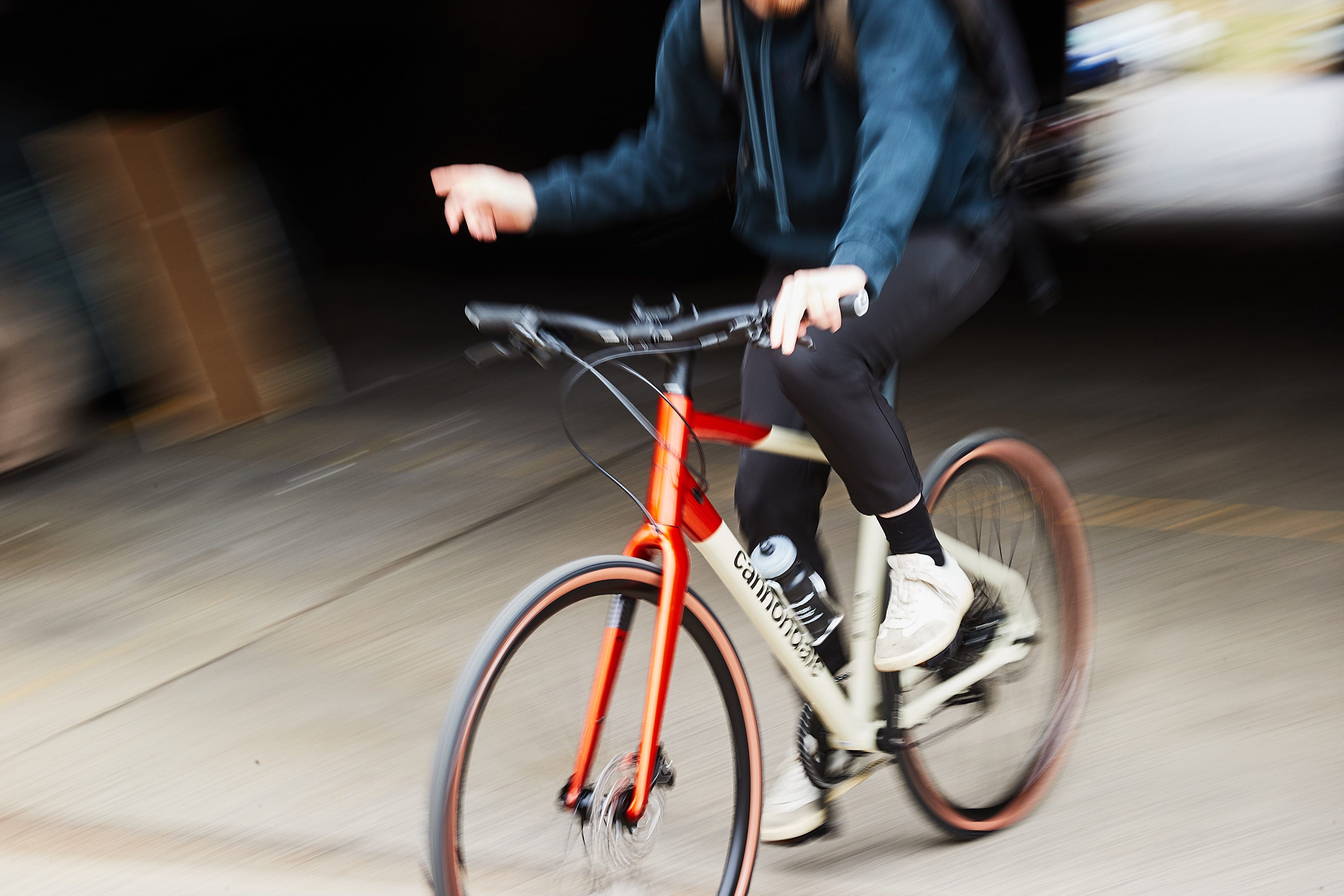
Compare the cost of a bike you can use as intended. A new bike, a discounted older model and a used bike can each be a good choice once fit, mechanical condition and necessary equipment are counted.
A beginner asking about hybrids set a budget under $300. That was her personal limit, not a market price. At that level, used bikes are worth checking, provided the size is right and you can assess the condition.
A used bike may need work on tires, tubes, chain or brakes, so get a qualified mechanic’s assessment before paying. A discounted bike may need accessories before it suits commuting. Get an estimate for the actual bike and fill in the same cost lines for each option.
| Cost item | What to find out | Your amount |
|---|---|---|
| Bike | Seller’s price for the confirmed model and size | $_____ |
| Mechanical assessment | Inspection fee if buying used | $_____ |
| Required service | Tire, tube, drivetrain or brake work | $_____ |
| Essential equipment | Rack, fenders, lights, lock or other must-haves | $_____ |
| Fit changes | Adjustments or contact-point parts | $_____ |
| Total | Add the quoted or confirmed amounts | $_____ |
The total shows the real cost, especially when a low advertised price leaves repairs or essential accessories out.
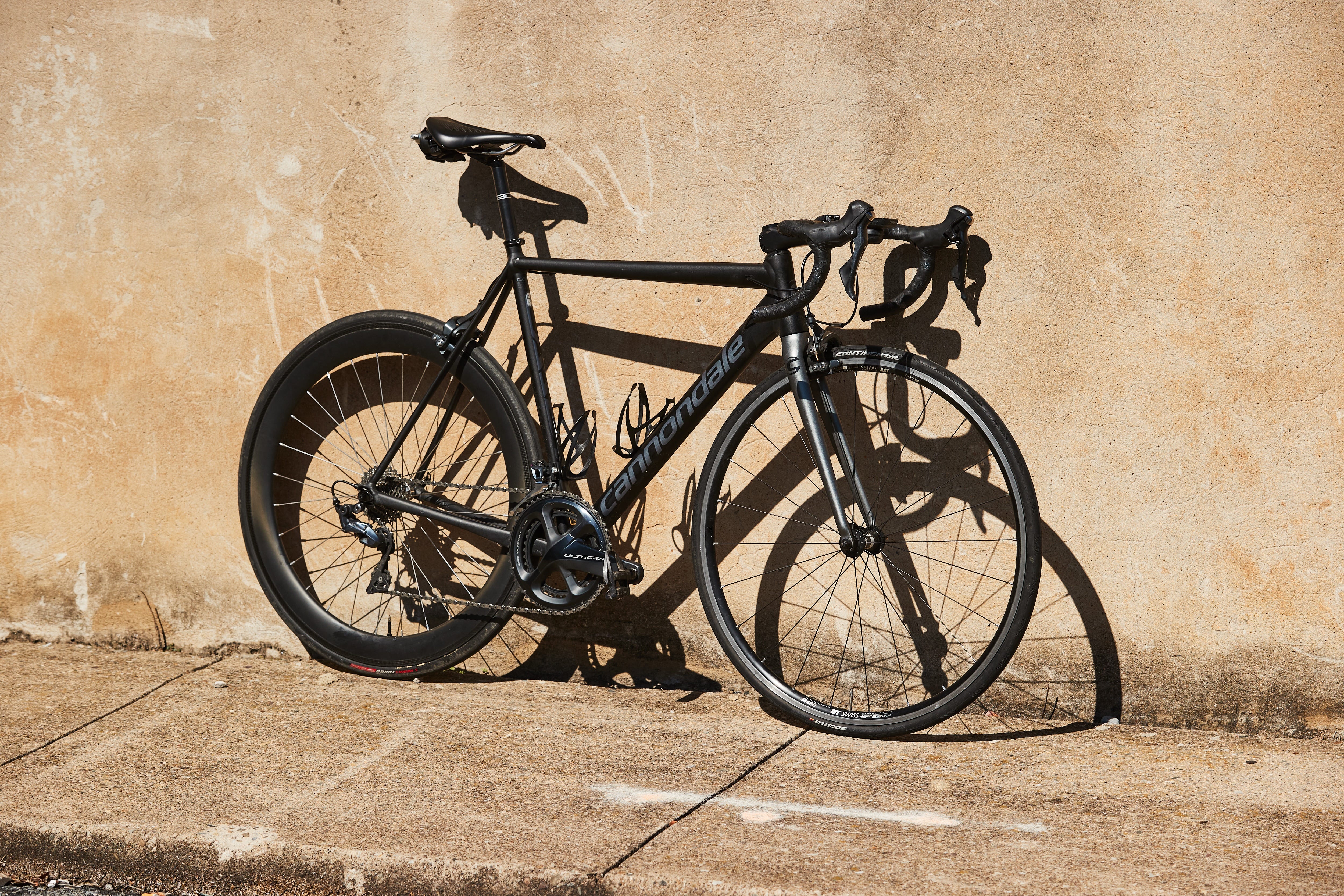
The shop-floor test ride: a pass, adjust, or reject checklist
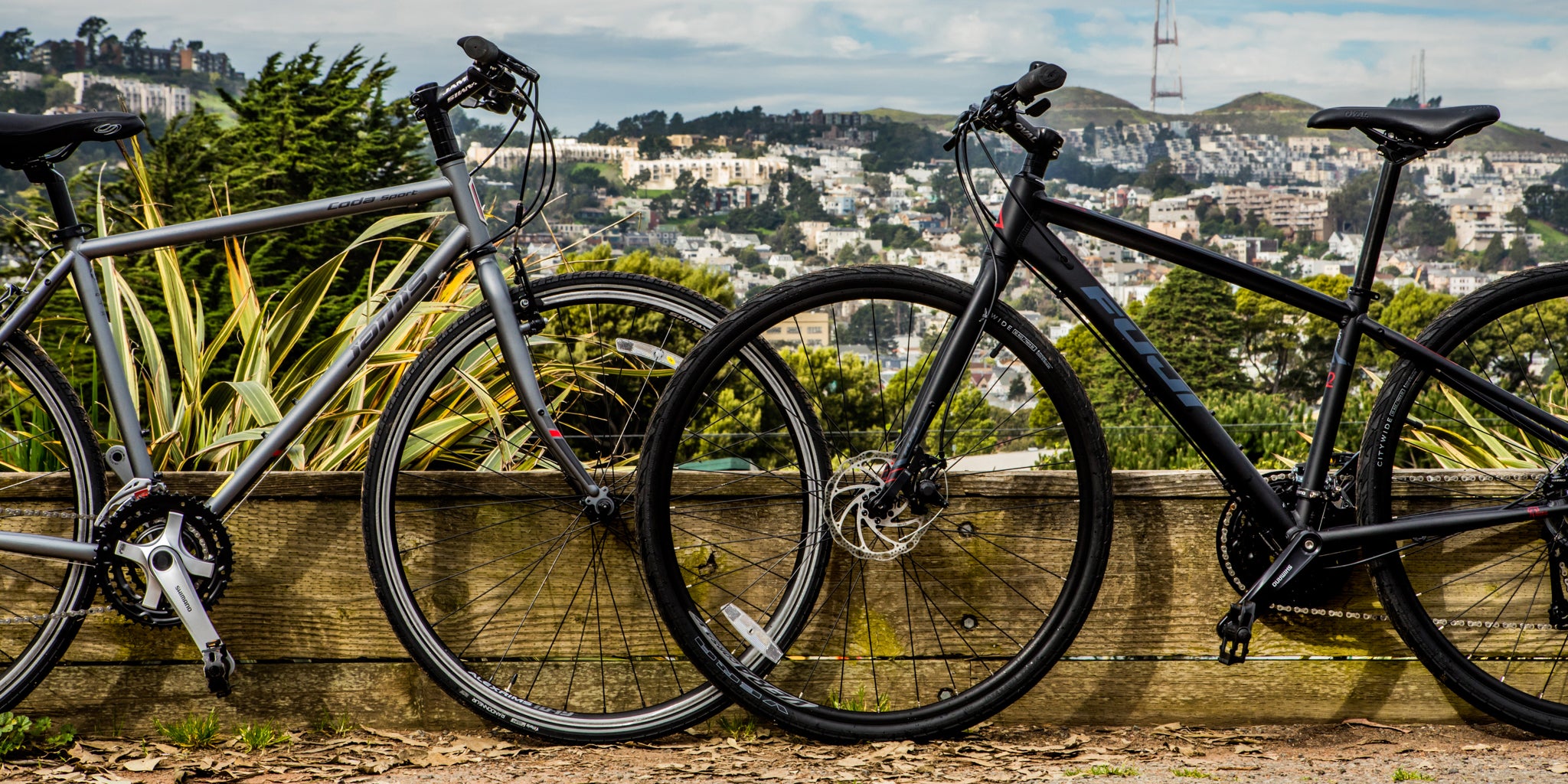
A test ride shows whether you can control the bike and use it for your rides. Start in a safe area and ask the shop to set the saddle and handlebar where adjustment is possible. Mount, dismount and stop first, then ride off at a comfortable pace. Notice where your hands rest, whether the levers are within reach, and how turns and braking feel.
| Test | What to check |
|---|---|
| Mount and stop | Get on, dismount and stop in control |
| Handlebar reach | Hold the grips without stretching |
| Brake-lever access | Operate both levers comfortably and predictably |
| Saddle and pedaling | Find a usable saddle position and a natural pedal stroke |
| Steering and turning | Control the bike on a suitable route |
| Shifting and hills | Find usable gears on a safe climb |
| Cargo, if you carry any | Mount and stop with your carrying gear fitted |
Score each bike one of three ways:
- Pass: You reach the bars and brakes, pedal naturally, and manage mounting and stopping.
- Adjust and retest: A shop can fix the problem within the bike’s intended range. Ride again before deciding.
- Reject: The frame stays hard to control, the saddle can’t reach a usable position, or the brake levers stay out of reach after adjustment.
Try two or three candidates under similar conditions. Include a safe hill if climbing matters to you, and repeat the mount-and-stop check with your bag if you commute. A short ride exposes bad fit and handling problems before you spend money. It won’t show long-term comfort or reliability.
Choosing between your finalists
Rate every hybrid you try as pass, adjust and retest, or reject. A frame you can’t control is a reject. So is a saddle that won’t reach a usable position, or brake levers that stay out of reach after adjustment. For the bikes that remain, look at the lowest gear rather than the number of speeds, since it tells you more about your hills. Then add repairs, a rack, fenders and any fit changes to the price on the tag. Start by writing down your usual surface, the hills and what you carry, then try two or three bikes in the same conditions, with your bag on if you commute.